


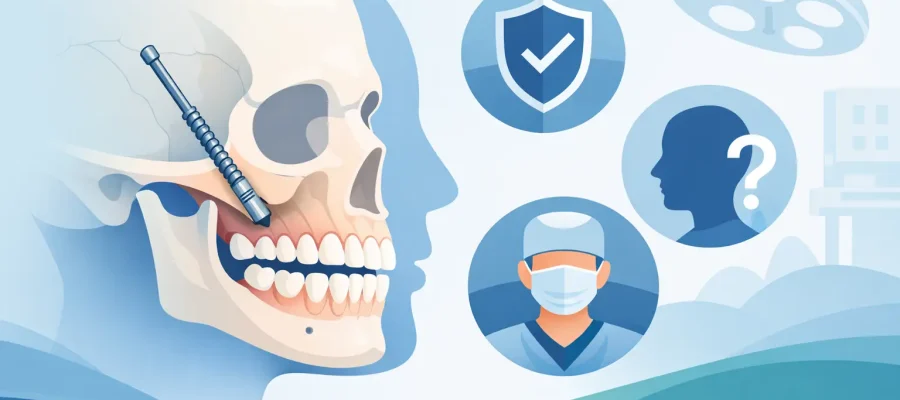
When a patient is told they do not have enough upper jawbone for regular implants, the next question is usually immediate and very fair: are zygomatic implants safe? The short answer is yes – in the right hands, for the right case, with the right planning. But this is not a shortcut procedure, and it should never be presented as one.
Zygomatic implants are designed for patients with severe bone loss in the upper jaw, especially when traditional implants would require extensive grafting or a long reconstruction timeline. They anchor into the cheekbone, which is typically denser and more stable than the compromised upper jaw. That design can make them a powerful solution for patients who want fixed teeth without waiting through multiple surgical stages. Safety, however, depends less on the implant itself and more on diagnosis, anatomy, surgical experience, and planning discipline.
Are zygomatic implants safe for everyone?
No. They are safe for carefully selected patients, but they are not the default answer for every upper-jaw implant case.
A patient with mild to moderate bone loss may still be better suited for conventional implants, sometimes with a sinus lift or grafting. Zygomatic implants are usually reserved for advanced cases – severe maxillary resorption, failed prior implant treatment, major sinus-related limitations, or situations where a patient wants to avoid long graft-healing phases.
That distinction matters. A safe treatment plan is not the most dramatic one. It is the one that solves the problem with the least unnecessary risk while still delivering strength, esthetics, and long-term function.
Why zygomatic implants can be a safe option
The reason zygomatic implants have become established in advanced implant dentistry is simple: they solve a difficult anatomical problem with solid biomechanics. Instead of relying on weak or depleted upper-jaw bone, they engage the zygomatic bone, which offers excellent support.
For the right patient, this can reduce the need for extensive bone grafting, shorten treatment time, and make immediate fixed teeth possible. That combination is attractive for international patients who want a predictable transformation without turning the process into a year-long reconstruction project.
Safety also improves when treatment is fully engineered before surgery. With high-level 3D imaging, digital planning, bite analysis, and prosthetic design built into the surgical plan, the procedure becomes far more controlled. The implant path, sinus relationship, soft tissue exit point, and final tooth position all need to work together. When they do, the treatment can be both efficient and highly stable.
Where the real risks are
Anyone answering the question are zygomatic implants safe without discussing complications is oversimplifying the topic.
These are longer implants placed in a more complex anatomical zone than standard implants. The surgery is technique-sensitive. Important structures are nearby, including the sinus and orbit. The main risks can include sinus complications, soft tissue problems, infection, implant malposition, speech or hygiene challenges if the prosthetic design is poor, and esthetic compromises if the implant trajectory is not ideal.
There is also a recovery consideration. Some patients experience swelling, bruising, congestion, or temporary discomfort that can feel more intense than routine implant placement. That does not mean the procedure is unsafe. It means it is advanced surgery and should be treated with the respect advanced surgery deserves.
The strongest protection against these risks is not marketing. It is case selection, surgeon experience, and digital planning that accounts for both surgery and the final smile outcome.
What makes zygomatic implants safer in modern practice
The safest zygomatic cases are usually the most thoroughly planned ones. This starts with CBCT imaging to study bone volume, sinus anatomy, facial proportions, and implant angulation. It continues with prosthetic planning, because stable implants alone are not enough. The final teeth must look right, feel right, and be maintainable.
A high-standard workflow often includes digital smile and bite planning before surgery, not after. That is especially valuable for full-arch patients who care about facial aesthetics as much as chewing power. If the team knows exactly where the final teeth need to sit, the implants can be positioned to support that outcome rather than forcing compromises later.
Experience with immediate loading also matters. Many patients seeking this treatment want fixed teeth quickly. That can be done safely when the implants achieve the required stability and the temporary bridge is designed correctly. When the loading protocol is rushed or the bite is not controlled, risk goes up.
This is why premium centers treat zygomatic implant planning as a full-system process, not just a surgical event.
Who is usually a good candidate?
The ideal candidate is often someone with severe bone loss in the upper jaw who wants fixed teeth and either cannot or does not want to go through major grafting. This may include patients who have worn dentures for years, lost bone after extractions, experienced failed upper implants, or have sinus anatomy that limits traditional solutions.
General health still matters. Smoking, uncontrolled diabetes, active infection, poor oral hygiene, and untreated bite issues can all affect safety and outcome. So can expectations. Patients who want speed without accepting the discipline of planning, healing, and follow-up are not ideal candidates for any advanced implant treatment.
A strong clinic will not treat zygomatic implants as a luxury upgrade. It will treat them as a precise answer to a specific problem.
What should patients ask before saying yes?
If you are comparing clinics, do not focus only on whether they offer zygomatic implants. Ask how they decide when not to use them.
You should also ask who plans the case, what imaging is used, whether prosthetic design is mapped before surgery, how immediate teeth are handled, what the recovery process looks like, and how complications are managed if they happen. Those answers tell you far more about safety than a headline claim ever will.
For international patients, coordination matters too. Advanced implant treatment is not just about the operating room. It is also about pre-arrival review, clear eligibility screening, protected treatment timing, and a structured follow-up pathway once you return home. A clinic that combines surgical precision with tight patient management creates a safer experience from start to finish.
Zygomatic implants vs bone grafting
This is where the conversation becomes more personal. Some patients hear that zygomatic implants avoid grafting and assume they are automatically the better option. Not always.
Bone grafting can be an excellent route for patients who want a more conventional implant setup and are comfortable with a longer timeline. Zygomatic implants may be more attractive for patients with advanced bone loss who want to reduce the number of surgical phases and move faster toward fixed teeth.
So, are zygomatic implants safe compared with grafting? In many qualified cases, yes. But safer does not always mean simpler. It means more suitable for the anatomy, goals, and time frame of that patient.
What recovery usually feels like
Most patients can expect swelling, facial tightness, and some sinus-related pressure in the early healing phase. The first days require careful following of instructions, softer foods, and close monitoring. If immediate fixed teeth are placed, patients often appreciate the emotional lift of leaving with a smile instead of a removable denture, but that should not be confused with being fully healed.
Healing is still a process. The temporary phase is about protecting integration while maintaining appearance and function. Final teeth come after stability, tissue response, and bite performance are confirmed.
That staged approach is one more reason the procedure can be safe. It respects biology while still delivering the speed many patients want.
The bottom line on safety
Zygomatic implants can be a very safe and highly effective solution for severe upper-jaw bone loss when they are performed by an experienced team using advanced imaging, disciplined planning, and prosthetic-first thinking. They are not for everyone, and they should never be sold as an easy fix. But for the right patient, they can replace a long, graft-heavy pathway with a faster route to fixed teeth and a confident smile.
At a clinic built around precision planning, immediate transformation, and tightly managed patient journeys, that balance of speed and safety becomes far more realistic. If you are considering this treatment, the smartest next step is not chasing the cheapest quote. It is choosing a team that can show you exactly why your case is suitable, exactly how your smile will be engineered, and exactly how your comfort and safety will be protected at every stage.
The best implant treatment is the one that gives you fixed teeth, facial confidence, and peace of mind all at once.