


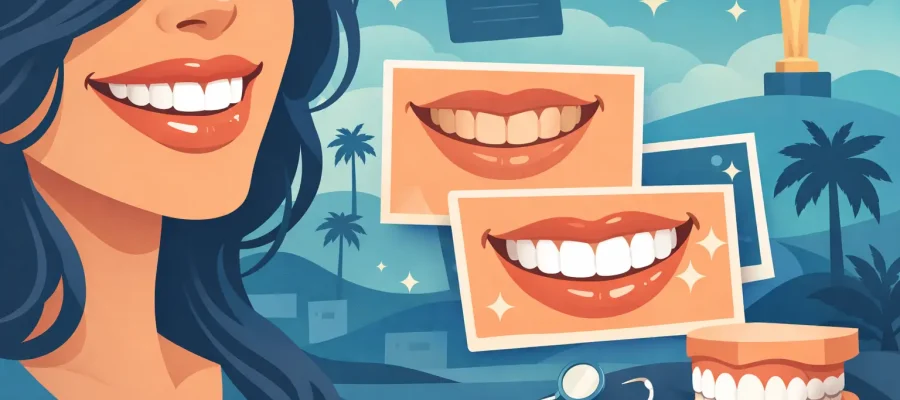
A camera-ready smile rarely starts in the treatment chair. It starts with a deadline.
That is what makes a hollywood smile transformation case study so useful for serious patients. When someone is preparing for a wedding, a speaking event, a media launch, or simply wants to stop hiding their teeth in photos, the real question is not just what looks good. It is what can be planned precisely, delivered quickly, and still hold up under close inspection.
This case study walks through a realistic premium smile makeover journey for an international patient traveling to Istanbul for a faster, more controlled result. Not every patient needs the same treatment mix, and that matters. A strong result is never about adding the most dentistry. It is about choosing the right combination of design, preparation, materials, and bite planning to create a smile that looks elevated without looking manufactured.
Hollywood smile transformation case study: the patient brief
The patient in this scenario is a 34-year-old US-based entrepreneur who spends a lot of time on camera. Her main complaints are common in aesthetic dentistry, but the combination is what makes the case interesting. She has uneven tooth lengths, old composite bonding that stains quickly, mild crowding in the upper front teeth, and a smile line that shows more gum than she likes when laughing.
She does not want braces. She does not want a treatment plan spread over many months. She wants a brighter, more symmetrical smile that still fits her face and does not look bulky or flat. Her timeline is tight – she has six weeks before a high-profile event and can travel once.
This is where a luxury smile makeover process matters. The goal is speed, but not rushed dentistry. Fast treatment only works when the planning is disciplined.
The consultation phase: deciding what the smile should do
In cosmetic dentistry, patients often ask for veneers when what they really want is better tooth display, cleaner proportions, and more confidence in photos. Those are not always the same thing.
The first step in this case is a digital consultation supported by full-face photos, smile videos, intraoral images, and radiographic review. The design conversation focuses on four variables: tooth shape, brightness, gum balance, and bite behavior. This matters because a white smile can still fail aesthetically if the edges are too long, the midline is off, or the upper incisors do not follow the lower lip naturally.
The patient asks for a very bright result, but there is a trade-off. Extremely opaque restorations can look artificial under natural daylight, especially on someone with expressive facial movement. The agreed design moves toward a bright but layered finish – clean, premium, and noticeable without crossing into an obvious fake look.
A 3D smile preview helps close the gap between expectation and execution. For international patients, that preview is more than a selling tool. It is a risk-control step. It gives the patient a chance to approve tooth shape and overall direction before travel, which reduces uncertainty once treatment begins.
Why this case needed a combined approach
This was not a one-procedure case. The patient needed several small corrections working together.
Her final plan included upper and lower E-Max veneers in the aesthetic zone, minor gum contouring to improve tooth proportion, professional whitening for teeth outside the veneer area, and bite refinement to protect the new restorations. That combination created a stronger result than veneers alone would have achieved.
This is where many smile makeovers either look exceptional or disappointing. If the gums frame the teeth poorly, the veneers have to compensate. If the bite is ignored, even beautiful ceramic work can chip or feel uncomfortable. If color is handled inconsistently, the smile can look patchy in close-up photos. Premium outcomes come from coordination, not just material choice.
Hollywood smile transformation case study: treatment in Istanbul
Once the patient arrived, the process moved quickly but in a controlled sequence. At a clinic such as DRGO Smile Clinic, the advantage is not only aesthetic dentistry itself. It is the ability to compress diagnostics, design approval, preparation, lab communication, and fitting into a short, managed stay.
On day one, the patient completed scans, X-rays, facial analysis, and a final in-person design review. Minor gum reshaping was performed first because millimeters matter in smile architecture. Small changes in gingival height can make teeth look longer, more balanced, and more feminine or more athletic depending on the design brief.
Tooth preparation was intentionally conservative. That is an important point in any honest case study. Not every Hollywood Smile requires aggressive reduction. In this case, because the crowding was mild and the digital plan respected her natural tooth position, minimal-prep veneers were possible on several teeth. Others required slightly more adjustment to create proper alignment and thickness control.
Temporary restorations were used as a live test drive. This stage often gets overlooked by patients, but it is one of the most valuable moments in the process. The patient could see how the new length affected speech, how the smile looked at rest, and whether the incisal edge line felt natural in motion. Two refinements were requested: slightly softer edge contours and a subtle reduction in canine prominence. Those changes were small, but they shifted the result from good to highly personalized.
Material choice: why E-Max fit this case
For a high-visibility aesthetic case, E-Max was the right choice because the patient wanted brightness with natural light transmission. Zirconium crowns are excellent in many situations, especially when additional strength or full-coverage restoration is needed, but this patient was not rebuilding heavily damaged teeth. She was refining visible front teeth with a premium cosmetic target.
E-Max allowed for a polished, luminous finish that looked crisp on camera without becoming flat. It also supported fine edge detail, which is often the difference between a smile that looks expensive and one that looks generic.
Of course, material choice always depends on function. If the patient had stronger grinding habits, major existing restorations, or structural compromise, the balance might shift. Aesthetic dentistry should never pretend there is one universal best material. There is only the best material for the case.
The final fit: what changed beyond color
The obvious change was whiteness, but the bigger transformation came from proportion and rhythm. The central incisors were given stronger but still natural dominance. The lateral incisors were corrected for symmetry. The gumline was leveled. The buccal corridor appeared fuller when she smiled, which made the whole expression look younger and more confident.
Her face also benefited from the new smile design in ways patients do not always expect. Better incisal support improved lip presentation. The smile showed more evenly in speech. Photos looked more balanced because the dental midline no longer pulled attention away from the rest of the face.
This is why the best smile makeovers feel engineered rather than exaggerated. They improve the entire visual composition.
Recovery, comfort, and short-stay reality
Patients often assume a rapid smile makeover means a painful one. In a well-planned case, that is usually not true. This patient reported mild gum sensitivity after contouring and expected temporary awareness after veneer preparation, but no major interruption to normal activity.
She stayed in Istanbul for final checks, bite adjustments, and placement review before flying home. That detail matters for international care. Same-trip treatment works best when there is enough time built in for refinement. A clinic that pushes speed without adjustment time can create stress later.
The bite was checked carefully at delivery and again before departure. This is not glamorous, but it is essential. The final smile has to do more than photograph well. It has to function through chewing, speaking, and long-term wear.
What this case study shows about premium smile makeovers
The main lesson from this hollywood smile transformation case study is simple: the visible result is only the surface layer of the process. What patients call a flawless smile is usually the outcome of dozens of precise choices – tooth width, edge length, color value, translucency, gum height, facial symmetry, and occlusal control.
It also shows why international patients increasingly choose curated treatment pathways instead of assembling everything themselves. When diagnostics, design, treatment, hotel stay, transfers, and follow-up are coordinated, the patient can focus on the result rather than managing logistics. For busy professionals and image-conscious travelers, that convenience is not a luxury extra. It is part of what makes the transformation possible on a real timeline.
The right Hollywood Smile should look expensive, but it should also look believable on your face, in daylight, and in motion. If a case is planned properly, the first thing people notice is not the dentistry. It is the confidence behind it.
If you are comparing smile makeover options, ask to see how the clinic thinks, not just how the before-and-afters look. The design logic is where the real transformation begins.