


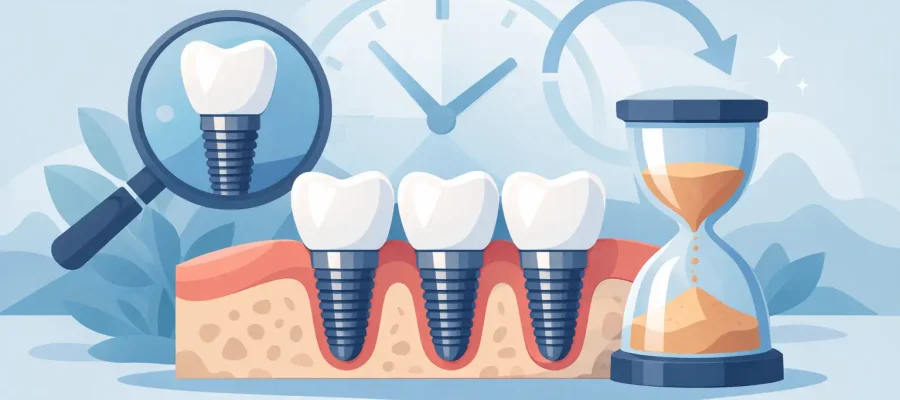
If you are investing in dental implants, you are not just buying a tooth replacement. You are buying stability, appearance, comfort, and the freedom to stop thinking about the gap every time you smile or eat. That is why one of the first questions patients ask is how long do teeth implants last – and the honest answer is longer than most people expect, but not every part lasts the same amount of time.
The implant itself can often last 20 years or more, and in many cases, it can last for decades. Some patients keep their implants for life. The part that tends to need maintenance or replacement sooner is the visible restoration on top, such as the crown, bridge, or full-arch prosthesis. That distinction matters because when people say an implant has “failed,” they are often mixing up two different components.
How long do teeth implants last in real life?
A dental implant has two main parts. The implant post is the titanium or ceramic fixture placed in the jawbone. Above it sits the restoration – the part you see when you smile. These parts live very different lives.
The implant post is designed to integrate with the bone and function like an artificial root. With strong planning, precise placement, and healthy healing, it can remain stable for decades. Many long-term studies show very high survival rates well past the 10-year mark.
The crown or bridge on top usually has a shorter life expectancy. A single implant crown may last 10 to 15 years before repair or replacement becomes necessary. Sometimes it lasts much longer. Full-arch restorations can also last many years, but because they take on heavy daily chewing forces, they may need periodic maintenance, relining, polishing, screw replacement, or full renewal depending on the material used.
So if you want the most practical answer, it is this: the implant body is often the longest-lasting part, while the cosmetic and functional top layer is the part most likely to be updated over time.
What determines how long teeth implants last?
Implants are not luck-based. Their lifespan is shaped by planning, biology, and how well the final bite is engineered.
Bone quality is one of the biggest factors. An implant needs enough healthy bone for stable placement and long-term support. If bone volume is limited, grafting or sinus lift treatment may be needed before or during implant placement. This is not a setback. In many cases, it is exactly what protects the implant’s long-term future.
Gum health matters just as much. Implants do not get cavities, but they can develop inflammation in the surrounding tissues. If plaque builds up and peri-implantitis develops, the bone around the implant can shrink. Left untreated, that can lead to implant failure. Patients who keep their gums healthy usually give their implants a much better chance of lasting decades.
Bite force is another major variable. Some patients clench, grind, or place extreme pressure on certain teeth, often without realizing it. That pressure may not remove the implant from the bone, but it can crack a crown, loosen screws, wear materials, or stress the surrounding structures. This is why night guards and bite design are not small details. They are part of protecting your investment.
Then there is the quality of the treatment itself. Implant longevity depends on precise planning, clean surgical technique, prosthetic accuracy, and a restoration designed for your facial balance and chewing pattern. Fast treatment can be excellent treatment, but only when it is built on diagnostics and disciplined execution.
The patient habits that help or hurt
Smoking raises the risk of healing problems and long-term implant complications. Poor brushing and skipped hygiene visits also shorten the life of both the implant and the restoration. On the other hand, patients who clean well, attend follow-ups, and address small issues early usually keep their results longer.
Medical conditions can play a role too. Diabetes, immune-related conditions, and certain medications may affect healing or bone stability. None of this automatically rules out implants, but it does mean treatment should be planned around the full health picture rather than treated like a one-size-fits-all procedure.
Why some implants last a lifetime and others do not
There is no single expiration date on an implant. A well-placed implant in a healthy patient with excellent maintenance can outlast many other dental restorations. But long-term success depends on respect for the details.
One common reason implants underperform is poor case selection. If the bite is unstable, the bone is inadequate, or the patient has active gum disease that is not controlled, the implant starts at a disadvantage. Another issue is rushing to the cosmetic finish without enough attention to function. A smile can look beautiful on day one and still develop technical problems later if the load distribution is wrong.
That is why premium implant care is not just about placing a screw in bone. It is about designing a system that can hold up under real life – meals, travel, stress, grinding, aging, and everyday use.
Single implants vs full-arch implants
Patients often ask whether a single implant lasts longer than an All-on-4 or All-on-6 solution. The answer is not simply yes or no.
A single implant in a healthy site often has a very strong long-term outlook because the forces are more isolated and hygiene access can be simpler. Full-arch implant solutions are also highly durable, but they involve a larger prosthetic structure, multiple implants, and more engineering variables. They can be life-changing for patients with failing teeth or missing arches, but they also require disciplined maintenance and occasional prosthetic servicing.
The upside is significant. Full-arch treatment can deliver fixed teeth immediately in selected cases, restore facial support, and replace years of dental instability with a clean, confident smile. The trade-off is that maintenance should be expected as part of ownership, not seen as a sign that treatment went wrong.
How to make implants last longer
If you want your implants to go the distance, think beyond surgery day. Daily cleaning is essential, especially around the gumline where inflammation starts. Professional hygiene visits matter because implants need monitoring even when they feel perfect.
If you grind your teeth, wear the night guard you were given. If a crown feels slightly high, if something starts trapping food, or if a screw-retained restoration feels loose, do not wait. Small mechanical issues are much easier to correct before they create larger biological ones.
Material choice also matters. Different crown and bridge materials offer different strengths, aesthetics, and wear profiles. The best option depends on whether the priority is maximum durability, top-tier esthetics, or a balance of both. For front teeth, appearance may lead the decision. For full-arch chewing zones, strength and force management become even more important.
How long do teeth implants last with proper care?
With proper care, the implant fixture itself can often last 20 years or more and may remain stable for life. The crown, bridge, or arch prosthesis may need maintenance or replacement earlier, usually somewhere in the 10- to 15-year range depending on material, bite force, and hygiene habits. Some last longer. Some need attention sooner. That does not mean the treatment failed. It means implant dentistry is both surgical and mechanical, and mechanical parts experience wear.
For international patients, this is an important mindset shift. The goal is not just to complete treatment quickly. The goal is to complete it in a way that remains predictable after you fly home. That means clear diagnostics, careful bite design, and a follow-up plan you understand.
At a clinic such as DRGO Smile Clinic, that level of planning is what turns a cosmetic result into a durable result. A strong smile should look premium on camera and perform quietly in daily life.
When should you worry about an implant?
Implants are designed to feel natural and low-maintenance, not fragile. But there are warning signs worth taking seriously. Bleeding around the implant, gum swelling, pain when chewing, a bad taste, recession, looseness, or a change in the way the restoration bites can all signal a problem.
Not every issue means the implant is failing. Sometimes the implant is stable and only the crown or screw needs adjustment. Sometimes the gums need professional treatment before deeper damage occurs. The key is speed. Early intervention protects both the implant and the appearance of the final result.
That is especially relevant if your treatment is tied to a major event – a wedding, a public-facing role, a new business launch, or simply a long-postponed confidence reset. The smartest implant patients do not wait for obvious pain. They treat maintenance as part of keeping the result exceptional.
Dental implants can be one of the longest-lasting investments in modern dentistry, but their lifespan is never just about the metal in the bone. It comes down to planning, precision, materials, and how well the result is maintained once it becomes part of your everyday life. If you choose treatment with the same care you would use for any major aesthetic decision, your smile has every chance to stay strong, stable, and camera-ready for many years.