


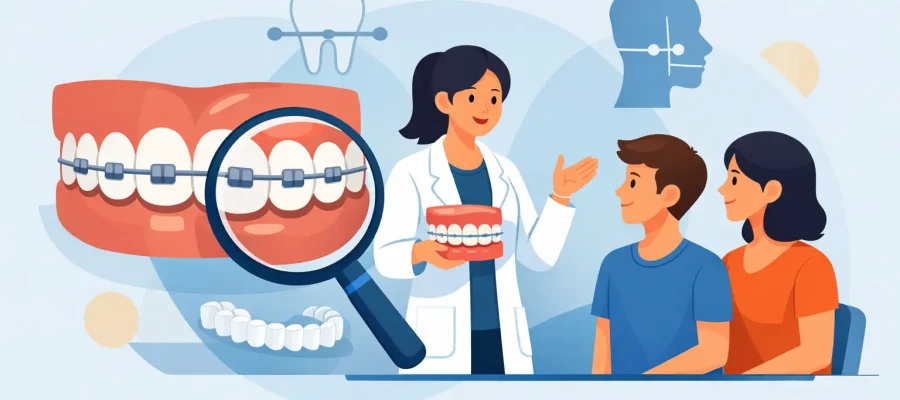
A smile can look bright, white, and expensive – and still feel off when the teeth do not line up correctly. If you have ever noticed crowding, spacing, a deep overbite, or teeth that seem to shift in photos, you have already seen why this field matters. So, what is orthodontics? It is the area of dentistry focused on guiding teeth and jaws into better alignment for function, balance, and appearance.
Orthodontics is often reduced to “getting braces,” but that misses the bigger picture. Proper alignment affects how your smile looks, how your bite feels, how evenly your teeth wear over time, and in some cases how easy they are to clean. For patients investing in cosmetic dentistry, orthodontics can also be the difference between a smile that simply looks better and one that is built on stronger planning.
What is orthodontics in dentistry?
Orthodontics is a dental specialty that diagnoses, prevents, and corrects misaligned teeth and jaw relationships. The goal is not just straight teeth. It is a more controlled bite, better spacing, improved symmetry, and a smile that works as well as it looks.
An orthodontic plan may address crowded teeth, gaps, protruding front teeth, crossbites, overbites, underbites, and midline issues. Some cases are mild and mostly aesthetic. Others affect chewing, speech, enamel wear, or long-term stability.
This is where the conversation becomes more sophisticated than many patients expect. Two smiles can look similar at first glance, but the underlying bite can be very different. One patient may need minor alignment before veneers. Another may need a more comprehensive tooth movement plan because the jaw relationship is part of the problem. The treatment depends on the biology, not just the photo.
Why orthodontics matters beyond straight teeth
Straight teeth are the visible win, but they are not the only reason orthodontics matters. When teeth meet properly, pressure is distributed more evenly across the bite. That can help reduce uneven wear, lower the risk of chipping in some cases, and make oral hygiene easier because overlapping areas are less difficult to brush and floss.
There is also the aesthetic side, and for many adults that is the starting point. Orthodontics can improve smile arc, tooth display, and facial balance in a way that feels natural rather than forced. A well-aligned foundation often allows cosmetic work to be more conservative. Instead of over-preparing healthy teeth to fake symmetry, alignment can create that symmetry more precisely.
That said, not every patient needs full orthodontic treatment before cosmetic dentistry. Sometimes the fastest and most predictable route is restorative. Sometimes a short alignment phase creates a much better final result. It depends on your timeline, your goals, and how much correction is actually needed.
Who needs orthodontic treatment?
Children and teens are the most familiar orthodontic patients, but adults now make up a major part of treatment demand. Many adults skipped braces earlier in life, relapsed after treatment, or want a more refined smile before a wedding, camera-facing role, business milestone, or major life event.
You may benefit from orthodontics if your teeth are crowded, spaced unevenly, or visibly rotated. It can also be worth evaluating if your upper and lower teeth do not meet comfortably, if one side bites differently than the other, or if you are noticing excessive wear in certain areas.
Some signs are subtle. You might chew mostly on one side, feel that your front teeth hit too hard, or notice that cosmetic bonding keeps chipping in the same place. Those are not always orthodontic problems alone, but alignment is often part of the story.
Common orthodontic problems
Orthodontics treats a wide range of bite and alignment issues. Crowding happens when there is not enough room for teeth to sit in the correct position. Spacing is the opposite problem, where gaps interrupt smile continuity and bite contact. Overbite refers to excessive vertical overlap of the upper front teeth over the lower ones, while underbite places the lower teeth too far forward.
Crossbite means some upper teeth sit inside the lower teeth instead of outside them. Open bite leaves a gap when the back teeth touch but the front teeth do not. There are also midline discrepancies, where the center of the upper teeth does not match the center of the lower teeth or face.
Each condition has different aesthetic and functional consequences. A small gap may be mostly cosmetic. A severe crossbite can affect tooth wear and jaw comfort. That is why real diagnosis matters more than self-diagnosis based on mirror checks or social media photos.
How orthodontics works
Orthodontic treatment works by applying controlled force over time to move teeth through bone. That sounds technical, but the concept is simple: pressure on one side of a tooth and relief on the other side allow the surrounding bone to remodel gradually. The tooth then shifts into a planned position.
Because this is a biological process, speed has limits. Teeth can be moved efficiently, but not recklessly. Faster is appealing, especially for international patients and adults on a deadline, yet safe movement still requires staging, monitoring, and realistic expectations.
Planning usually starts with digital scans, photos, and bite analysis. In more advanced workflows, the clinician maps the desired tooth positions before treatment begins. This matters because orthodontics is not just about moving teeth into a straight line. It is about deciding where each tooth should finish so the smile, bite, and facial proportions work together.
Types of orthodontic treatment
Traditional braces remain highly effective, especially for more complex movements. Metal brackets are visible, but they offer strong control and predictable mechanics. Ceramic braces are less noticeable, though they may not be ideal for every case.
Clear aligners have become especially popular with adults because they are discreet, removable, and easier to fit into a professional or social lifestyle. They can be excellent for mild to moderate alignment issues and selected complex cases. The trade-off is compliance. If you do not wear them as directed, treatment slows down or loses precision.
Some patients need additional tools such as elastics, expanders, or retention devices. In severe skeletal cases, orthodontics may be combined with jaw surgery, though that is a very different category from routine cosmetic alignment.
For image-conscious adults, the choice often comes down to visibility, comfort, travel schedule, and complexity. The best option is not always the least visible one. It is the one that can deliver the required movement with the fewest compromises.
What is orthodontics doing before cosmetic dentistry?
This is where orthodontics becomes especially relevant in high-end smile design. If teeth are significantly crowded, flared, or unevenly spaced, moving them first can create a cleaner canvas for veneers, crowns, or whitening. The result often looks more natural because the restorations do not need to compensate for as much misalignment.
In premium aesthetic dentistry, the smartest treatment plan is not always the most aggressive one. Orthodontics can reduce how much tooth structure needs to be reshaped and can improve symmetry before final cosmetic work begins. For the right patient, that means better proportions, more conservative dentistry, and a more stable finish.
For other patients, especially those seeking rapid transformation, restorative treatment may be planned without a separate orthodontic phase. That can still produce beautiful results when case selection is disciplined and the smile is designed with precision. The key is knowing when alignment should come first and when it should not.
How long does orthodontic treatment take?
Treatment time varies widely. Minor cosmetic alignment may take a few months. More comprehensive bite correction often takes 12 to 24 months, sometimes longer. The timeline depends on the amount of movement, the type of appliance, patient compliance, and whether the case involves jaw discrepancies rather than tooth position alone.
Adults often ask if treatment can be accelerated. Sometimes it can be streamlined through better planning and focused goals, but there is no universal shortcut that replaces biology. A realistic schedule is part of quality care.
If you are combining orthodontics with cosmetic or restorative dentistry, sequencing becomes crucial. The right timing can save appointments, improve results, and reduce the need for revisions later.
Is orthodontics worth it for adults?
For many adults, yes – especially when confidence, camera-readiness, and long-term smile quality all matter. Orthodontics is one of the few treatments that can change both aesthetics and function at the same time. It can refine the smile in a way whitening never will and support restorative work in a way veneers alone sometimes cannot.
The return is not only visual. Patients often report that their smile feels easier to maintain, more comfortable in motion, and more balanced in photos. That kind of precision matters when you want your result to look intentional, not merely improved.
At a clinic like DRGO Smile, where digital planning and high-aesthetic outcomes shape the patient journey, orthodontic evaluation can be a smart part of a larger smile strategy rather than a standalone decision. Sometimes it is the main treatment. Sometimes it is the move that makes the final transformation more refined.
If you are asking what is orthodontics, the clearest answer is this: it is the science of putting your smile in the right position before the world sees it at its best. The smartest next step is not guessing whether you need it, but getting a plan built around the result you actually want.