


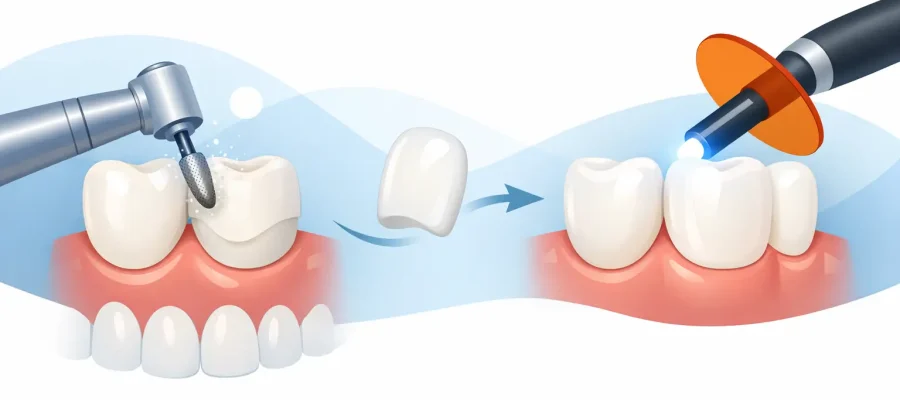
If you are choosing veneers for a wedding, a rebrand, a media appearance, or simply because your current smile no longer matches how you see yourself, you do not want vague promises. You want to know exactly what happens, how long it takes, how much tooth reduction is involved, and what the final result can realistically look like. That is why understanding the e max veneer step by step process matters.
E-Max veneers are thin ceramic shells made from lithium disilicate, a material known for its combination of strength, light transmission, and refined aesthetics. They are often selected for patients who want a brighter, more symmetrical, more polished smile without the heavier look that can come from bulkier restorations. Done well, they look clean, natural, and camera-ready.
The key phrase there is done well. Great veneers are not just about placing ceramic on teeth. They are about diagnosis, design, preparation discipline, bite control, and bonding precision. Here is how the process works when it is planned properly.
Why patients choose E-Max veneers
E-Max is popular for a reason. It reflects light in a way that can mimic natural enamel, which is why it is often used in smile makeover cases where aesthetics are the priority. It can correct shape, length, minor spacing, surface wear, and discoloration that does not respond well to whitening.
That said, E-Max veneers are not the answer for every case. If teeth are heavily damaged, structurally weak, or affected by severe grinding, a different restorative option may be more predictable. If alignment problems are significant, orthodontics may need to come first. The best result starts with choosing the right treatment, not forcing the wrong one.
E max veneer step by step: the real treatment journey
1. Consultation and smile analysis
Everything starts with assessment. This stage is about far more than deciding on a shade of white. The dentist evaluates tooth shape, gum levels, enamel quality, bite relationship, lip movement, facial proportions, and the way your smile appears when you speak.
Photos, digital scans, and in many cases video analysis help build a treatment plan with much more precision than a quick chairside opinion. If you are traveling for treatment, this planning stage often begins remotely so the clinical team can assess whether you are a strong candidate before you book.
The goal is simple: make sure the result is not just beautiful in isolation, but balanced on your face.
2. Digital smile design and preview
This is where the treatment becomes tangible. Using digital design tools, the clinician maps the proposed tooth shapes, proportions, and smile line. For many patients, this is the point where uncertainty drops. You stop imagining and start seeing direction.
A strong design process helps answer the questions patients care about most. Will the teeth look too large? Too opaque? Too artificial? Can the smile stay elegant rather than overly aggressive? These details are decided before ceramic is made, not after.
At clinics that focus on smile makeovers, this stage may also include a 3D preview or mock-up so you can visualize the new smile with more confidence.
3. Shade and aesthetic planning
Whiter is not always better. The most successful veneer shades are chosen based on skin tone, facial features, age, and the look you want. Some patients want a high-brightness Hollywood finish. Others want a softer luxury-natural result.
Surface texture, translucency, and edge effects matter just as much as the basic shade tab. These details are what separate a premium veneer smile from one that looks flat or fake in daylight.
4. Tooth preparation
This is often the part patients worry about most. In many E-Max veneer cases, preparation is conservative, meaning only a minimal amount of enamel is adjusted to create space for the ceramic. The exact amount depends on the starting position of the teeth, the desired shape change, and how bright the veneers need to be.
If teeth already project forward, some preparation is needed to avoid an overbuilt final result. If only very minor refinement is required, reduction may be limited. The discipline here is critical. Too much removal is unnecessary. Too little can compromise the aesthetics.
Preparation is usually performed under local anesthesia for comfort. Once complete, the teeth are scanned or molded for fabrication.
5. Temporary veneers if needed
Depending on the workflow and timeline, temporary veneers may be placed while the final restorations are being made. These temporaries protect the prepared teeth and give you an early sense of shape and length.
They are not the final finish, so patients should not judge the completed smile by the temporary stage alone. Still, they can be useful for checking phonetics, smile line, and general comfort.
In advanced digital clinics, fabrication can move quickly, which is especially valuable for international patients who want efficient treatment with minimal downtime.
6. Laboratory fabrication
This is where design turns into ceramic. The lab uses the approved plan, scans, and shade instructions to create the veneers with careful attention to fit, contours, translucency, and polish. This stage matters more than many patients realize.
A premium result depends on communication between clinician and lab. If the planning is generic, the veneers often look generic. If the planning is exact, the restorations can look highly individualized.
For patients seeking a signature smile, craftsmanship is not optional. It is the difference between acceptable and exceptional.
7. Try-in and fit check
Before final bonding, the veneers are placed on the teeth for evaluation. The dentist checks marginal fit, bite, symmetry, midline, length, color balance, and overall harmony with the face. You also get the chance to see the proposed result.
This stage is where small refinements can be made. Sometimes the plan is perfect as designed. Sometimes tiny changes in edge length or contour make the smile feel more natural and more powerful. Precision at this point protects the final outcome.
Bonding E-Max veneers step by step
8. Tooth surface preparation for bonding
Once the veneers are approved, the teeth are cleaned and prepared for adhesive bonding. This involves specific surface treatment so the bonding agent can create a strong, lasting connection between the tooth and the ceramic.
This is not a casual cementation process. With E-Max, bonding protocol is a technical stage that directly affects longevity and performance. Moisture control, timing, and material handling all matter.
9. Veneer conditioning and adhesive placement
The inner surface of each veneer is treated according to ceramic bonding protocol. Then adhesive materials are applied with care to optimize retention and esthetics. The veneer is seated in place, excess cement is removed, and the restoration is cured.
Each veneer is placed with attention to alignment and contact. This is detailed work. Rushing this part is how beautiful veneers turn into functional problems.
10. Final finishing and bite adjustment
After bonding, the dentist checks your bite in static and dynamic movement. This step is essential. A veneer can look excellent and still fail early if the bite is not managed correctly.
Final polishing, margin refinement, and occlusal adjustment help protect the veneers and improve comfort. You should leave not only with a better-looking smile, but with one that feels correct when you speak and chew.
What recovery and aftercare look like
Most patients return to normal activity quickly. Some experience mild sensitivity in the first days, especially with cold foods or drinks, but this usually settles. There may also be a short adaptation period as your lips and tongue get used to the new contours.
Aftercare is straightforward but important. Brush well, floss carefully, avoid using teeth as tools, and be cautious with very hard foods. If you grind your teeth at night, a protective night guard may be recommended. Veneers are strong, but they are not indestructible.
Regular reviews help maintain the result. A premium smile should be monitored like any high-value investment.
How long the process takes
It depends on the complexity of the case and the clinic workflow. Some patients need a staged approach with gum contouring, whitening, or bite correction before veneers. Others can complete treatment in a much faster cosmetic timeline.
For international patients, this is where organized planning becomes a major advantage. A clinic that combines digital design, efficient lab coordination, and tightly managed appointments can compress treatment time without sacrificing precision. At DRGO Smile Clinic, that speed is paired with a curated patient journey, so the experience feels controlled from arrival to final smile reveal.
Are E-Max veneers worth it?
For the right patient, yes. They offer one of the most refined cosmetic upgrades in dentistry when the goal is elegance, brightness, and facial harmony. But they are worth it only when the case is selected correctly and executed with discipline.
The best veneer result does not scream dentistry. It changes how your whole face reads – more polished, more confident, more camera-ready – while still looking like you. If that is the outcome you want, the smartest next step is not guessing. It is getting a proper assessment and seeing what your smile could look like before treatment even begins.