


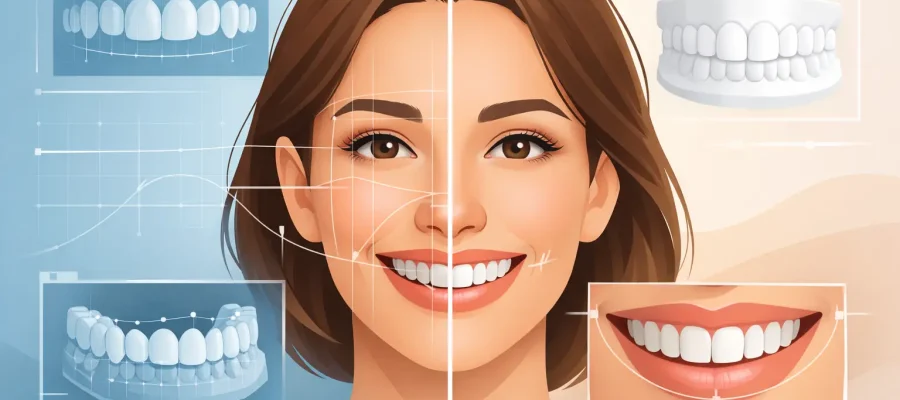
A strong smile makeover should not start with guesswork. When patients ask for a digital smile design before after example, what they usually want is simple: proof that the result they see on screen can translate into a real, wearable smile that fits their face, bite, and goals.
That is exactly where Digital Smile Design earns its value. It turns a cosmetic dental plan from a vague promise into a mapped outcome. Instead of choosing veneers or crowns based on a generic shape chart, the dentist builds your future smile around facial proportions, lip movement, gum display, tooth position, and function. For international patients flying in for treatment, that level of planning matters even more. It reduces surprises, shortens decision time, and makes fast treatment timelines feel far more secure.
What a digital smile design before after example actually shows
Most patients look at before and after photos and focus on whiteness or tooth shape. A true Digital Smile Design example shows much more than that. The “before” is not only the starting smile. It includes the underlying issues that affect the final result – worn edges, short teeth, asymmetry, old crowns, gaps, crowding, dark shades, missing teeth, or uneven gums.
The design phase sits between the before and after. This is the part many clinics skip over in their marketing, but it is the reason some results look elegant and natural while others look flat, oversized, or artificial. A proper design process uses photos, video, digital scans, and bite records to create a smile that works from the front view and in motion.
Then comes the “after.” In a high-quality case, the final result should look cleaner, brighter, and more balanced without looking disconnected from the patient’s face. The best after photos do not scream that dental work was done. They look polished, intentional, and believable.
A realistic before and after scenario
Imagine a patient in her mid-30s from the US traveling for a smile makeover before her wedding season. Her main concerns are worn front teeth, uneven edges, a slightly narrow smile, and two older restorations that no longer match the surrounding teeth. She wants a brighter smile, but not one that looks too square or overly opaque.
In the before stage, her smile appears tired rather than unhealthy. The teeth are not severely damaged, yet small imperfections combine to create a dated look. This is common. Many premium cosmetic cases are not about repairing dramatic dental failure. They are about refining proportion, brightness, and symmetry to produce a stronger overall presence.
During Digital Smile Design, the dentist studies her facial midline, smile arc, lip support, and how much tooth shows when she speaks. A digital preview is created to test new tooth length, contour, and width. At this point, there are decisions to make. If she wants maximum brightness, the team can design for that. If she wants a softer and more natural finish, translucency and shape can be adjusted. This is where luxury cosmetic dentistry becomes engineered rather than improvised.
In the after result, the teeth are slightly longer, more even, and better aligned visually. The smile fills the corners of the mouth more attractively. The restorations blend with the natural dentition or are replaced entirely for consistency. The gum line may be refined if needed. The final effect is not just whiter teeth. It is a sharper, more expensive-looking smile that suits her face in photos, in conversation, and under different lighting.
Why the planning stage changes the final result
The difference between a standard cosmetic consultation and Digital Smile Design is predictability. Without digital planning, many decisions happen chairside or rely too heavily on verbal descriptions like “natural” or “Hollywood.” Those words mean different things to different people.
With a digital workflow, the design can be visualized before final restorations are made. That matters for veneers, zirconium crowns, E-Max restorations, and full-mouth rehabilitation. It matters even more in complex cases involving implants, gum asymmetry, or worn bites.
A patient may arrive thinking they need only whitening and veneers, then discover the real issue is proportion or gum level. Another patient may request very large teeth, but a preview reveals that the look would overpower their face. Digital planning helps narrow the gap between expectation and outcome. It does not remove every variable, but it dramatically improves control.
Where before and after examples can be misleading
Not every smile makeover photo tells the full story. Lighting, camera angle, lip position, and retouching can make average work look exceptional. That is why the most useful digital smile design before after example includes context about what changed and why.
A bright result is not automatically a better result. Ultra-white restorations can look impressive online but feel unnatural in person if they clash with skin tone, facial softness, or age. Likewise, very uniform teeth may photograph well yet remove the individuality that makes a smile attractive.
There is also a practical trade-off. The most aggressive cosmetic transformation is not always the most conservative one. Some patients are ideal candidates for minimal-prep veneers. Others need crowns because of old restorations, structural damage, or bite issues. In implant cases, the design must respect bone support, speech, hygiene access, and long-term stability. Beautiful dentistry still has to function.
How the process typically works for international patients
For patients traveling for treatment, speed matters, but speed without planning is a risk. A premium clinic will usually begin with photo review, medical and dental history, and an assessment of the patient’s goals before travel is confirmed. Once on site, digital scans, imaging, and a full aesthetic analysis are used to refine the plan.
The design preview gives the patient a clearer sense of the intended outcome before final production begins. Depending on the case, there may also be a mock-up or trial smile. This stage is especially valuable for patients who want control over details like tooth shape, feminine versus masculine contours, incisal edge length, and how bright the final shade should be.
From there, treatment moves into preparation, temporary restorations if required, and final fabrication using CAD/CAM or laboratory-supported workflows. In well-organized same-visit or short-stay systems, this can happen far faster than many patients expect. But the speed only works because the planning is disciplined.
At DRGO Smile Clinic, this kind of workflow is built for patients who want a signature smile with a tightly managed travel and treatment experience, not a loose series of appointments with uncertain timing.
What makes a good candidate for Digital Smile Design
The strongest candidates are usually patients who care about visible detail. If you are comparing veneer shapes, worried about looking too fake, planning for a wedding or media appearance, or replacing older cosmetic work, digital planning gives you more control.
It is also valuable for implant patients and full-mouth rehabilitation cases because the design phase helps coordinate surgery, bite position, gum levels, and final aesthetics. In these cases, the before and after difference can be dramatic, but the real win is that the result feels stable, comfortable, and intentional.
If your case is very minor, such as simple whitening with no shape changes, a full design workflow may not be necessary. But once multiple teeth, visible front restorations, gum aesthetics, or bite changes are involved, the benefit increases quickly.
What to ask when reviewing examples
When a clinic shows you a before and after case, ask what procedures were actually done. Was it whitening, veneers, zirconium crowns, gum contouring, implants, or a combination? Ask whether the preview matched the final result closely and whether a mock-up was used before final placement.
You should also ask how the design was personalized. A smile should not be copied from another patient or from an influencer photo without adapting it to your face. Precision is what separates premium smile design from trend-driven cosmetic dentistry.
The best example is not always the most dramatic one. It is the one that shows planning, restraint where needed, and a final result that looks expensive because it is balanced.
If you are considering treatment abroad, a digital smile design before after example should give you more than inspiration. It should give you confidence that your new smile can be planned before it is placed – and that changes to your appearance will feel deliberate, not left to chance.