


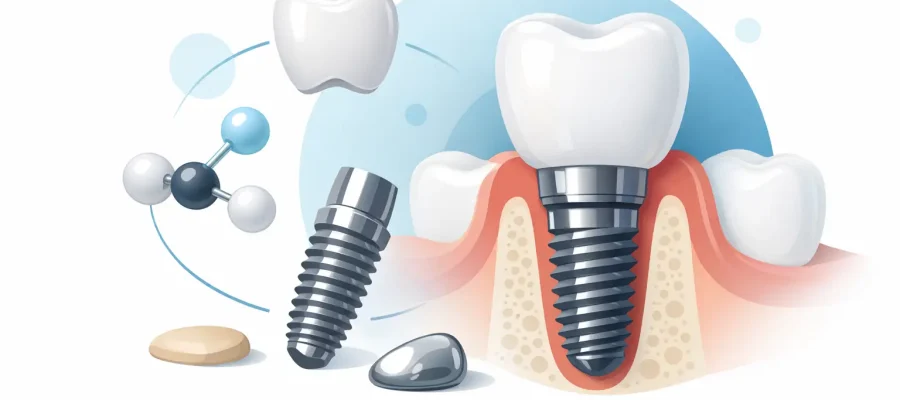
If you are comparing implant options, one question matters more than most: what are teeth implants made of, and how does that choice affect how they look, feel, and last? The short answer is that a dental implant is not one single piece. It is a system, and each part can be made from a different material depending on your bone, bite, smile design goals, and treatment timeline.
That distinction matters. Patients often think only about the visible tooth, but the visible part is just one layer of the final result. The post placed in the bone, the connector above it, and the crown you actually see all play different roles. If you want an implant that feels natural, photographs well, and performs under daily pressure, the material choice should be planned with the same precision as the surgery itself.
What Are Teeth Implants Made Of in Most Cases?
In most modern cases, the implant post is made of titanium. This is the small screw-like component placed into the jawbone to act as an artificial tooth root. Titanium became the standard for a reason: it is strong, lightweight, corrosion-resistant, and highly biocompatible. That means the body usually accepts it well, and the bone can fuse directly to its surface in a process called osseointegration.
On top of that implant post sits the abutment, which connects the implant to the crown. Abutments are often made from titanium too, although zirconia abutments are sometimes used in highly aesthetic areas, especially for front teeth where light reflection through the gumline matters.
The crown itself is usually made from ceramic-based materials. Common options include zirconia, porcelain fused to metal, or E-Max in carefully selected cosmetic cases. Each has a different balance of strength and beauty. For back teeth, strength often leads the decision. For front teeth, translucency and shape control become more important.
The Core Material: Why Titanium Is So Common
Titanium has earned its position because it performs exceptionally well under real-world conditions. It handles biting force, resists breakdown inside the mouth, and bonds predictably with bone. For single implants, multiple implants, and full-arch systems like All-on-4 or All-on-6, titanium remains the material most surgeons trust for long-term stability.
There are also different grades and alloys of titanium. Pure titanium is often used because of its excellent tissue compatibility, while titanium alloys may be chosen for added mechanical strength. Patients do not usually need to choose the exact grade themselves, but they should know that implant quality is not only about the material name. Surface treatment, engineering precision, and the implant brand all affect the result.
A well-made titanium implant placed with disciplined planning can support a restoration for many years. But material alone does not guarantee success. Bone quality, gum health, bite force, oral hygiene, and surgical accuracy all shape the outcome.
Zirconia Implants: The Metal-Free Alternative
When people ask what are teeth implants made of, they are often really asking whether implants can be made without metal. The answer is yes. Zirconia implants are the main metal-free alternative.
Zirconia is a high-strength ceramic known for its white color and aesthetic appeal. That white tone can be useful in patients with thin gums or a high smile line, where dark show-through from metal is a concern. It also appeals to patients who prefer a metal-free restoration for personal reasons.
That said, zirconia implants are not automatically better. They can be an excellent choice in selected cases, but they are less forgiving in some clinical situations. Titanium has the longer track record, wider design flexibility, and more extensive long-term data. Zirconia systems may also offer fewer component options, which matters when a case is complex or highly customized.
This is where planning matters more than trends. If the priority is maximum versatility and proven performance, titanium often leads. If the priority is a metal-free solution with strong aesthetics and the case is suitable, zirconia may be worth considering.
The Visible Tooth Is Usually Not the Implant
One of the biggest misconceptions is that the implant itself is the white tooth you see. It is not. The implant post stays hidden inside the bone. The visible part is the crown, bridge, or full-arch prosthesis attached above it.
That visible restoration can be made from several materials. Zirconia is one of the most popular options because it combines durability with a clean, premium look. It works particularly well in full-mouth and posterior cases where strength is essential.
Porcelain layered over a strong core can create beautiful, lifelike esthetics, especially in the front of the mouth. E-Max can also be used in the right cosmetic situations because it offers impressive translucency and a refined appearance. The trade-off is that not every highly aesthetic material is the best option for every bite. Someone with heavy grinding forces may need a more durable design, even if another material looks slightly more natural under studio lighting.
In premium smile planning, the goal is never to choose the prettiest material in isolation. It is to choose the material that delivers the right combination of shade, contour, strength, and long-term reliability for your face and function.
How Material Choice Affects Appearance and Feel
To patients, the most obvious concern is whether the implant will look like a real tooth. Material affects that, but often in indirect ways.
Titanium is hidden, so it rarely affects the final look unless the gums are extremely thin or the soft tissue recedes over time. In those cases, the underlying color of the abutment or implant can influence how the gumline appears. That is why zirconia abutments are sometimes chosen in the smile zone.
The crown material affects appearance more directly. Zirconia tends to be slightly more opaque, which can be helpful for masking darkness and creating consistency. Layered ceramics can look more translucent and natural, but they may require more careful case selection. The right answer depends on your gum biotype, adjacent teeth, bite pattern, and the level of cosmetic precision you want.
Feel is a different question. A well-integrated implant should feel stable and comfortable, but it will never feel exactly like a natural tooth because it does not have the same periodontal ligament. Material does not change that basic reality as much as good placement and correct bite adjustment do.
Are These Materials Safe?
For most patients, yes. Titanium has decades of clinical use behind it and is considered very safe in implant dentistry. True titanium allergy is rare, though some patients with specific sensitivities may ask about zirconia instead.
Zirconia is also biocompatible and widely used in dentistry. The more practical question is not usually safety versus danger. It is suitability. Which material fits your anatomy, expectations, and restoration design best?
A premium treatment plan should account for more than the material brochure. It should consider bone volume, gum architecture, whether immediate loading is possible, and how the restoration will look on camera and in person. That is especially relevant for international patients booking treatment around a wedding, media appearance, business launch, or other fixed deadline.
What Are Teeth Implants Made Of for Full-Arch Cases?
In full-arch treatment, the implanted fixtures are still most often titanium. That is because full-arch cases demand excellent strength, precision, and long-term load distribution across multiple implants.
The bridge attached on top may be made from zirconia or from a hybrid design that combines different materials for strength and shock absorption. The choice depends on bite force, facial aesthetics, arch shape, and budget. Some patients are better served by monolithic zirconia for durability and polish. Others may benefit from a layered or hybrid prosthesis when comfort, weight, or esthetic detailing is the priority.
This is where digital planning changes everything. In advanced clinics, 3D imaging and smile design allow the team to choose materials not just by category but by how they will perform in your exact mouth. That level of control is how clinics like DRGO Smile create fast, high-aesthetic outcomes without guessing.
So Which Material Is Best?
There is no single best material for every patient. There is the best material for your case.
If you want the most established implant foundation with the strongest long-term track record, titanium is usually the leader. If you want a metal-free option and your anatomy supports it, zirconia may be a strong fit. If your main focus is the visible tooth, then the conversation shifts from implant material to crown material, where zirconia, porcelain, and other ceramics each bring different advantages.
The smartest question is not simply what are teeth implants made of. It is which combination of materials will give you a result that is stable, attractive, and realistic for your timeline. When that decision is made through detailed imaging, bite analysis, and cosmetic planning, the implant becomes more than a replacement tooth. It becomes part of a smile that looks engineered, not improvised.
If you are considering treatment, ask to see exactly which materials are used for the implant, abutment, and final restoration – and why. The best providers will not just name the material. They will show you how that choice supports the result you want to wear every day.