


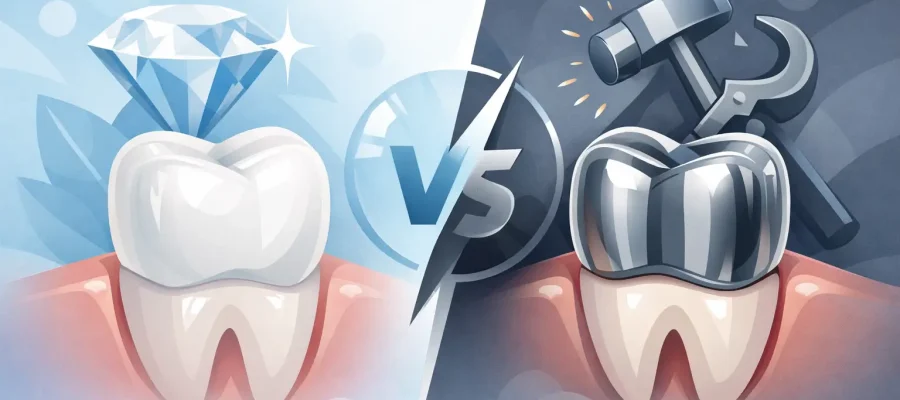
You notice it fastest in photos. A crown that technically works can still look flat, dark at the gumline, or just slightly off next to natural teeth. That is why the zirconium vs metal crown decision matters more than many patients expect, especially if your goal is not just to fix a tooth, but to upgrade your smile with a result that looks intentional, polished, and camera-ready.
For back teeth that take heavy bite pressure, both options can perform well. The real difference shows up in aesthetics, light reflection, gum response, and how confidently the restoration blends into your smile over time. If you are planning cosmetic dentistry, preparing for a wedding, building a more refined smile line, or traveling for a faster full-mouth transformation, the crown material should match the outcome you actually want.
Zirconium vs metal crown: the real difference
A metal crown is typically made from a metal alloy, sometimes fully metallic and sometimes used as the inner base under porcelain. These crowns are strong and have been used in dentistry for decades. They are often chosen for function-first cases, especially in less visible areas.
A zirconium crown is made from zirconia, a highly durable ceramic material known for combining strength with a more natural appearance. It reflects light more like a real tooth than metal-based restorations do, which makes it a leading choice for visible teeth and smile design cases.
On paper, this can sound like a simple durability-versus-beauty conversation. In real treatment planning, it is more nuanced. Zirconium is not just the prettier option. In many modern cases, it is the better balance of appearance, strength, and tissue compatibility.
Appearance is where zirconium pulls ahead
If the crown sits anywhere near the front of your smile, material choice is rarely a small detail. It shapes how white your smile looks, how natural the surface reflects light, and whether the restoration disappears into the rest of your teeth or announces itself.
Metal crowns do not offer a natural tooth-like translucency. Even when porcelain is layered over metal, the substructure can affect the final look. In some patients, especially those with thinner gums, a darker line near the gum can become visible over time. That may not matter on a molar that never shows. It matters a lot on a smile makeover.
Zirconium crowns are built for aesthetic dentistry. They can be shade-matched with greater precision, and they create a cleaner, brighter, more uniform look across the smile. For patients pursuing a Hollywood Smile or a high-impact cosmetic upgrade, zirconium usually aligns better with the result they have in mind.
This is particularly relevant for international patients who want major visible change in a short treatment window. When the goal is a signature smile rather than a basic repair, the crown material has to support that level of finish.
Why light reflection changes everything
Natural teeth are not opaque blocks of white. They reflect and transmit light in a specific way. That is one reason some crowns look artificial even when the shape is acceptable.
Zirconium can be designed to mimic that optical behavior much more effectively than metal-based alternatives. The result is a smile that looks refined under daylight, indoor lighting, and flash photography. For image-conscious patients, that difference is not cosmetic fluff. It is the whole point.
Strength matters, but context matters more
Many patients assume metal must be stronger because it is metal. The reality is that zirconia is exceptionally strong and fully capable of handling heavy bite forces in many crown cases. It is widely used in both cosmetic and restorative dentistry because it performs under pressure while still delivering a premium appearance.
Metal crowns still have a place. In certain high-load posterior cases, especially where aesthetics are not a concern, they can be a practical choice. They also have a long clinical track record. But strength alone should not decide the case if the tooth is visible when you speak, smile, or laugh.
When patients ask which lasts longer, the honest answer is that both can be durable when they are properly planned, accurately fitted, and well maintained. Longevity depends on more than the material. Bite design, tooth preparation, oral habits such as grinding, and the precision of the crown fabrication all influence how well the restoration holds up.
That is why the conversation should move beyond material names and toward treatment design. A well-engineered zirconium crown will outperform a poorly planned metal crown, and the opposite is also true.
Gum health and comfort are part of the result
A crown is not judged only by how it looks on day one. It also has to sit well against the gums and remain comfortable over time.
Zirconium is highly biocompatible, which means soft tissues often respond very well to it. Many patients like the clean feel of zirconia-based restorations, especially in cosmetic zones where healthy-looking gums are part of the final appearance. If the gumline looks irritated or shadowed, even an expensive smile can lose its appeal.
Metal-based crowns can still function successfully, but some patients are more sensitive to metal alloys than others, and aesthetic changes around the gum margin can become more noticeable over time. Again, this may be acceptable for a non-visible molar. It is usually less appealing in premium smile design.
Which option is better for front teeth?
For front teeth, zirconium is usually the stronger candidate overall because it offers the appearance patients actually want without sacrificing performance. The front of the smile demands more than function. It demands symmetry, brightness, proportion, and a material that supports a natural-looking finish.
A metal crown on a front tooth is usually a compromise. It may restore the tooth, but it rarely delivers the kind of visual result associated with luxury cosmetic dentistry. If you are investing in your smile because your confidence, professional image, or milestone event matters, compromise is rarely the smart choice.
What about back teeth?
For back teeth, the answer depends on your priorities. If the tooth is completely out of sight and the case is purely functional, a metal crown can still be a reasonable option. If you want a uniform smile, prefer metal-free dentistry, or want the restoration to feel more premium and future-facing, zirconium remains highly attractive even in posterior areas.
Many patients today choose zirconium across multiple teeth because they want consistency. They do not want one standard for visible teeth and another for everything else. They want a smile that feels fully upgraded.
Cost is part of the conversation, but not the whole decision
Metal crowns can be less expensive in some settings, which is why they are still offered. But lower cost upfront does not always equal better value. If the appearance falls short of your expectations or the restoration becomes visibly less attractive over time, many patients end up wanting a replacement sooner than planned.
Zirconium usually sits in the premium category because the material and the aesthetic result justify it. For patients traveling for treatment, especially those combining dental care with a time-sensitive itinerary, choosing the crown that best matches the end goal can avoid disappointment and reduce the chance of future revisions.
The better question is not simply, which one costs less? It is, which one gives me the result I want to live with every day?
How the best clinics decide between zirconium and metal
The right clinic does not push a crown material based on habit. It plans around your smile line, bite, gum structure, facial proportions, and timeline. In advanced cosmetic workflows, crown selection is part of a larger design system that includes digital planning, mockups, and precise shade strategy.
That is where modern clinics create a different level of predictability. Instead of guessing what will look good, they engineer the result before the final crown is made. At DRGO Smile Clinic, this kind of planning is especially valuable for international patients who want speed without sacrificing control. When crowns are part of a larger transformation, material choice becomes a design decision, not just a technical one.
So which one should you choose?
If your priority is a natural-looking, bright, high-end smile that performs well and photographs beautifully, zirconium is usually the better answer. If your case is hidden in the back of the mouth, purely functional, and cost-sensitive, a metal crown may still be suitable.
Most patients seeking cosmetic improvement, visible upgrades, or full smile transformation are happier with zirconium because it supports the outcome they actually care about. It looks more refined, blends better, and feels more aligned with modern aesthetic dentistry.
The smartest choice is the one that fits your bite, your timeline, and the image you want to see in the mirror. If your crown is part of a bigger smile vision, choose the material that was made for that level of result.