


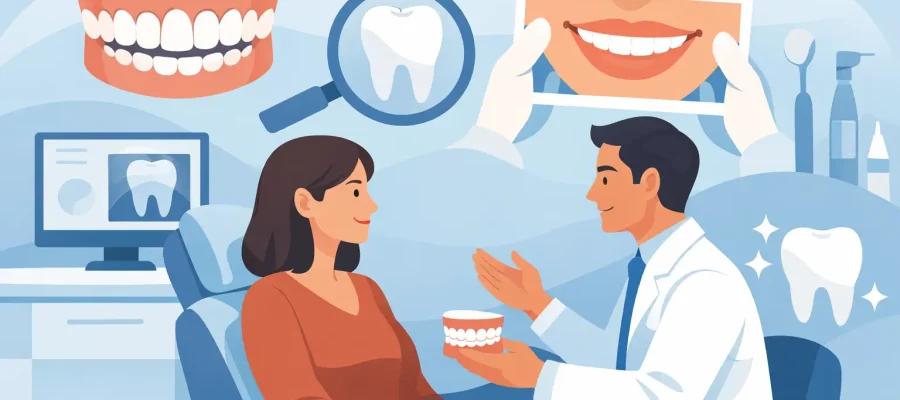
A cosmetic consultation should feel more like a design appointment than a quick dental checkup. If you are researching what to expect during your first cosmetic dental consultation, expect a focused conversation about the smile you want, the clinical foundation required to create it, and the exact path from your current teeth to a result you will feel proud to show.
For international patients, this first step also answers practical questions that matter just as much as aesthetics: Can your treatment be completed in one trip? Will veneers, crowns, implants, or whitening deliver the look you have in mind? How many days should you allow in Istanbul? A premium consultation turns those unknowns into a clear, personalized plan.
Your Consultation Starts With Your Vision
The first conversation is about more than choosing the whitest shade or asking for a “Hollywood Smile.” Your dentist will want to understand what prompted the change. You may be preparing for a wedding, building a public-facing career, recovering confidence after years of dental problems, or simply ready for a smile that matches the way you feel.
Be direct about what you love and what you want to change. Bring photos of smiles you find attractive if they help explain your taste. They are useful references, but not a template. A smile that looks natural and balanced on someone else may not suit your facial proportions, lip shape, gum line, or tooth structure.
You should also discuss your timeline. A patient who needs a camera-ready result before an event may be a candidate for a fast, carefully planned workflow. Someone with significant decay, gum disease, missing teeth, or bone loss may need staged treatment before final cosmetic work can begin. Speed is valuable, but only when the foundation is healthy enough to support a predictable result.
A Full Clinical Assessment Comes Before Smile Design
Beautiful dentistry has to work as well as it looks. Your consultation will include a detailed assessment of your teeth, gums, bite, and jaw function. The clinical team may take digital X-rays, photographs, intraoral scans, and, when implants or surgical treatment are being considered, 3D imaging.
These records reveal details that a mirror cannot. Your dentist can assess old fillings and crowns, enamel thickness, tooth wear, decay, gum symmetry, bite pressure, and the available bone for implants. If you clench or grind your teeth, that matters too. It can affect whether E-Max veneers, zirconium crowns, or another restorative option is the smarter long-term choice.
This is also the moment to share your complete health history. Mention medications, allergies, previous dental trauma, smoking or vaping, jaw pain, sleep issues, and any past cosmetic treatment that did not meet your expectations. There is no benefit in minimizing these details. The more accurately your dentist understands your situation, the more precisely your treatment can be planned.
What Your Dentist Is Evaluating
A cosmetic consultation is not a search for a one-size-fits-all package. The team is evaluating whether your desired result can be achieved safely and whether the recommended materials will perform well in your mouth. For example, veneers may be ideal when teeth are healthy but uneven, stained, chipped, or slightly misaligned. Crowns may be more appropriate when teeth are heavily restored, weak, or structurally compromised.
If teeth are missing or cannot be saved, implants may be part of the conversation. Depending on your oral health and bone volume, immediate implant placement or fixed full-arch options such as All-on-4 or All-on-6 may be possible. In other cases, bone grafting, a sinus lift, or healing time is required first. A trustworthy consultation makes these distinctions clear rather than promising the same solution to every patient.
You Will See Your Smile Before Treatment Begins
One of the most valuable parts of a modern cosmetic consultation is Digital Smile Design. Instead of relying only on verbal descriptions, your dentist can use scans, facial photographs, and digital planning tools to map proportions, tooth length, smile width, and color against your features.
A 3D preview helps turn broad goals like “natural but brighter” or “more even and youthful” into a visible direction. You can discuss whether you prefer a soft, understated look or a brighter, more defined Hollywood Smile. You can also see why small changes in tooth shape or gum contour can dramatically affect the final expression.
A preview is a planning tool, not a careless promise that every pixel will be copied exactly. Final results depend on your natural anatomy, bite, tissue response, and the material selected. Still, it gives you an active role before irreversible work begins. You should leave knowing what is being proposed and why it suits your face, not simply how many units are being recommended.
Expect Honest Options, Not a Single Sales Script
Your dentist should walk you through the options that fit your case, including the advantages and trade-offs. Teeth whitening can brighten healthy natural enamel but will not change the color of existing crowns or veneers. Gum aesthetics can improve a gummy or uneven smile, but it may need to be coordinated with restorations for the proportions to look right.
E-Max veneers are prized for lifelike translucency and can be an excellent choice for many front-tooth smile makeovers. Zirconium crowns offer high strength and are often preferred when a tooth needs more structural coverage or when bite forces are heavier. The best material depends on the tooth, its position, your bite, and your aesthetic target.
You should feel comfortable asking whether a more conservative option exists. Sometimes whitening, bonding, orthodontic alignment, or replacing only a few old restorations is enough. Other times, a complete smile makeover produces the more balanced and durable outcome. The right plan is the one that protects oral health while delivering a result that looks intentional, not overdone.
Your Timeline and Travel Plan Become Clear
For patients traveling from the United States, treatment logistics are part of the consultation, not an afterthought. Once your scans and clinical needs are reviewed, you can discuss whether your plan suits a single visit, requires two trips, or needs a longer healing period.
Many cosmetic cases follow a precise sequence: preparation, digital impression, temporary smile or try-in, design approval, and final placement. Advanced CAD/CAM workflows can reduce waiting time for selected crown cases, while more complex implant and full-mouth cases require a treatment timeline that respects biology and healing.
At DRGO Smile Clinic, international planning can also include accommodation, VIP transfers, interpreter support, and a schedule designed around your appointments. That concierge structure is useful, but it should never rush clinical decisions. Your dentist should explain how many visits are needed, how long each appointment may take, what recovery feels like, and whether you will need a night guard or follow-up care after returning home.
You Should Receive Transparent Pricing and Next Steps
By the end of a strong consultation, pricing should feel clear rather than vague. Ask what is included in the proposed treatment plan: diagnostic records, temporary restorations, final veneers or crowns, implant components, medications, follow-up visits, transportation, and hotel arrangements if you are booking an all-inclusive package.
It is equally smart to ask what could change the price. Additional decay removal, root canal treatment, extractions, grafting, or unexpected adjustments may be necessary if the examination reveals issues that were not visible in initial photos. Clear pricing does not mean pretending contingencies never happen. It means explaining them before treatment begins.
You should also leave with practical aftercare guidance. Cosmetic restorations are durable, but they are not indestructible. If you grind your teeth, a protective night guard may be essential. If you drink coffee, red wine, or smoke, whitening maintenance and cleaning habits may affect how your smile ages. A premium result deserves a plan for protecting it.
Questions Worth Asking Before You Commit
Ask to see cases similar to yours, especially if you have worn teeth, a gummy smile, old crowns, missing teeth, or a complex bite. Ask who will perform each stage of treatment and what happens if an adjustment is needed after you return home. If you are considering implants, ask whether immediate placement is clinically appropriate for you or simply convenient on paper.
Most of all, ask what your dentist would recommend if you were a family member. The answer should connect your goals to your oral health, timeline, and budget with confidence and without pressure.
Your first consultation is where a future smile becomes an engineered plan. Bring your questions, be candid about the result you want, and give yourself permission to choose only when the design, clinical reasoning, timing, and support all feel right.