


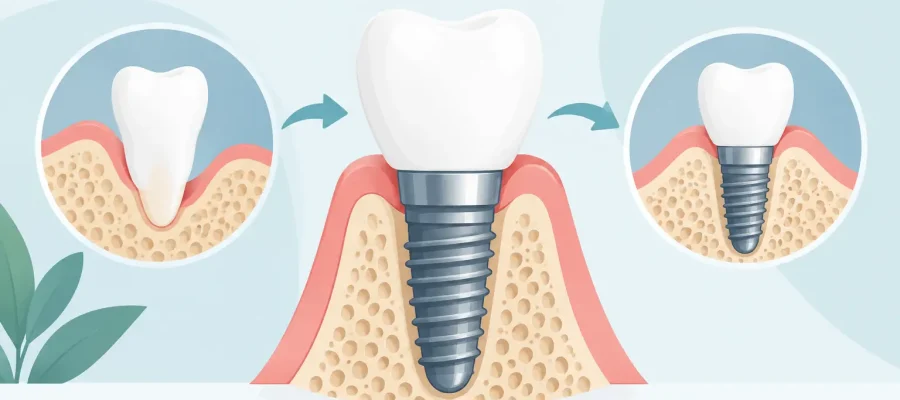
A missing tooth changes more than a photo or the way you chew. The jawbone beneath that tooth no longer receives the pressure it needs to stay active, and it can gradually shrink. So, can dental implants prevent bone loss? In many cases, yes. By replacing the missing tooth root as well as the visible tooth, an implant helps preserve the stimulation that supports a fuller, stronger jawline.
For patients considering a single implant, an All-on-4 full-arch restoration, or a complete smile makeover, this is one of the most valuable reasons not to leave a gap untreated. An implant is not only a cosmetic upgrade. It is a structural decision for your smile’s future.
Why Bone Loss Starts After a Tooth Is Lost
Your natural teeth have roots that sit in the jawbone. Every time you bite and chew, force travels through those roots into the bone. That force signals to the body that the bone is needed.
Once a tooth is extracted or lost, that signal disappears. The body begins to resorb, or break down, the unused bone in that area. This process can begin within the first months after tooth loss and may continue over time. The gumline can flatten, nearby teeth may start to shift, and the face can eventually take on a more sunken appearance.
This is why replacing only the visible portion of a tooth is not always enough. A traditional bridge can restore appearance and chewing function, but it sits above the gumline and does not replace a root. A removable denture can also improve appearance, yet it may place pressure on the gums rather than transmit natural chewing forces into the jaw.
How Dental Implants Help Prevent Bone Loss
A dental implant is a small titanium post placed in the jawbone, where it functions as an artificial tooth root. During healing, the bone attaches to the implant through a process called osseointegration. Once the implant is stable, it can support a custom crown, bridge, or full fixed arch.
When you chew with an implant-supported tooth, forces are directed into the jawbone. This is why implants can help preserve bone in the specific area where they are placed. They restore the root-level connection that other tooth-replacement options cannot provide.
The distinction matters. A beautifully crafted crown on an implant can recreate the shape, shade, and translucency of a natural tooth. More importantly, the implant beneath it helps protect the foundation supporting that result.
However, “prevent” does not mean an implant makes bone loss impossible. Bone levels depend on surgical planning, gum health, bite forces, daily cleaning, smoking status, medical conditions, and regular professional maintenance. The goal is to preserve as much healthy bone as possible and protect it long term.
Timing Matters: Earlier Placement Usually Protects More Bone
The best time to discuss an implant is often before an extraction, or immediately after one. In the right clinical case, an immediate implant may be placed on the same day the tooth is removed. This can reduce treatment stages and help preserve the natural shape of the gum and bone.
Immediate placement is not right for every patient. If there is significant infection, insufficient bone, active gum disease, or an unstable bite, a surgeon may recommend healing first. That is not a setback. It is a precision-first approach designed to give the implant the best conditions for lasting success.
For a front tooth, timing is especially significant because even small changes in the gumline and facial bone can affect the final aesthetic. Digital planning allows the team to evaluate the root position, bone volume, smile line, and ideal crown design before treatment begins.
Can an Implant Restore Bone That Is Already Gone?
An implant can preserve the bone that remains, but it does not automatically rebuild bone that has already been lost. If the jawbone is too thin or too short to anchor an implant securely, bone grafting may be recommended before or during implant placement.
A bone graft adds material that supports new bone formation and creates a stronger foundation for the implant. In the upper back jaw, a sinus lift may be needed when the sinus space sits too close to the available bone. These procedures sound complex, but they are routinely planned with 3D imaging to make placement more predictable.
For patients who have worn dentures for years, advanced bone loss does not always rule out fixed teeth. Full-arch solutions such as All-on-4 or All-on-6 use carefully angled implants and strategic placement to maximize the available bone. Some patients can receive fixed provisional teeth immediately after surgery, so they leave with a confident, functional smile while their implants heal.
The Full-Arch Difference: Fixed Teeth and Facial Support
When all or most teeth in an arch are missing, bone loss can affect more than one area. Dentures may restore the look of teeth, but they cannot fully replicate the stability of roots. Over time, a loose denture may need relining as the gum and bone ridge changes shape.
Implant-supported full arches are designed differently. The implants anchor a fixed bridge to the jaw, providing stronger biting stability and helping deliver stimulation across key areas of the arch. The result can be a major upgrade in function, confidence, and facial support.
This is also where detailed treatment design matters most. The position of every implant influences the bridge, bite, lip support, speech, and final smile proportions. At DRGO Smile Clinic, 3D Digital Smile Design and advanced imaging are used to plan the surgical and aesthetic stages as one coordinated result, rather than treating them as separate problems.
What Can Still Cause Bone Loss Around Implants?
Dental implants have an excellent record of long-term success, but they need the same level of care as natural teeth. Plaque bacteria can cause inflammation around an implant, known as peri-implant mucositis. If left untreated, it can progress to peri-implantitis, which may lead to bone loss around the implant.
The most common risks are preventable. Poor home care, skipped hygiene visits, untreated gum disease, smoking, uncontrolled diabetes, and heavy grinding can all affect long-term outcomes. A crown or bridge that is not designed with a balanced bite can also overload the implant.
For this reason, premium implant treatment is not simply about placing a post and attaching a crown. It requires a full evaluation of the gums, bone, bite, and final tooth design. Precision at the planning stage helps protect the investment you make in your smile.
Protecting Your Implant Investment
After treatment, brush carefully around the gumline, clean between teeth or beneath a fixed bridge with the tools recommended by your dentist, and keep scheduled hygiene appointments. If you grind your teeth, a custom night guard may protect both your restoration and your implants.
Pay attention to changes. Bleeding gums, swelling, a bad taste, looseness, or discomfort around an implant should be evaluated promptly. Implants should feel stable and natural, not something you have to think about every day.
Is an Implant Always the Best Choice?
Not every missing tooth needs the same solution. A patient with a small gap, healthy neighboring teeth, and enough bone may be an ideal candidate for a single implant. Someone missing an entire arch may benefit from All-on-4 or All-on-6. In a few cases, a bridge or removable option may be appropriate because of budget, medical history, anatomy, or personal preference.
The right treatment begins with a clear diagnosis, not a one-size-fits-all promise. A comprehensive consultation should include 3D imaging, gum assessment, bite analysis, and a discussion of the final smile you want to achieve. For international patients, that clarity is particularly valuable because it allows travel dates, treatment stages, and healing time to be planned with confidence.
A missing tooth does not have to become a slow structural compromise. The earlier you assess the bone and replace the root where appropriate, the more options you are likely to have. A well-planned implant can do more than complete your smile – it can help preserve the foundation that makes a confident result last.