


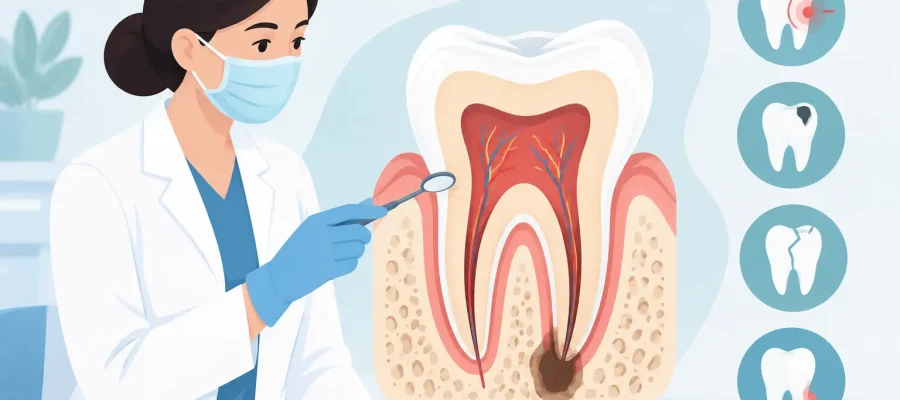
A tooth can look perfectly intact in a photo and still be in serious trouble underneath. Root canal treatment: when is it necessary? Usually, when the soft tissue inside the tooth has become inflamed, infected, or irreversibly damaged – and preserving the natural tooth is still the best clinical option.
For patients planning a smile makeover, crowns, or implant treatment, this distinction matters. A root canal is not a cosmetic shortcut or a procedure chosen simply because a tooth is sensitive. It is a precise restorative treatment designed to remove infection, relieve pain, and create a stable foundation for the smile you want.
Root canal treatment: when is it necessary?
At the center of every tooth is the pulp, a small chamber containing nerves, blood vessels, and connective tissue. The pulp helps a tooth develop, but once the tooth is fully formed, it can continue to function without it. When bacteria reach this inner tissue, the body cannot reliably clear the infection on its own because the space is enclosed.
A root canal may be necessary when deep decay, a crack, repeated dental work, trauma, or severe gum-related infection has affected the pulp. The goal is straightforward: remove the damaged tissue, disinfect the internal canals, seal them tightly, and restore the tooth so it can function comfortably again.
The alternative is often not “wait and see.” Untreated infection may cause increasing pain, an abscess, bone loss around the tooth, facial swelling, or eventual tooth loss. That is why a proper diagnosis is more valuable than guessing based on symptoms alone.
Signs that deserve a prompt dental assessment
Some teeth announce a problem clearly. Others become quiet after the nerve dies, even while infection continues around the root. Pain is meaningful, but its absence does not always mean the tooth is healthy.
Common warning signs include persistent toothache, sharp pain when biting, prolonged sensitivity to hot or cold, swelling or tenderness in the gums, a pimple-like bump near a tooth, darkening of a single tooth, or an unpleasant taste that keeps returning. A tooth that feels unusually high when you bite can also signal inflammation around the root.
However, these symptoms are not exclusive to root canal problems. A cracked tooth, gum infection, sinus pressure, bite imbalance, or temporary sensitivity after whitening can feel similar. This is why a clinical exam, digital X-rays, and pulp testing are essential before deciding on treatment.
Severe pain is not the only reason
A common misconception is that a root canal is only needed when pain becomes unbearable. In reality, some infections are found during routine imaging before they become dramatic. This is especially relevant for patients preparing for veneers, crowns, or full-mouth rehabilitation.
If a tooth has a hidden infection beneath an old restoration, placing a beautiful new crown over it without resolving the underlying issue can compromise the result. Premium dentistry begins with a healthy foundation, not just a brighter surface.
What happens during root canal treatment?
Modern root canal therapy is more controlled and comfortable than its reputation suggests. Local anesthesia is used to fully numb the area, and treatment is performed with careful isolation to keep the tooth clean and dry.
First, the dentist accesses the inner chamber of the tooth and removes infected or inflamed pulp tissue. The root canals are then cleaned, shaped, and disinfected. Because these channels can be exceptionally narrow and curved, precision matters. The dentist seals the canals with a biocompatible filling material to prevent bacteria from returning.
In many cases, the tooth is closed with a temporary restoration first, then permanently restored once the dentist confirms stability. Some straightforward cases can be completed in one visit, while more complex infections may require additional appointments or medication placed inside the tooth between visits. The right timeline depends on the anatomy of the tooth, the degree of infection, and your clinical response – not on a rushed promise.
Why the final restoration matters as much as the root canal
A root canal removes infection, but it does not automatically make the tooth strong. Teeth with extensive decay, old fillings, or large access openings can be more vulnerable to fractures afterward, particularly back teeth that take heavy chewing forces.
For many molars and premolars, a custom crown is recommended after treatment. It wraps the remaining tooth structure and helps protect it from splitting. Front teeth may sometimes need only a conservative bonded restoration, depending on how much healthy enamel remains and whether the tooth is exposed to heavy bite pressure.
This is where restorative planning and aesthetics must work together. The shape, shade, bite, and gumline of the final crown should support your wider smile design. At DRGO Smile Clinic, diagnostic planning can coordinate restorative needs with the aesthetic direction of your future smile, so urgent care does not derail the final result.
Root canal versus extraction: which is better?
When a natural tooth is restorable, saving it is often the preferred choice. Your own tooth has a natural ligament that supports bite feedback and maintains the surrounding bone. A successful root canal followed by a quality restoration can allow that tooth to function for many years.
That said, a root canal is not always the best investment. If a tooth is severely cracked below the gumline, has inadequate healthy structure left to support a crown, has advanced bone loss, or has a poor long-term prognosis, extraction and implant replacement may be the more predictable solution.
The decision should be based on prognosis, not pressure. Extraction can appear faster at first, but replacing a missing tooth involves additional planning, healing, and cost. Conversely, repeatedly treating a tooth with a hopeless prognosis can delay a more reliable implant solution. An experienced clinician will explain both paths clearly, including what each means for your timeline, appearance, and long-term oral health.
Planning root canal care when traveling for dentistry
International patients often want efficient treatment without cutting corners. If you are traveling for a smile makeover or restorative work, share recent X-rays, dental records, and any symptoms during your remote consultation whenever possible. This allows the clinical team to identify potential risks before your arrival and build a realistic schedule.
A root canal discovered during an in-person examination may affect the sequence of cosmetic treatment. It can mean treating the infection first, allowing the tooth to settle, and then completing the final crown or veneer plan. In other cases, treatment and restoration can be coordinated within the same travel window. The difference comes down to clinical findings, not a one-size-fits-all itinerary.
If you have facial swelling, fever, difficulty swallowing, trouble breathing, or rapidly spreading pain, seek urgent local medical or dental care rather than waiting for a trip. These symptoms can indicate a spreading infection that needs immediate attention.
What recovery usually feels like
It is normal to have mild tenderness when biting for a few days after treatment, especially if the tooth was painful or infected beforehand. Over-the-counter pain relief may be appropriate when recommended by your dentist, and it is wise to avoid chewing hard foods on the treated tooth until the final restoration is in place.
Call your dentist promptly if pain becomes severe, swelling appears or worsens, your bite feels uneven, or a temporary filling comes out. Root canal treatment has a high success rate, but follow-up and a well-sealed final restoration are part of protecting that success.
A tooth that needs a root canal is not a failed tooth. With the right diagnosis and restoration, it can become a stable, natural-looking part of a confident smile again. If one tooth feels different, do not wait for the pain to make the decision for you – a focused evaluation can protect both your comfort and your long-term smile plan.