


A missing tooth can change more than your bite. It can affect the way you smile in photos, speak in meetings, and choose what to eat. When comparing single tooth implant vs. dental bridge: which is the better option?, the right answer comes down to your bone health, adjacent teeth, timeline, aesthetic expectations, and long-term priorities.
For many patients, a single implant is the most conservative and premium solution because it replaces the missing tooth without altering healthy neighboring teeth. A dental bridge can still be an excellent restoration, particularly when speed, budget, or the condition of surrounding teeth makes it the smarter clinical choice. The goal is not simply to fill a gap. It is to restore a natural-looking smile with a plan built for your face, bite, and future.
Single Tooth Implant vs. Dental Bridge: The Core Difference
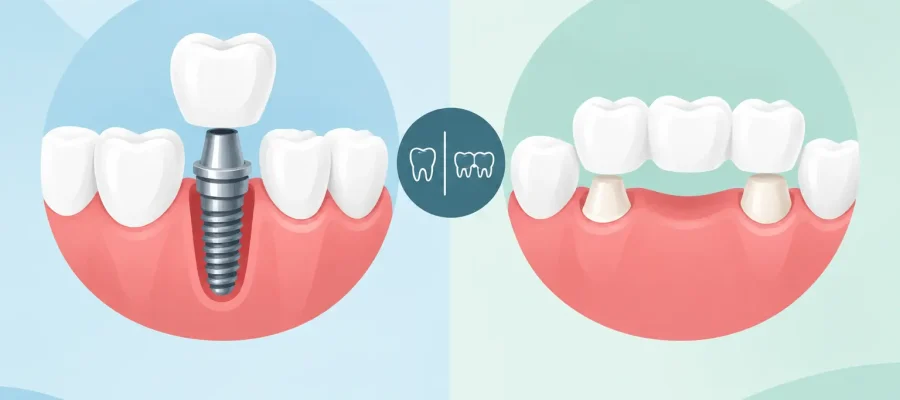
A single tooth implant replaces both the visible tooth and its root. A titanium implant is placed into the jawbone, where it integrates with the bone over time. Once stable, it supports a custom crown designed to match the color, shape, translucency, and bite of your natural teeth.
A dental bridge replaces the visible tooth above the gumline. The teeth on either side of the gap are prepared to support a connected restoration, usually made of three crowns: one crown on each supporting tooth and a false tooth in the center. In the right case, a bridge delivers a beautiful, fixed result without implant surgery.
The distinction matters because implants and bridges interact with the mouth differently. An implant stands independently. A bridge relies on neighboring teeth for support.
When a Single Tooth Implant Is the Better Choice
If the teeth next to the missing space are healthy and untouched, an implant is often the preferred option. It preserves those teeth rather than requiring them to be shaped for crowns. This is a meaningful advantage for patients who want the most tissue-conserving solution possible.
An implant also supports the jawbone in the area where the root was lost. After an extraction, the bone can gradually shrink because it no longer receives stimulation from a tooth root. While an implant cannot reverse every change that has already occurred, it can help maintain bone volume once placed. This is especially valuable in the smile zone, where gum contour and facial support influence the final aesthetic result.
For a front tooth, precise planning is essential. The crown must not only match the surrounding teeth but also emerge naturally from the gumline. Digital planning, 3D imaging, and a carefully designed provisional crown help create a result that looks like it belongs in your smile, not like it was added afterward.
Implants are also easier to clean in a familiar way. You brush and floss around one independent crown, rather than cleaning beneath a connected bridge. With consistent home care and professional maintenance, an implant can be a durable long-term investment.
That said, implant treatment requires adequate bone, healthy gums, and good overall healing conditions. Smoking, uncontrolled diabetes, active gum disease, heavy grinding, or limited bone volume can affect the plan. Some patients need a bone graft or sinus lift before implant placement, which adds time to treatment.
When a Dental Bridge Makes More Sense
A bridge is not a second-best choice by default. It can be the most efficient and clinically sensible answer in several situations.
If the teeth on either side of the missing tooth already have large fillings, old crowns, cracks, or cosmetic concerns, preparing them for a bridge may be appropriate. Rather than placing an implant between two teeth that already need major restoration, a well-designed bridge can renew the entire section in one coordinated treatment.
A bridge may also suit patients who are not candidates for implant surgery or who prefer to avoid a surgical procedure. It is typically completed faster than a conventional implant because there is no waiting period for bone integration. In many cases, preparation, temporary restoration, and final bridge placement can fit into a shorter treatment schedule.
For international patients, timing matters. A bridge may be appealing when a short visit is essential and the clinical situation supports it. However, speed should never replace planning. The supporting teeth, gum health, bite forces, and smile line all need close evaluation before choosing this route.
The trade-off is that bridges require preparation of adjacent teeth. They also do not replace the tooth root, so bone in the missing-tooth area may continue to change gradually over time. Cleaning requires special flossing tools or an interdental brush to access the area beneath the false tooth.
Aesthetics: Which Looks More Natural?
Both options can look exceptional when designed correctly. The quality of the result depends on diagnostic planning, materials, gum architecture, and the skill behind the restoration – not just whether you choose an implant or a bridge.
A single implant can offer the most natural illusion because it is individually positioned and emerges through the gumline like a natural tooth. In the front of the mouth, this independent structure gives the dentist more control over symmetry and contour. It is often the first choice for patients seeking a refined, camera-ready finish.
A bridge can also produce a beautiful result, especially when it replaces a tooth between two crowns. Matching shade and shape across all three units can create a polished, cohesive appearance. The key is avoiding a bulky design or a dark-looking gumline, particularly in highly visible areas.
At DRGO Smile Clinic, advanced digital smile planning can preview tooth proportions and smile harmony before final restorations are made. That planning is especially useful for patients who are restoring a missing tooth as part of a larger cosmetic upgrade, such as veneers, crowns, or a full smile makeover.
Treatment Time and Travel Planning
A traditional implant timeline is longer because the implant needs time to stabilize in the bone. Depending on your case, the process may involve implant placement, a healing period, and a return visit for the final crown. In selected cases with strong bone, healthy gums, and stable bite conditions, immediate implant placement with a temporary tooth may be possible after extraction.
Immediate does not mean rushed. It means the case has been carefully selected and digitally planned. The temporary tooth protects appearance during healing, while the final crown is completed once the implant is ready for its definitive restoration.
A bridge generally offers a faster route to a fixed tooth. After the supporting teeth are prepared, you wear a temporary bridge while the final restoration is crafted. Modern CAD/CAM workflows can shorten this timeline in suitable cases, but the final schedule still depends on the complexity of your bite and aesthetic requirements.
If you are traveling for treatment, share recent X-rays, photos, and your dental history before booking. A remote consultation can provide an initial direction, but final candidacy must be confirmed through an in-person examination and 3D imaging.
Cost: Look Beyond the First Price
A bridge often has a lower initial cost than an implant, particularly if no additional procedures are needed. But price should be viewed alongside longevity, maintenance, and the condition of adjacent teeth.
An implant may cost more upfront because it includes surgery, an abutment, and a final crown. If bone grafting is required, the investment rises further. Yet it may protect neighboring teeth from future preparation and can be a strong value over time when properly maintained.
A bridge can be highly cost-effective when adjacent teeth already need crowns. If those teeth are healthy, however, the lower initial price may come with the long-term trade-off of altering two teeth to replace one.
Neither option is maintenance-free. Implants need excellent gum care and regular monitoring to reduce the risk of inflammation around the implant. Bridges need meticulous cleaning underneath the replacement tooth and attention to the margins of the supporting crowns. Your bite also matters: patients who clench or grind may need a night guard to protect either restoration.
How to Make the Right Decision
Choose an implant when you want to preserve healthy adjacent teeth, protect bone where possible, and invest in an independent, highly natural-looking replacement. It is often ideal for a single missing tooth when the bone and gum conditions are favorable and you can accommodate the healing timeline.
Choose a bridge when the neighboring teeth already need crowns, you need a shorter treatment timeline, or implant surgery is not appropriate for your health or anatomy. A carefully crafted bridge can restore confidence, function, and aesthetics without compromising the quality of your smile.
The best decision starts with a full examination rather than a one-size-fits-all answer. Your scans, gum health, bite, smile design goals, and travel timeline should shape the treatment plan. A missing tooth deserves more than a quick replacement – it deserves a result that feels natural every time you smile, speak, and sit down for a meal.