


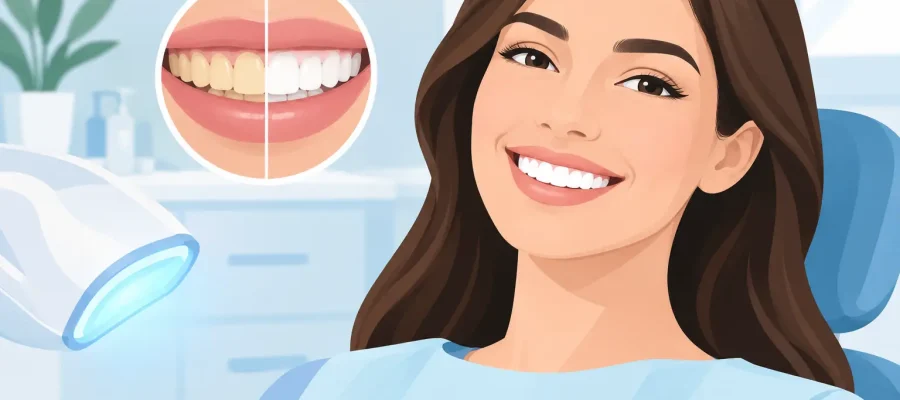
A brighter smile can change how you show up in photos, meetings, and milestone moments. But professional teeth whitening: what results can you expect? The honest answer is a visibly lighter, cleaner-looking smile that still looks like yours, not an artificial white filter. Your final shade depends on your natural enamel, the type of staining present, and whether your teeth and existing dental work are suitable for whitening.
For patients planning a wedding, media appearance, holiday, or full smile makeover in Istanbul, whitening can be one of the fastest ways to refresh the face. It is also a treatment where precise expectations matter. A properly planned result is more valuable than chasing the brightest possible shade.
Professional Teeth Whitening: What Results Can You Expect?
Most suitable patients see a change of several shades after a professional whitening treatment. For some, the difference is subtle but polished. For others, especially those with yellow or surface-related stains from coffee, tea, red wine, or tobacco, the improvement can be dramatic.
Dentists measure color with shade guides rather than promises such as “Hollywood white.” A patient may move from a warmer ivory tone to a lighter, fresher shade in one visit, but there is no universal number of shades that applies to every smile. Enamel thickness, natural tooth color, age, and the chemistry behind the discoloration all affect the outcome.
Professional whitening is designed to lift stains from natural tooth structure. It does not change the color of veneers, crowns, fillings, bonding, or implants. If you have visible restorations in the smile zone, your dentist should plan around that fact before treatment begins. Whitening natural teeth first may allow new veneers or crowns to be matched to your preferred lighter shade.
The result should look bright, not flat
The best whitening result preserves dimension. Natural teeth have variations in translucency and color, particularly near the edges. A healthy, elevated shade can look refined on camera and in person without appearing opaque or overly uniform.
This is why an in-clinic assessment matters. The goal is not simply maximum bleaching. It is a shade that complements your skin tone, lip color, facial features, and any planned aesthetic dentistry. For a patient considering E-Max veneers, zirconium crowns, or a complete smile design, whitening may be part of a wider plan rather than the final step.
What Happens During a Professional Whitening Appointment?
Professional whitening starts with a clinical examination. Your dentist checks for cavities, cracks, gum inflammation, exposed roots, leaking fillings, and sensitivity risks. Whitening should not be used to cover a dental problem. Treating the underlying issue first protects both your comfort and your result.
Your teeth are cleaned if needed so surface buildup does not interfere with the whitening gel. The gums and lips are protected, then a high-strength whitening gel is placed carefully on the teeth. Depending on the technique and your starting shade, the gel may be refreshed during the session to maintain performance.
Many in-office treatments take around 60 to 90 minutes. The visual change is immediate, although teeth can appear slightly brighter right after treatment because they are temporarily dehydrated. Your settled shade is easier to judge after a few days, once the teeth rehydrate.
For international patients, professional whitening can often fit neatly into a short cosmetic-dentistry itinerary. It may be completed as a standalone treatment or scheduled around other appointments, depending on your treatment plan and oral health.
Which Stains Respond Best?
Yellow-toned staining generally responds well to whitening. This is often associated with aging, coffee, tea, wine, dark sauces, and tobacco. Surface stains can improve quickly, particularly after a professional cleaning.
Brown staining may also respond, but results vary based on its source. Gray or blue-gray discoloration is more complex. It can be related to trauma, certain medications, older root canal treatment, or changes within the tooth itself. In these cases, external whitening may help only modestly, and a dentist may discuss alternatives such as internal whitening, bonding, or veneers.
White spots are another situation that requires judgment. Whitening can initially make these areas look more noticeable because the surrounding enamel becomes lighter. In some patients, the contrast settles over time. In others, additional cosmetic treatment may be the better route.
Sensitivity: The Trade-Off to Plan For
Temporary sensitivity is the most common trade-off with professional whitening. You may feel brief zings in one or more teeth during treatment or for the next day or two. This usually resolves quickly, but patients with gum recession, worn enamel, existing sensitivity, or cracked teeth need a more cautious protocol.
A specialist can reduce sensitivity by adjusting treatment time, using a lower-intensity approach, applying desensitizing products, or spacing whitening over more than one session. This is another advantage of professional supervision: the plan can be adapted to your teeth rather than forcing every patient through the same process.
Avoid scheduling whitening immediately before a major event if you know your teeth are sensitive. A few days of buffer time gives your shade time to settle and lets any sensitivity fade before photos, travel, or celebrations.
How Long Will Professional Whitening Last?
A professional result can remain attractive for months to a few years, but it is not permanent. The rate at which teeth pick up new pigment depends largely on daily habits and the natural porosity of your enamel.
Coffee every morning does not mean you cannot whiten your teeth. It means maintenance should be realistic. Rinsing with water after dark drinks, keeping up with hygiene visits, and using a dentist-recommended touch-up method can help preserve your result. Smoking and frequent use of highly pigmented foods and drinks will usually shorten the time between touch-ups.
The first 24 to 48 hours after whitening are especially relevant. Teeth can be more receptive to staining while they rehydrate. Choose lighter-colored foods and drinks where possible, and follow the aftercare instructions given by your dental team. Small decisions during this period can protect the clean, bright finish you have invested in.
Whitening Before Veneers or a Smile Makeover
If your goal is a complete Hollywood Smile, whitening may still have an important role. It can brighten teeth that will remain natural, including lower teeth or teeth outside the veneer zone. It also gives you and your dentist a clearer reference point when selecting the shade for new restorations.
At DRGO Smile Clinic, aesthetic planning can be supported by Digital Smile Design and 3D previews, allowing the desired color, tooth proportions, and smile line to be considered together. This matters because a bright smile is only one element of a convincing transformation. Gum balance, tooth shape, symmetry, and facial harmony determine whether the finished result looks truly premium.
If you already have crowns or veneers that no longer match your natural teeth, whitening alone will not make them lighter. The practical sequence is usually to whiten first, allow the shade to stabilize, then replace or update visible restorations if needed. That approach avoids creating a mismatch between newly brightened teeth and older dental work.
Who Should Wait Before Whitening?
Whitening is not the right first move for everyone. Active tooth decay, gum disease, untreated pain, significant enamel loss, and poorly fitting restorations should be addressed before cosmetic whitening. Pregnant or breastfeeding patients are commonly advised to postpone elective whitening as a precaution.
Patients with very dark internal discoloration should also avoid assuming that one appointment will produce a dramatic transformation. A consultation provides the clarity that marketing cannot: whether whitening is likely to deliver the result you want, how many sessions may be appropriate, and whether a different aesthetic solution would serve you better.
A brighter smile is most convincing when it is planned around your real teeth, your timeline, and your desired level of change. Start with a shade assessment, bring reference photos if you have a specific look in mind, and give your dentist permission to recommend the treatment that will look best beyond the first before-and-after photo.