


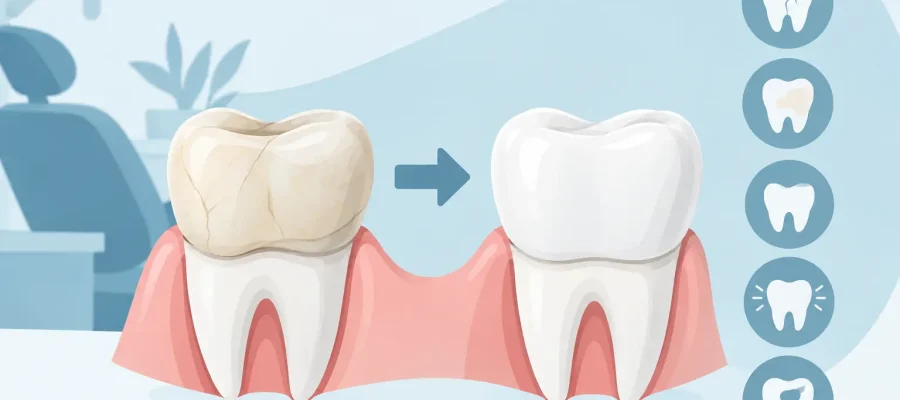
A crown can look polished in photos yet quietly stop protecting the tooth underneath it. Can old dental crowns be replaced? Signs you should know are often visible before a crown fails completely: a dark line at the gumline, sensitivity when you drink something cold, a loose feeling, or changes in the way your bite meets. Replacing it at the right time can protect both your smile design and the natural tooth that supports it.
Can Old Dental Crowns Be Replaced? Signs You Should Know
Yes. Old dental crowns can usually be replaced, whether they are porcelain-fused-to-metal crowns, all-ceramic crowns, zirconium crowns, or crowns placed after root canal treatment. The key question is not simply how old the crown is. It is whether the crown still seals the tooth correctly, fits the gumline, supports your bite, and matches the level of aesthetics you want today.
A crown is not permanent. With attentive home care and professional maintenance, many crowns perform well for 10 to 15 years, and sometimes longer. But age alone does not tell the full story. A five-year-old crown with a crack or leaking edge may need attention sooner than a 15-year-old crown that remains stable and healthy.
For patients considering a full smile upgrade, replacing older crowns can also be part of creating a more balanced, natural-looking result. Modern ceramic materials, digital planning, and precise shade matching can improve how crowns reflect light, meet the gums, and blend with surrounding teeth.
The Signs a Crown May Need Replacement
A visible crack, chip, or rough edge is a clear reason to schedule an assessment. Ceramic can fracture from grinding, a hard bite, trauma, or years of wear. Small surface imperfections are not always emergencies, but they can collect plaque, irritate the tongue, and develop into larger fractures.
Pain or sensitivity deserves attention as well. A crowned tooth should not consistently hurt when you bite, react sharply to hot or cold temperatures, or throb without an obvious cause. The issue may be a gap at the crown edge, decay beneath the crown, gum recession exposing part of the tooth, or a problem involving the nerve or root. A new crown may be part of the solution, but the tooth must be diagnosed and treated first.
Watch for changes around the gumline. If you see a dark gray line, it may be the edge of an older metal-based crown showing through as the gums recede. That is often an aesthetic concern rather than a medical emergency, but it can make a once-bright smile look aged. Redness, bleeding, persistent bad breath, or tenderness around one crown can point to trapped plaque, an overhanging margin, or a poor fit that needs correction.
Other signs include:
- A crown that feels loose, moves slightly, or comes off repeatedly
- Food catching between the crowned tooth and its neighbor
- A bite that suddenly feels high, uneven, or uncomfortable
- Darkening near the crown margin or visible decay around the edge
- A crown color that no longer matches your natural teeth or cosmetic work
Do not wait for a crown to fall out before acting. When bacteria enter through a compromised edge, they can damage the remaining tooth structure beneath the crown. Early replacement is usually more straightforward than treating advanced decay, infection, or a fracture below the gumline.
Why Old Crowns Fail
Crowns do not usually fail because the ceramic simply reaches an expiration date. More often, the supporting tooth, bonding material, gums, or bite changes over time.
Repeated pressure from clenching and grinding can create microscopic cracks in ceramic or loosen the cement that holds a crown in place. Acid erosion, frequent sugar exposure, and inconsistent cleaning can allow decay to begin at the crown margin. Gum recession can uncover the transition between crown and tooth, making an old restoration more noticeable and more vulnerable.
A crown can also become outdated aesthetically. Older porcelain-fused-to-metal crowns may appear opaque compared with modern E-Max or layered zirconium. They can cast a gray tone at the gumline, particularly in the front teeth. Replacing a single front crown requires careful shade control because the goal is not simply a white tooth. It is a tooth with the same translucency, brightness, texture, and character as the teeth around it.
What Happens During Crown Replacement?
The first stage is diagnosis, not removal. Your dentist evaluates the crown margins, gum health, bite, neighboring teeth, and the condition of the root and bone. Digital scans and X-rays help reveal decay or infection that cannot be seen from the surface. If the tooth has enough healthy structure and the root is stable, the crown can often be removed and replaced.
Next, the old crown is carefully sectioned and lifted away to preserve as much of the natural tooth as possible. The tooth is then cleaned and inspected. If there is minor decay, it is removed before the tooth is rebuilt. If more support is needed, your dentist may recommend a core build-up. A root canal may be necessary when infection or nerve damage is present, but not every old crown requires one.
Once the tooth is stable, the new crown is planned. For cosmetic zones, this should include more than selecting a generic shade. A precise plan considers facial proportions, lip position, adjacent tooth color, gumline symmetry, and how your teeth appear in different light. Digital Smile Design can be especially valuable when replacing several visible crowns or combining crown replacement with veneers, whitening, or gum contouring.
A temporary crown may be placed while the final restoration is made. In suitable cases, CAD/CAM technology allows a high-quality crown to be designed and fabricated in a single visit. Same-day treatment is not the best choice for every case, particularly when gums are inflamed, root treatment is needed, or complex aesthetic layering is planned. Clinical stability should always guide the timeline.
Choosing the Right Material for Your New Crown
The best crown material depends on location, bite force, cosmetic goals, and the amount of natural tooth remaining. There is no single premium material that is right for every tooth.
Zirconium crowns are highly durable and work well for back teeth, bridges, and patients with strong bites. Modern layered zirconium can also deliver refined aesthetics in visible areas. E-Max crowns are valued for their lifelike translucency and are often considered for front teeth when the bite and tooth preparation allow it. Full-metal crowns remain durable but are rarely chosen for a smile-focused result because of their appearance.
For a front tooth, a beautiful crown must disappear into the smile. For a molar, function and long-term strength may lead the decision. In many complete smile cases, dentists use different materials strategically rather than forcing every tooth into the same solution.
When Replacement Becomes More Complex
Sometimes an old crown reveals a deeper issue. Extensive decay, a vertical root fracture, severe bone loss, or a tooth that cannot be rebuilt may make replacement impossible. In those cases, extraction and a dental implant can be the more predictable long-term route.
This is why a quick cosmetic fix is not enough. Placing a new crown over an unhealthy foundation can hide the problem temporarily while allowing it to progress. A proper treatment plan protects the biology first, then creates the aesthetic result.
For international patients, this planning matters even more. A clinic should review your scans, photos, medical history, and smile goals before travel, then build a realistic schedule around diagnostics, treatment, and follow-up. At DRGO Smile Clinic, digital planning and coordinated care help patients understand whether a replacement crown, root treatment, implant, or wider smile makeover offers the strongest outcome before they commit to treatment travel.
How to Protect a New Crown
A new crown still needs daily care. Brush along the gumline, clean between teeth every day, and attend professional hygiene visits. If you grind your teeth, a custom night guard can protect both your crowns and your natural enamel. Avoid using teeth to open packaging or bite very hard objects, especially if you have cosmetic ceramic work in the front of your smile.
If an older crown looks darker, feels different, or no longer gives you confidence when you smile, treat that change as useful information. A focused evaluation can show whether you need a simple replacement now or a more complete plan that protects your teeth and delivers the polished, natural result you want to show confidently.