


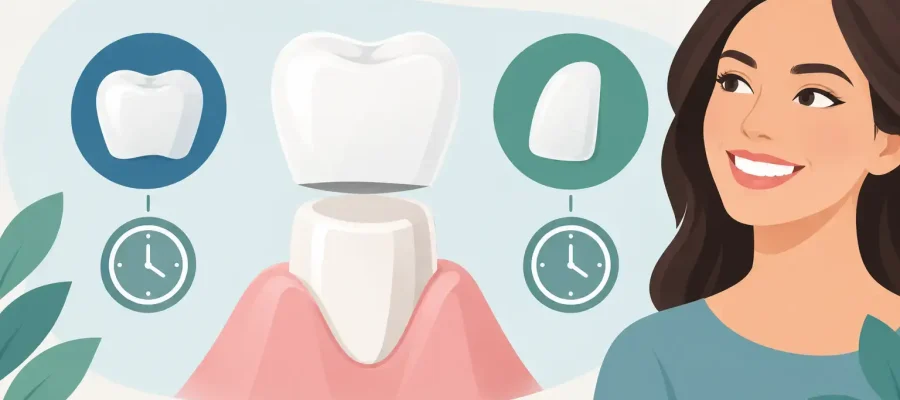
A smile makeover should still look exceptional long after the wedding photos, boardroom presentation, or first red-carpet moment. So, how long do dental crowns and veneers last? With premium materials, precise planning, and the right daily habits, veneers commonly last 10 to 15 years or longer, while well-made crowns can last 15 years and, in many cases, beyond.
The honest answer is never just a number. Your material, bite, oral health, preparation quality, and aftercare all influence the lifespan of your new smile. A signature smile is an investment in how you look and feel – and it deserves a treatment plan built for both immediate impact and lasting performance.
How Long Do Dental Crowns and Veneers Last?
Porcelain veneers, including high-quality E-Max veneers, typically last 10 to 15 years. Many patients enjoy them for 15 to 20 years when the veneers are expertly bonded, their bite is properly managed, and they maintain excellent oral hygiene. Composite veneers are generally more affordable and less invasive, but they tend to last around 5 to 7 years before they may need polishing, repair, or replacement due to staining and wear.
Dental crowns usually have a longer expected lifespan because they cover and protect the full visible portion of a prepared tooth. Zirconium crowns often last 15 to 20 years or more, particularly in areas where chewing forces are high. E-Max crowns can last 10 to 15 years or longer and are often chosen for front teeth because they deliver remarkable translucency and natural-looking color.
These timelines are averages, not expiration dates. A crown can fail early if the tooth underneath develops decay or if heavy grinding causes a fracture. On the other hand, a carefully designed restoration can stay beautiful and functional for decades.
Crowns and Veneers Are Built for Different Jobs
A veneer is a thin, custom-crafted shell bonded to the front surface of a tooth. It is designed primarily to improve color, shape, symmetry, minor alignment concerns, and the overall harmony of the smile. Veneers are ideal when healthy teeth need an aesthetic upgrade rather than full structural reinforcement.
A crown covers the entire tooth. It is often recommended when a tooth is weakened by a large filling, root canal treatment, crack, severe wear, or extensive decay. It can also be used to correct significant discoloration or shape concerns where a veneer would not provide enough support.
This difference matters for longevity. A crown is engineered to protect a structurally compromised tooth, while a veneer relies on strong, healthy enamel for its bond. Choosing a veneer for a tooth that truly needs a crown can compromise the result. Choosing crowns for every tooth when conservative veneers would be appropriate can remove more natural tooth structure than necessary. The right treatment is not about using one material everywhere. It is about matching each tooth to the solution it needs.
The Material Makes a Visible Difference
Premium ceramics do more than create a brighter smile. They influence strength, translucency, stain resistance, and how naturally the restoration blends with surrounding teeth.
E-Max is a lithium disilicate ceramic valued for its lifelike appearance. It reflects light in a way that closely resembles natural enamel, making it a leading choice for veneers and front-tooth crowns. It is durable, but it may not be the first choice for every back tooth or for patients with intense bite pressure.
Zirconium is exceptionally strong and highly resistant to fracture. It is often recommended for posterior crowns, bridges, and cases involving substantial bite force. Modern layered and high-translucency zirconium options can also achieve beautiful cosmetic results in visible areas.
The best material is not always the hardest material. A highly translucent front-tooth restoration may need a different balance of beauty and strength than a molar crown. During digital planning, your dentist should consider your facial features, lip line, bite, tooth position, and aesthetic goals before recommending the final ceramic.
What Shortens the Life of a Crown or Veneer?
Most restorations do not fail because the ceramic simply reaches a certain age. They fail because of pressure, neglect, changes in the mouth, or an original treatment plan that did not adequately account for the bite.
Bruxism, or clenching and grinding, is one of the biggest threats. Repeated nighttime pressure can chip ceramics, loosen bonding, wear opposing teeth, and place strain on the natural tooth under a crown. A custom night guard is a small addition that can protect a major smile investment.
Decay at the edge of a crown is another common issue. The crown itself cannot decay, but the natural tooth and gumline around it can. If bacteria enter the margin of a restoration, the tooth may need additional treatment or a replacement crown.
Hard-object habits also create avoidable risk. Ice, pen caps, fingernails, bottle caps, and hard candy can damage even strong ceramics. Crowns and veneers are made to function like teeth, not to replace tools.
Finally, gums can change over time. Gum recession may expose the edge of a crown or veneer, affecting appearance even if the restoration remains secure. Routine hygiene appointments and early treatment for gum inflammation help preserve the clean, balanced look of the smile.
Precision at the Planning Stage Protects Your Result
Longevity starts before the final restorations are placed. A beautiful result requires more than selecting a bright shade and taking an impression. The dentist must evaluate tooth health, gum position, bite forces, jaw movement, and the relationship between the upper and lower teeth.
Digital Smile Design and 3D previews allow patients to see the direction of their new smile before final treatment begins. This is especially valuable for international patients who want confidence in the shape, proportions, and character of their result. A planned try-in stage can provide another opportunity to assess phonetics, comfort, and appearance before final placement.
For crowns, precise digital scanning and CAD/CAM fabrication support a close fit at the margins. For veneers, conservative preparation and careful bonding preserve as much healthy enamel as possible. These details may not be visible in a before-and-after photo, but they are central to how well restorations perform over time.
Same-day crown workflows can be an excellent option for suitable cases, especially for patients traveling on a defined schedule. Still, speed should never replace clinical judgment. Complex bite rehabilitation, gum treatment, or cases requiring laboratory characterization may need additional time to achieve the safest and most refined result.
How to Make Your New Smile Last Longer
Daily care is straightforward, but consistency matters. Brush twice daily with a non-abrasive toothpaste and a soft-bristled brush. Floss every day, paying close attention to the gumline around crowns and between teeth. An electric toothbrush can be useful, but aggressive brushing with a hard brush can irritate gums and contribute to recession.
Schedule professional cleanings and examinations regularly. Your dentist can identify a small chip, an early leaking margin, gum inflammation, or bite changes before they become a larger and more expensive concern.
If you clench, grind, or wake with jaw tension, wear your custom night guard as directed. If you play contact sports, use a protective mouthguard. And if one restoration suddenly feels high when you bite, do not wait for it to “settle.” A prompt bite adjustment can prevent unnecessary stress on the ceramic and the tooth beneath it.
Whitening also deserves a thoughtful approach. Crowns and veneers do not whiten after placement. If you plan to brighten your natural teeth, it is best to do that before selecting the final shade of your restorations. Later whitening can create a mismatch between natural enamel and ceramic.
When Is Replacement Needed?
Replacement is not automatically required because a crown or veneer reaches the 10-year mark. It may be needed when there is a crack, chip, recurrent decay, loosening, visible margin, gum recession, or a cosmetic change you no longer like. In some cases, a minor polish or small repair is enough. In others, the restoration and possibly the underlying tooth need more comprehensive care.
The goal is not simply to make restorations last as long as possible. It is to keep your teeth, gums, bite, and smile healthy enough that your restorations continue to look effortless. At DRGO Smile Clinic, that means designing every smile around precise digital planning, premium materials, and a result you can wear with confidence long after your trip to Istanbul is over.
A lasting smile is built through smart material choices, careful craftsmanship, and the habits you keep once you are home. Treat your crowns and veneers like the premium work they are, and they can keep showing up beautifully for the moments that matter.