


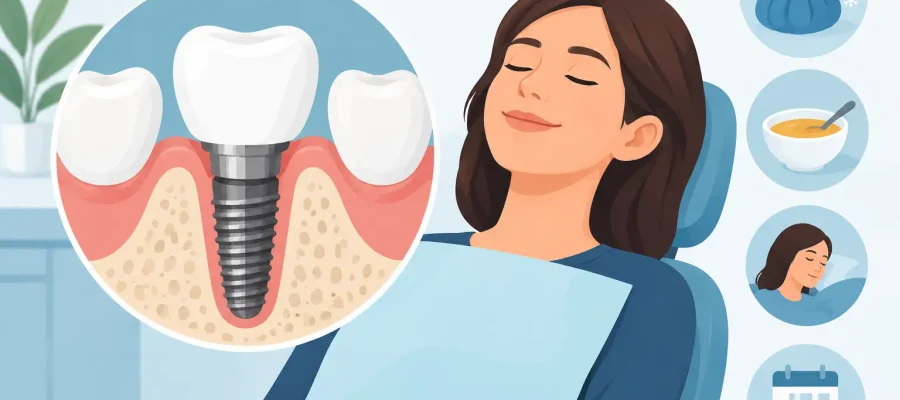
A dental implant can replace a missing tooth with a result that looks, feels, and functions remarkably close to the real thing. But the precision of the final smile starts with healing. If you are asking, “what happens during dental implant recovery?” the short answer is that your body is building a stable biological connection between the implant and your jawbone – while your dentist protects that process with careful planning, follow-up, and the right restoration timeline.
Recovery is not one identical experience for every patient. A straightforward single implant often has a lighter recovery than a full-arch All-on-4 or All-on-6 treatment. Bone grafting, a sinus lift, immediate placement after extraction, your overall health, and habits such as smoking can all affect the pace of healing. The goal is the same: a comfortable recovery that leads to secure, long-lasting teeth.
The First 24 to 72 Hours: Protecting the Surgical Site
Once the numbness fades, mild soreness, swelling, and small amounts of bleeding are expected. Most patients describe the feeling as pressure or tenderness rather than severe pain. Your dentist may recommend prescribed medication or over-the-counter pain relief based on your medical history and the complexity of your procedure.
During the first day, rest is part of the treatment plan. Keep your head elevated, use a cold compress on the outside of the face in short intervals, and avoid intense exercise. Increased blood flow can trigger bleeding or worsen swelling when the area is still fresh.
You will also need to protect the blood clot at the implant site. Avoid vigorous rinsing, spitting, using a straw, smoking, and alcohol. These actions can disrupt early healing and increase the risk of complications. If gauze is placed, bite with gentle, steady pressure as instructed.
Soft, cool foods are usually easiest at this stage. Think yogurt, eggs, smoothies eaten with a spoon, mashed vegetables, soup that has cooled down, and soft pasta. Very hot drinks, crunchy foods, seeds, and spicy meals can irritate the surgical area. Hydration matters, but take small, comfortable sips.
Days 3 to 7: Swelling Peaks, Then Settles
For many patients, swelling is most noticeable around day two or three. Bruising can also appear, particularly after multiple implants, grafting, or full-arch treatment. This is a normal inflammatory response, not automatically a sign that something is wrong.
After the first couple of days, your dentist may advise switching from cold compresses to gentle warmth to ease stiffness. You should begin feeling progressively more comfortable as the week moves on. Some patients are ready to return to desk work within a day or two; others prefer more downtime after extensive surgery.
Oral hygiene remains essential, but it must be gentle. You may be asked to use a prescribed antibacterial rinse and to avoid brushing directly over the surgical site initially. The rest of your mouth should still be cleaned carefully. A clean healing environment helps protect the gum tissue around the implant.
If you received an immediate temporary tooth or a fixed temporary bridge, it is there to support your appearance and confidence while healing takes place. It is not a license to chew normally right away. Follow the recommended soft-food diet and avoid biting hard foods with the temporary restoration. Early overload is one of the risks a carefully planned recovery is designed to prevent.
Weeks 2 to 6: The Outside Heals Before the Bone Does
By the second week, gum tenderness and visible swelling should be substantially improved. If non-dissolving stitches were used, they are often removed around this point. You may feel almost back to normal, but the deeper healing work is still underway.
The gum tissue is closing and adapting around the implant. Beneath the surface, new bone is beginning to grow against the implant’s textured surface. This process is called osseointegration. It is the reason implants can eventually handle the forces of biting and chewing without relying on neighboring teeth.
This stage requires patience. Feeling good does not always mean the implant is ready for full chewing pressure. Your dentist will tell you when to expand your diet, based on the stability of the implant, the quality of the bone, and the type of restoration you are wearing.
For international patients, this is also why a treatment plan needs to be designed around real healing biology, not just a travel calendar. Immediate implant and immediate-load protocols can be excellent options for suitable cases, especially for full-arch treatment, but they depend on sufficient primary stability, bite control, and precise digital planning. Not every patient should be rushed into the same timeline.
What Happens During Dental Implant Recovery Under the Gumline
The most valuable part of recovery is largely invisible. After placement, the jawbone remodels around the implant. Specialized bone cells gradually form a direct, stable interface with the titanium fixture. There is no shortcut that replaces this biological process.
For a conventional implant case, osseointegration commonly takes several months. The exact duration depends on whether the implant is in the upper or lower jaw, whether grafting was needed, bone density, implant stability at surgery, and your healing response. The upper back jaw can require more time because its bone is often less dense than the lower jaw.
If a tooth was extracted and an implant placed on the same day, your dentist also monitors how the extraction socket and surrounding gum contour are healing. When a bone graft or sinus lift is involved, the graft needs time to become integrated, living bone before it can fully support an implant or final crown.
This measured approach is not a delay in your smile transformation. It is how a refined result becomes durable. The final crown, bridge, or full-arch prosthesis should be designed only when the foundation is ready.
Months 3 to 6: Preparing the Final Tooth or Smile
Once your implant has demonstrated stable healing, the final restoration phase begins. Your dentist may take a digital scan or detailed impression to create the crown, bridge, or full-arch teeth. The final design considers much more than the missing tooth space. It accounts for your bite, facial proportions, gum line, tooth shade, speech, and the way your lips frame your smile.
For patients receiving a single implant crown, the final tooth is shaped to blend naturally with the teeth beside it. For full-arch patients, the focus is broader: a secure bite, facial support, cleanable contours, balanced tooth proportions, and a smile that looks polished without appearing artificial.
At DRGO Smile Clinic, digital planning can help patients see the direction of their new smile before the final restoration is made. That predictability is especially valuable when you are coordinating treatment from abroad and want each visit to have a clear purpose.
What You Can Do to Support a Better Recovery
The quality of implant recovery is a partnership between surgical precision and patient habits. Take medication exactly as directed, attend all scheduled reviews, maintain gentle but consistent oral hygiene, and follow food restrictions even when you feel better.
Smoking and nicotine use deserve special attention. They reduce blood flow to the gums and can significantly raise the risk of infection, delayed healing, and implant failure. If you are planning implant treatment, stopping before surgery and remaining nicotine-free during recovery is one of the strongest decisions you can make for your result.
Nutrition also matters. Prioritize protein, hydration, and nutrient-rich soft foods during the first phase. If you have diabetes, keeping blood sugar well controlled is especially important because poor control can slow healing and raise infection risk.
When to Contact Your Dentist
Some discomfort is expected. Pain that becomes stronger after initially improving is not. Contact your dental team promptly if you develop persistent or heavy bleeding, fever, worsening swelling after day three, pus or a foul taste, numbness that does not improve as expected, an allergic reaction to medication, or an implant or temporary tooth that feels loose.
Do not try to test implant stability by moving it with your tongue or fingers. If something feels different, let your dentist assess it. Early attention can often prevent a small concern from becoming a larger interruption to your treatment plan.
A successful implant recovery is not about enduring discomfort or racing toward the final crown. It is about giving a precisely placed implant the conditions it needs to become part of your foundation – so when you smile, speak, and eat with confidence, the result feels as strong as it looks.