


A missing front tooth changes more than a photograph. It can alter the way you speak, smile, and show up at work or major events. So, can a dental implant look like the other teeth? With the right planning, materials, and clinical precision, it can be extraordinarily difficult for anyone else to identify which tooth is the implant.
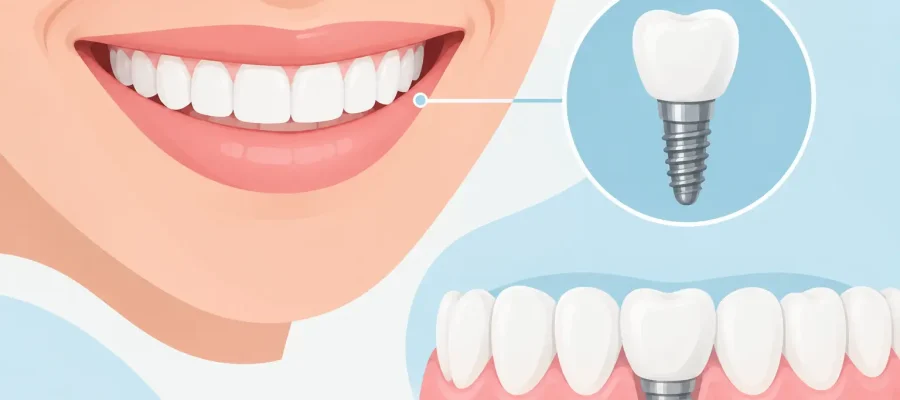
The key is understanding that the visible result is not simply an implant. The titanium implant sits beneath the gumline, while the custom crown above it must match the surrounding teeth in color, shape, texture, translucency, and position. Natural-looking results are engineered before treatment begins.
Can a dental implant look like the other teeth?
Yes, but the answer depends on where the implant is placed, the health of your gums and bone, and the level of detail behind the final crown. Replacing a back molar is usually more forgiving because it is less visible. Replacing a front tooth demands a much higher aesthetic standard, especially when you have a high smile line that exposes a lot of gum tissue.
A beautiful implant crown should not look like a perfectly white standalone tooth. It should look like it belongs in your smile. That means matching the natural warmth or brightness of neighboring teeth, their tiny surface characteristics, the way they reflect light, and even subtle asymmetries that make real teeth look real.
An experienced implant team also plans the gumline. A crown can be made beautifully, but if the gum contour sits too high, too low, or looks flat beside the adjacent teeth, the result may still reveal that something is different. This is why implant dentistry in the smile zone is both surgical and cosmetic work.
What creates a natural-looking implant?
The implant is positioned for the final smile
The final crown should guide implant placement, not the other way around. Before surgery, a specialist evaluates your bite, facial proportions, gumline, available bone, and the exact position of the teeth next to the gap. Digital scans and 3D imaging make it possible to plan the implant angle and depth with far greater accuracy than a one-size-fits-all approach.
Position matters because the implant has no natural ligament like a real tooth. It cannot be moved with orthodontics after placement. If it is too far toward the lip, too far toward the palate, or angled incorrectly, creating a convincing crown becomes more difficult. Careful digital planning protects the appearance as well as the function of the result.
The crown is individually designed
The visible tooth is usually a ceramic crown, often crafted from high-quality zirconia or layered ceramic depending on the location and aesthetic goal. These materials can be customized far beyond a basic shade selection.
For front teeth, the dental team studies color in layers. Natural enamel is not one flat shade. It can be more translucent near the edge, slightly darker near the gumline, and affected by the colors of surrounding teeth. A premium crown may include subtle texture and surface detail so it catches light in the same way as its neighbors.
Shade matching is also best performed in the right lighting and ideally before major whitening. If you plan to brighten your natural teeth, do it before your final crown is made. Ceramic does not whiten with bleaching gel, so a crown created for your current shade may look darker after whitening.
The gumline frames the result
For a single front implant, the gum architecture can be as important as the crown itself. Natural teeth have small gum peaks and curves that frame each tooth. When a tooth has been missing for a long time, the bone and soft tissue may shrink, making it harder to recreate that natural contour.
In these cases, bone grafting or soft-tissue grafting may be recommended before or alongside implant treatment. This can add time to the process, but it is often a worthwhile trade-off for patients who want the most natural result in a highly visible area. Immediate implant placement can sometimes help preserve tissue after an extraction, but it is only suitable when the infection level, bone condition, and bite allow it.
Your bite protects the appearance over time
A crown that looks perfect on the day it is placed still needs to function correctly. Excessive bite force can chip ceramic, loosen components, or affect the surrounding tissue over time. Patients who clench or grind may benefit from a night guard, particularly after restoring front teeth or completing a larger smile makeover.
The final bite is checked carefully so the implant crown supports natural chewing without taking more force than it should. This clinical detail is one reason a beautiful result should never be rushed through the finishing stage.
The treatment journey for a single implant
A predictable implant journey begins with a consultation and digital assessment. Your dentist examines the gap, neighboring teeth, gums, bite, and bone volume. For international patients, sharing clear photos and X-rays in advance can help establish an initial direction, although final eligibility always requires an in-person clinical evaluation.
If the tooth is still present but cannot be saved, it may be extracted and replaced with an implant immediately in selected cases. A temporary tooth can often be used during healing, particularly in the front of the mouth, so you are not left with a visible gap. However, an immediate temporary is not the same as a final crown. It is designed to protect the site and support the soft tissue while the implant integrates with the bone.
Healing time varies. Some patients can progress quickly, while others need several months for bone integration or graft maturation. A clinic promising a fixed timeline without evaluating your scans, gum condition, and medical history is not offering true predictability.
Once the implant is stable, digital impressions capture the exact position of the implant and the shape of the surrounding teeth. The crown is then designed, tried in where appropriate, adjusted for shade and bite, and permanently secured. At DRGO Smile Clinic, this planning-led approach combines 3D smile analysis with high-end restorative materials to prioritize a result that looks intentional, not artificial.
Situations that can make matching more challenging
Not every case starts from the same foundation. If the adjacent teeth are heavily worn, stained, uneven, or already crowned, matching one new implant crown can be more complex. In some cases, restoring several teeth together with veneers or crowns creates a more balanced color and shape across the visible smile.
A single implant beside a very translucent natural front tooth can also require more advanced material selection. The color of the implant components beneath the crown, the thickness of your gum tissue, and the darkness of the underlying area can affect the final appearance. Your dentist may recommend a customized abutment, a component that connects the implant to the crown, to control these details.
There is also a difference between “natural” and “ultra-white.” If your goal is a bright Hollywood Smile, the implant crown can absolutely be designed to match that look. But the adjacent teeth need to be whitened or restored to the same target shade. One brilliant white implant crown beside naturally darker teeth will look noticeable for the wrong reason.
How to choose the right implant plan
Ask to see cases that resemble your own, especially if your missing tooth is in the front. Look beyond the crown itself. Examine the gumline, symmetry, color transition, and how the tooth appears beside the natural teeth. Before-and-after images should demonstrate thoughtful integration, not simply a filled gap.
You should also understand whether your quote includes the surgical implant, abutment, temporary tooth if needed, final crown, imaging, and any potential grafting. A clear plan makes it easier to compare treatment options fairly and avoid surprises later.
For patients traveling for care, timing deserves the same attention as aesthetics. Some cases can be managed efficiently with immediate placement and temporary restorations, while others require staged visits for the strongest long-term result. The better choice is the one that protects your bone, gums, and final smile, not necessarily the shortest itinerary.
A dental implant does not need to look like a replacement. When its placement, gum support, ceramic design, and bite are planned as one result, it can look like it was always part of your smile.