


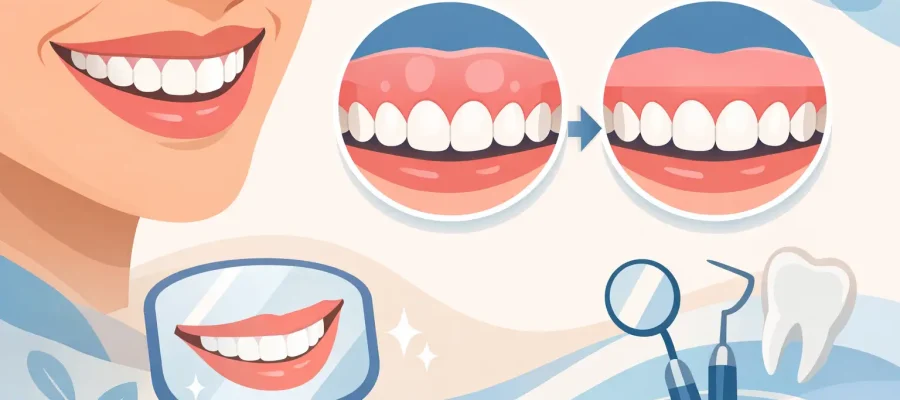
A bright, straight set of teeth can still look unfinished when the gumline is uneven, too prominent, or covers more tooth structure than it should. So, can gum shape affect your smile? Absolutely. Your gums create the frame around every visible tooth, influencing whether a smile appears balanced, youthful, symmetrical, and naturally refined.
For patients considering veneers, crowns, whitening, or a complete Hollywood Smile, gum shape is not a minor detail to address later. It is part of the design from the beginning. The most convincing smile makeovers are engineered around tooth color, tooth proportion, lip movement, and gingival contours together.
How Gum Shape Changes the Way Teeth Look
Teeth are not viewed in isolation. The eye reads the relationship between white enamel and pink gum tissue almost instantly. Even beautifully made E-Max veneers can look too short, too square, or uneven if the gumline around them is not in harmony.
A well-balanced gumline typically follows the natural architecture of the upper teeth. The gum peaks around the central incisors and canines are often slightly higher than those around the lateral incisors. This small variation creates rhythm rather than a flat, artificial line. When one side sits noticeably higher or lower than the other, the smile may look asymmetrical even when the teeth themselves are straight.
Gum shape also affects perceived tooth length. If excess gum tissue covers the upper portion of the teeth, teeth may appear short or small. If gums have receded, teeth can look longer and darker near the roots. Neither situation automatically requires treatment, but both deserve careful assessment before cosmetic work begins.
The “gummy smile” question
A gummy smile means more gum tissue shows than a patient would like when smiling. The cause matters. It may relate to excess gum tissue, teeth that did not fully emerge, upper-lip movement, jaw position, or a combination of factors.
That distinction changes the solution. Gum contouring may be appropriate when tissue is the primary issue. If the upper lip lifts very high, carefully planned lip-relaxing treatment may be considered. When the underlying concern is skeletal, the discussion becomes more complex. A premium treatment plan does not force every gummy smile into one procedure. It identifies the reason first.
Can Gum Shape Affect Your Smile Makeover Results?
Yes, especially when veneers or crowns are involved. Cosmetic restorations are designed to fit within a specific visual frame. If gum levels are uneven before placement, simply making the teeth brighter or wider can make the imbalance more noticeable.
For example, a patient may request longer, more glamorous front teeth. If the gums are covering a significant amount of natural enamel, placing oversized veneers without adjusting the gumline can create bulky proportions. In another case, a single tooth may sit lower at the gumline because of inflammation or natural variation. Matching the neighboring teeth without considering that tissue level can leave the final result looking slightly off in photographs.
This is why a smile makeover should begin with facial and gum analysis, not a shade guide alone. The right plan may include gum aesthetics before restorations, or it may require no gum procedure at all. Healthy, naturally irregular gums do not need to be made perfectly uniform. The objective is proportion and harmony, not a generic template.
What Creates an Unbalanced Gumline?
An uneven gumline can develop for several reasons. Genetics plays a role in natural gum height and tooth eruption. Gum inflammation can make tissue swollen, red, and more visible. Brushing too aggressively, periodontal disease, clenching, and thin gum tissue can contribute to recession.
Previous dental work can matter as well. A crown that does not sit correctly at the gum margin may irritate the surrounding tissue or create an awkward visual transition. Old restorations can also appear darker at the edge over time, especially if gum recession exposes more of the tooth or restoration.
For international patients seeking fast transformation, this is where clinical discipline matters. Speed should never mean placing cosmetic work over active inflammation or untreated periodontal disease. Healthy gums are the foundation of a result that looks polished on day one and remains easier to maintain afterward.
Gum Contouring: When It May Be the Right Option
Gum contouring, sometimes called gingival reshaping, removes or reshapes a precise amount of gum tissue to improve symmetry and reveal more of the natural tooth. It can be a highly effective finishing procedure when excess tissue or uneven contours are the main concern.
The treatment is often considered for patients whose teeth look short, whose gumline is asymmetric, or whose planned veneers and crowns need a more balanced frame. Modern techniques can allow for very precise shaping, but the amount of tissue that can be safely adjusted depends on tooth position, bone levels, gum health, and the biological space around each tooth.
That last point is critical. Gums cannot simply be cut higher to create longer-looking teeth. If the treatment crosses biological limits, the tissue may become irritated, recede unpredictably, or compromise the final restoration. In some cases, crown lengthening that addresses both gum and underlying bone is needed. In others, conservative contouring is enough. A detailed examination determines the difference.
What recovery and timing can look like
Mild tenderness and temporary sensitivity are common after gum reshaping. Healing time varies based on the extent of treatment and whether bone adjustment was needed. When veneers or crowns are planned, the dentist may allow tissue to settle before final restorations are fabricated, particularly where the front teeth are concerned.
For suitable cases, digital planning and coordinated in-clinic workflows can make the process far more efficient than patients expect. Still, predictability is more valuable than rushing. The final gumline must be stable enough to support the intended cosmetic result.
How Digital Smile Design Brings Gums Into the Plan
A smile is not designed from a close-up image of teeth alone. It should be evaluated in motion: while speaking, smiling broadly, and resting. Digital Smile Design allows the dentist to assess the relationship between the lips, face, teeth, and gums before treatment begins.
At DRGO Smile Clinic, this planning approach can help patients preview the direction of their transformation before committing to veneers, zirconium crowns, or other aesthetic procedures. Photos, scans, and digital measurements help establish tooth length, smile width, midline position, and the ideal gum architecture for the individual face.
This matters for patients traveling to Istanbul on a focused treatment timeline. A clear plan reduces surprises. It also prevents a common mistake: choosing a smile from someone else’s before-and-after photo without accounting for different lip lines, facial proportions, and gum display. A signature smile should look elevated, not copied.
When Gum Shape Should Not Be Changed
Not every visible gumline needs correction. Some patients have a low smile line, meaning little gum tissue shows when they smile. In that situation, a tiny discrepancy that appears obvious in a close-up may be invisible in real life.
There are also cases where recession should be managed conservatively rather than disguised with larger crowns or veneers. If gums are thin or unstable, the priority may be periodontal care, improved home hygiene, bite management, or grafting before elective cosmetic treatment. The best aesthetic decision is sometimes to preserve healthy tissue rather than pursue maximum alteration.
Patients should also be cautious about requesting an extremely high, ruler-straight gumline. Natural smiles have subtle variation. Excessive uniformity can look manufactured, and overly aggressive reshaping can create long-term risks that are not worth a short-term cosmetic gain.
The Right Questions Before You Commit
Before agreeing to a cosmetic plan, ask whether your gum health has been assessed, whether the proposed tooth lengths suit your face, and whether any asymmetry comes from tissue, tooth position, or the lip. You should also understand whether gum treatment is necessary before restorations and how the clinic will manage healing within your travel schedule.
A high-quality consultation should give you more than a procedure name and a price. It should explain the sequence: gum health first, digital design, any required reshaping, restoration planning, try-in when appropriate, and final placement. That sequence protects both the appearance and the longevity of your investment.
The most memorable smile makeovers do not announce the procedure. They make people notice that you look rested, confident, and exceptionally put together. If your gums are shaping the story your teeth tell, a carefully planned evaluation can be the detail that turns a good result into a truly natural-looking one.