


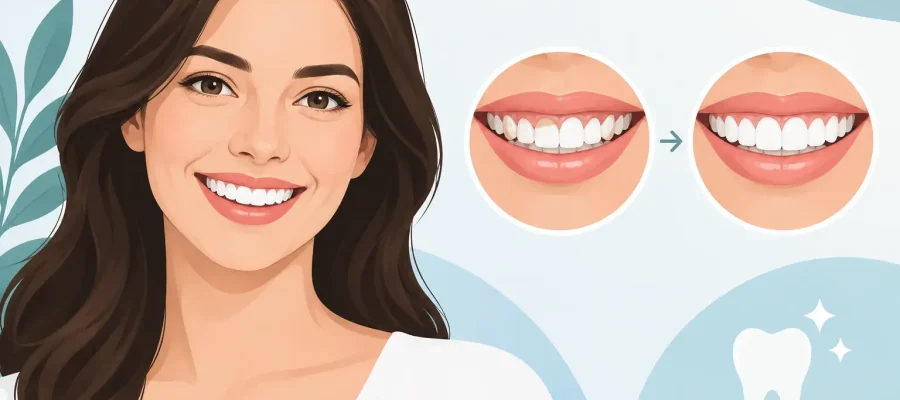
A smile can look narrow even when the teeth themselves are healthy and well aligned. Dark spaces at the corners of the mouth, short-looking front teeth, uneven gums, and poorly matched tooth proportions can all make the dental arch appear smaller. So, can smile design make teeth look wider? Yes – when it is planned around facial proportions, tooth shape, and the way your lips frame your smile, it can create a noticeably broader, more balanced appearance without making teeth look oversized.
The goal is not to produce a flat row of unnaturally large white teeth. A premium smile design creates the right visual width for your face, so your smile looks open, refined, and confident from the front and in photographs.
How Smile Design Makes Teeth Look Wider
Smile width is largely an optical effect. Your dentist evaluates what is visible when you smile: the front teeth, premolars, gumline, lip position, and the negative space between the corners of your smile and your cheeks. These darker areas are often called buccal corridors. When they appear too wide, the smile can look narrow even if the teeth are straight.
A personalized smile design can improve that impression in several ways. The front teeth may be reshaped to create more presence, adjacent teeth can be restored to continue the smile line farther back, and the proportions of each tooth can be adjusted so the arch looks fuller. The changes are measured, not guessed. A few millimeters in the right place can transform how wide the entire smile appears.
Digital Smile Design makes this process more predictable. High-resolution photographs, scans, bite records, and facial analysis allow the dental team to plan the proposed tooth shapes before treatment begins. A 3D preview or physical mock-up helps you see whether a broader smile suits your features before final restorations are made.
The Treatments That Create a Broader-Looking Smile
Veneers and Crowns Can Build Better Proportions
E-Max veneers are often an excellent option when teeth are healthy but look narrow, worn, uneven, or too small for the face. A veneer can subtly increase the visible width and length of a tooth while improving its color and surface texture. When several visible teeth are designed together, the result can reduce dark corner spaces and create a fuller smile line.
Zirconium crowns may be recommended when teeth need greater structural support because of extensive fillings, fractures, root canal treatment, or major wear. Like veneers, crowns can be designed to improve width and symmetry. The difference is clinical: a crown covers the entire tooth, while a veneer generally covers the front surface and edge. The right choice depends on how much natural tooth structure needs protection.
Neither treatment should simply make every tooth wider. Overbuilt restorations can look bulky, affect speech, complicate cleaning, or create bite problems. The strongest aesthetic result comes from carefully varying tooth dimensions, preserving natural transitions from the central incisors to the teeth farther back.
Gum Contouring Can Reveal More Tooth
Sometimes the issue is not tooth width at all. A low or uneven gumline can cover part of the tooth surface, making teeth look short and square. Gum contouring, also called gum aesthetics, can reshape excess or asymmetrical gum tissue to reveal more of the natural tooth.
This can make the front teeth look longer and more elegant, which often improves the perceived width of the smile as well. It is particularly valuable when one tooth looks smaller than its matching tooth on the other side, or when the gumline interrupts an otherwise balanced smile.
Healthy gums are essential before any cosmetic change. If there is inflammation, recession, or periodontal disease, those conditions must be assessed and treated first. A wider-looking smile should never come at the expense of long-term gum health.
Orthodontics May Be the Better First Step
If the upper arch is genuinely narrow or teeth are significantly crowded, clear aligners or orthodontic treatment may be recommended before veneers or crowns. Orthodontics can reposition teeth to create a broader arch and improve bite alignment. Cosmetic restorations can then refine shape, shade, and small asymmetries.
This approach takes longer than a veneer-only makeover, but it can be the more conservative choice for patients who want to preserve as much natural enamel as possible. In other cases, a carefully planned combination of alignment and restorations provides the most complete result.
Can Smile Design Make Teeth Look Wider Without Looking Fake?
Yes, but natural-looking width depends on restraint. A convincing smile has dimension. Teeth should follow the curve of the lower lip, reflect your facial midline, and fit the visible space between your cheeks when you smile. The incisal edges should not all sit in a perfectly straight, artificial line, and the shade should have depth rather than a flat opaque white appearance.
Your face matters as much as your teeth. A smile that looks balanced on a person with a broad jaw, full lips, or a wider facial structure may look excessive on someone with a smaller face. This is why selecting a generic “Hollywood Smile” from a photo is risky. The best result is a signature smile designed for you, not copied from someone else.
Your dentist will also consider how you speak, laugh, and show your teeth at rest. Some patients display only the front six teeth in a natural smile, while others show eight to ten. Designing only the front teeth for a patient with a broad smile can leave visible color or shape differences at the sides. Planning the full smile zone prevents that disconnect.
What Happens During a Wider Smile Design Consultation?
The consultation should begin with your goals, but it should not end there. Bring reference photos if you have them, especially if there is a certain level of brightness, tooth shape, or smile width you like. Your dental team can explain which parts of that look are suitable for your own facial features and oral health.
Next comes the clinical assessment. This includes digital scans, photographs, bite analysis, tooth and gum evaluation, and sometimes X-rays. The team checks for decay, cracks, gum disease, bite pressure, grinding, and jaw concerns that could affect the durability of veneers or crowns.
A digital design is then created around your face and smile dynamics. Before final placement, you may have a mock-up or temporary try-in. This is a critical stage: you can assess the apparent width, tooth length, phonetics, and overall character of the smile. Adjustments are easiest before the final ceramic restorations are bonded or cemented.
At DRGO Smile Clinic, this planning-first approach supports international patients who want clarity before traveling for treatment. Digital Smile Design, coordinated treatment stages, and a defined smile preview help turn an aesthetic idea into a controlled clinical plan.
The Trade-Offs to Understand Before Treatment
A broader-looking smile can be transformative, but the treatment plan needs to respect function. Veneers and crowns require maintenance over time, even when they are made from premium ceramics. Patients who grind their teeth may need a protective night guard. Gum contouring changes soft tissue and must be performed conservatively. Orthodontics may add time, but it can reduce the amount of restorative work needed later.
Shade is another decision worth making carefully. Very bright teeth can look striking in photos, but the ideal color depends on skin tone, eye color, age, and the teeth that will remain untreated. If you are restoring only part of the mouth, matching is often more important than choosing the brightest possible shade.
The key question is not simply, “How wide can my teeth look?” It is, “What proportions will make my smile look naturally fuller, healthy, and unmistakably mine?”
A well-designed smile should feel like it has always belonged to your face. If you are considering a makeover for a wedding, career milestone, camera-facing work, or a long-awaited confidence reset, start with a digital consultation and ask to see the width, shape, and balance of your future smile before you commit.