


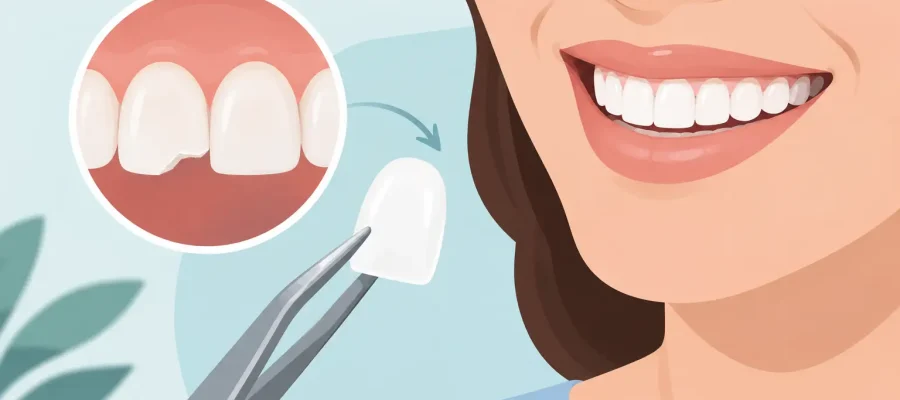
A tiny chip can change the way you smile in photos, speak in meetings, or lean in during a conversation. If you are asking, “can veneers fix small chipped teeth?”, the answer is often yes – but the best treatment depends on where the chip is, how much enamel remains, your bite, and whether you want a subtle repair or a complete smile upgrade.
For a single, barely visible chip, veneers may be more treatment than you need. For several worn, uneven, stained, or chipped front teeth, porcelain veneers can create a more controlled, high-impact result: balanced shape, refined color, and a smile designed around your facial features.
Can Veneers Fix Small Chipped Teeth?
Veneers can restore small chips by covering the visible front surface of a tooth with a custom-crafted porcelain shell. The veneer replaces the missing visual edge while also correcting surrounding concerns, such as uneven length, minor gaps, discoloration, or asymmetry.
This is why veneers are especially effective when a chip is part of a bigger aesthetic picture. Rather than simply filling one damaged corner, your dentist can refine the tooth proportions across the smile line. The goal is not to make teeth look artificial or overly uniform. It is to create a bright, natural-looking smile with intentional symmetry and the right amount of character.
For a small chip on a healthy tooth, the deciding question is usually not whether a veneer can fix it. It is whether a veneer is the most conservative and valuable choice for your long-term goals.
When a Veneer Is the Right Choice
Porcelain veneers are often a strong option when the chipped tooth is visible when you smile and one or more of the following applies: the tooth is also discolored, slightly crooked, short, worn, misshapen, or separated from neighboring teeth by small gaps.
They can also be ideal for patients who have repeatedly repaired the same front-tooth chip with composite bonding. Bonding is useful, but it can stain, dull, or chip over time, particularly at the biting edge. A well-designed porcelain veneer generally offers greater stain resistance and a more stable surface finish.
The aesthetic advantage becomes clearer when multiple teeth are involved. If your upper front teeth have minor edge chips from grinding, old restorations, or everyday wear, treating a carefully selected number of visible teeth can create a cohesive result. The color, translucency, edge texture, and proportions are planned together rather than repaired one spot at a time.
Veneers are not automatically the answer for every chip. If the damage is limited to a tiny corner and the tooth is otherwise beautifully shaped and colored, conservative composite bonding may preserve more natural enamel and deliver an excellent result. A specialist consultation should make that distinction clear before any preparation begins.
Veneers vs. Bonding for a Small Chip
Composite bonding uses tooth-colored resin to rebuild the missing area directly on the tooth. It is usually faster, less expensive, and often requires little or no enamel adjustment. For a single minor chip, it can be a smart, conservative first choice.
Veneers are fabricated from porcelain or high-quality ceramic and bonded to the front of the tooth. They typically require more planning and, in many cases, a small amount of enamel preparation. That trade-off can be worthwhile when you want to change more than the chip itself.
Bonding is generally best for a minimal repair, especially when the surrounding tooth already looks great. Veneers are better suited to patients seeking a premium smile makeover, greater color control, improved symmetry, and a polished finish across several visible teeth.
There is also a practical lifestyle consideration. If you grind or clench your teeth, neither bonding nor veneers should be placed without evaluating the bite. Constant pressure can chip natural teeth and restorations alike. A night guard, bite adjustment, or treatment for heavy clenching may be part of protecting your final result.
What About Dental Crowns?
A crown covers the entire tooth, so it is usually reserved for a tooth with more extensive fracture, large existing fillings, major decay, root canal treatment, or structural weakness. Placing a crown for a tiny cosmetic chip alone can be unnecessarily aggressive.
The right restoration should match the amount of damage. A precise treatment plan protects healthy tooth structure while giving you the level of aesthetic improvement you actually want.
What Happens Before Veneer Treatment
A premium veneer result begins long before porcelain is placed. The first stage is a detailed clinical assessment. Your dentist checks the chip, enamel quality, gum health, bite, and any signs of cracks, decay, or grinding. X-rays or digital scans may be needed to make sure the tooth is structurally sound.
Next comes smile planning. With Digital Smile Design and 3D imaging, you can preview changes to tooth length, shape, shade, and alignment before committing to the final look. This step matters for chipped teeth because a repair should blend into your smile, not look like an isolated patch.
Your dentist then determines whether no-prep or minimal-prep veneers are clinically appropriate. No-prep veneers can work in selected cases, but they are not universally better. Adding porcelain without creating enough space may make teeth look bulky. Minimal, precisely controlled preparation can produce a thinner, more natural transition at the edges and gumline.
Once the design is approved, teeth are prepared if needed, digital impressions are captured, and temporary veneers may be placed. At the try-in stage, you assess the proposed shape and shade before final bonding. This is the moment to confirm that the smile feels like you – only sharper, brighter, and more balanced.
How Long Do Veneers Last on Chipped Teeth?
High-quality porcelain veneers can last many years when they are correctly planned, bonded, and cared for. Their lifespan depends on bite forces, oral hygiene, diet, regular dental checkups, and habits such as nail-biting, ice-chewing, or opening packages with your teeth.
Porcelain resists stains better than composite resin, but veneers are not indestructible. A hard impact can still chip or dislodge them. Patients who play contact sports should use a protective mouthguard, and patients who clench or grind need a custom night guard.
Daily care remains simple: brush with a non-abrasive toothpaste, floss around the gumline, and keep regular professional cleanings. Avoid using your front teeth as tools. Those habits protect both your veneers and the natural teeth beneath them.
When Veneers May Not Be Recommended
Veneers may need to wait if active gum disease, untreated decay, infection, or severe bite issues are present. Cosmetic treatment should never cover an underlying health concern.
They can also be a poor fit when a tooth has too little enamel for predictable bonding, when the chip extends deeply into the tooth, or when damage is mostly on the back surface rather than the visible front. In these cases, bonding, a crown, orthodontic treatment, or restorative care may be more appropriate.
If only one tooth is being treated, color matching deserves extra attention. Natural teeth have variations in translucency and shade, especially near the biting edges. A skilled ceramic approach can make a single veneer blend beautifully, but whitening nearby teeth may be recommended first if you want a brighter overall smile.
A Faster, More Predictable Veneer Journey in Istanbul
For international patients, treatment timing matters as much as aesthetics. A carefully coordinated veneer journey can combine digital planning, preparation, try-in, and final placement within a defined travel schedule, provided your oral health and clinical needs allow it.
At DRGO Smile Clinic, the focus is on engineered aesthetics rather than one-size-fits-all veneers. Digital smile previews help patients make decisions with clarity, while coordinated treatment and concierge support reduce the friction of traveling for a premium smile transformation.
The right repair for a small chip should make you forget the chip was ever there. Start with a professional smile assessment, ask to see the proposed shape before treatment, and choose the option that preserves your tooth while delivering the confidence you want every time the camera comes up.