


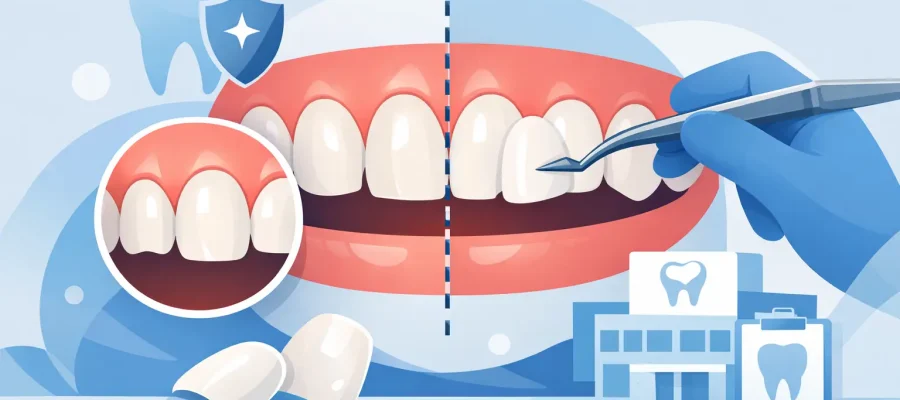
A front tooth that looks slightly shorter in photos can pull attention from an otherwise healthy smile. It may be the result of wear, a small chip, naturally uneven development, or gum tissue that covers more of one tooth than another. So, can veneers fix uneven tooth length? In many cases, yes. Precisely designed veneers can add length, refine tooth proportions, and create a more balanced smile without making the result look artificial.
The key is diagnosing why the teeth appear uneven before choosing a treatment. A premium smile makeover is not about making every tooth identical. It is about engineering the right symmetry, tooth shape, and smile line for your face.
How veneers fix uneven tooth length
Porcelain veneers are thin, custom-made shells bonded to the visible front surface of teeth. Because they can alter a tooth’s apparent height, width, color, and contour, they are often an excellent solution for front teeth that look too short, worn down, chipped, or irregularly shaped.
For example, if one central incisor is 1 to 2 millimeters shorter than the other, a veneer can be designed to restore the missing visual length. If several teeth have become shorter from years of grinding, veneers can rebuild the smile line so the front teeth and canines follow a more attractive, youthful progression.
High-quality E-Max veneers are especially valued for this type of aesthetic refinement. Their translucency can mimic natural enamel, while digital planning helps control the exact edge position and proportions before final placement. The goal is a smile that looks naturally aligned at conversation distance and flawless in close-up photos.
Veneers work best when the underlying tooth is healthy and there is enough enamel for reliable bonding. They are a cosmetic restoration, but the planning behind them must be clinical.
Uneven length is not always a veneer problem
Teeth can look uneven for very different reasons. Treating the visible issue without addressing the cause can compromise both aesthetics and longevity.
When the tooth itself is short or damaged
Veneers are usually a strong option when uneven length comes from small chips, edge wear, naturally short teeth, mild shape differences, or old bonding that no longer matches the surrounding teeth. They can restore a cleaner, more proportional appearance while also improving color and surface texture.
If the teeth are severely worn, however, the bite must be evaluated first. Teeth that have lost significant height often indicate clenching or grinding. Simply placing longer veneers without managing the bite can place excessive pressure on the restorations. In these cases, a dentist may recommend a protective night guard after treatment and, depending on the level of damage, may consider crowns or a broader full-mouth rehabilitation plan.
When gum levels create the illusion of uneven teeth
Sometimes the teeth are actually similar in length, but one side appears shorter because more gum tissue covers it. This is common around the upper front teeth, where even a small difference in gum height can disrupt smile symmetry.
Gum contouring, also called gum aesthetics, may be the more direct treatment. By carefully reshaping the gumline, the visible tooth length can be balanced. In selected cases, gum contouring is combined with veneers to perfect both the frame of the smile and the teeth within it.
This combination requires precise planning. Removing too much gum tissue just to expose more tooth is never the objective. The gumline must respect biological limits, periodontal health, and the proportions of your lips and face.
When a crown may be the safer option
A veneer covers the front of a tooth, while a crown surrounds it. If a tooth is heavily filled, deeply cracked, significantly weakened, or has undergone root canal treatment, a crown can provide the strength a veneer cannot.
Modern zirconium and ceramic crowns can still deliver a highly aesthetic result. For a smile makeover, the best treatment is not always the least invasive option. It is the option that protects the tooth while achieving the planned final shape.
What makes a length correction look natural
Adding length sounds simple, but a few millimeters can completely change a smile. The most convincing results come from analyzing more than the teeth alone.
Your dentist should consider your facial proportions, lip movement, gumline, bite, and how much tooth shows when you speak and smile. A youthful smile often shows the upper front teeth prominently, but the ideal amount varies from person to person. A longer edge that looks elegant on one face may look oversized on another.
Tooth shape matters as well. Square-shaped teeth can project confidence and structure, while softer, more rounded contours may create a gentler look. The central incisors usually guide the design, with neighboring teeth shaped to create a smooth and intentional progression rather than a flat row of identical edges.
Color selection also affects perceived length. Very bright veneers with opaque surfaces can make teeth look larger and less natural. Premium ceramics are selected and layered to balance brightness with translucency, so the final smile has depth rather than a uniform, artificial white finish.
The veneer treatment process for uneven tooth length
For international patients, predictability matters as much as appearance. A properly managed veneer journey begins before any tooth preparation takes place.
1. Digital smile planning
The first stage is a clinical assessment, photographs, scans, and bite analysis. With Digital Smile Design and 3D visualization, you can review proposed changes in tooth length, shape, and overall balance before committing to the final plan.
This stage reveals whether veneers alone are appropriate or whether gum contouring, whitening, orthodontic alignment, or restorative work should come first. It also creates a clear agreement about the intended outcome.
2. Preparation and temporary design
When veneers are the right choice, the teeth are prepared conservatively where possible. The amount of enamel adjusted depends on the starting position, desired length, and ceramic thickness. Teeth that are set back may need very little preparation, while prominent teeth may require more refinement to avoid a bulky result.
Temporary veneers or a trial smile may be used to test the new tooth length. This gives you a chance to see how your smile looks and feels before the final ceramic restorations are placed. It is a valuable checkpoint, particularly when the change involves multiple front teeth.
3. Final placement and bite refinement
The final veneers are bonded with careful attention to edge position, contact points, and bite. Your dentist checks how the teeth meet when you close, speak, and move your jaw side to side. A beautiful result must also function comfortably.
At DRGO Smile Clinic, digital planning and coordinated treatment workflows help international patients move through this process with clarity, from arrival and smile design through final placement and aftercare guidance.
How many veneers are needed?
One veneer can correct one short tooth, but treating a single tooth is not always the most aesthetic choice. Natural teeth vary in color, translucency, and texture, so matching one veneer perfectly can be challenging.
For a small correction, one or two veneers may be enough. For a complete smile line transformation, patients often choose six, eight, or ten upper veneers, sometimes with lower veneers as well. The right number depends on how many teeth show when you smile, the degree of color change desired, and whether the neighboring teeth already complement the new proportions.
A responsible plan avoids placing veneers on healthy teeth that do not need treatment. At the same time, it recognizes that treating too few teeth can leave a visible mismatch. This is where a digital preview helps make the decision feel less subjective.
Results, maintenance, and the trade-off to understand
Porcelain veneers can deliver a dramatic correction for uneven tooth length, but they are not a reversible cosmetic accessory. Tooth preparation may be necessary, and veneers will eventually need replacement after years of service. Their lifespan depends on material quality, bonding technique, oral hygiene, bite forces, and habits such as nail biting or opening packages with your teeth.
Daily care is straightforward: brush with a non-abrasive toothpaste, floss carefully, attend routine hygiene visits, and use a night guard if you clench or grind. Veneers resist staining better than natural enamel, but gum health remains essential to keeping the edges of the restorations looking refined.
If your uneven teeth affect how freely you smile, the next step is not choosing a veneer shade online. It is getting a precise assessment of your tooth structure, gumline, and bite, then seeing your proposed new smile before treatment begins.