


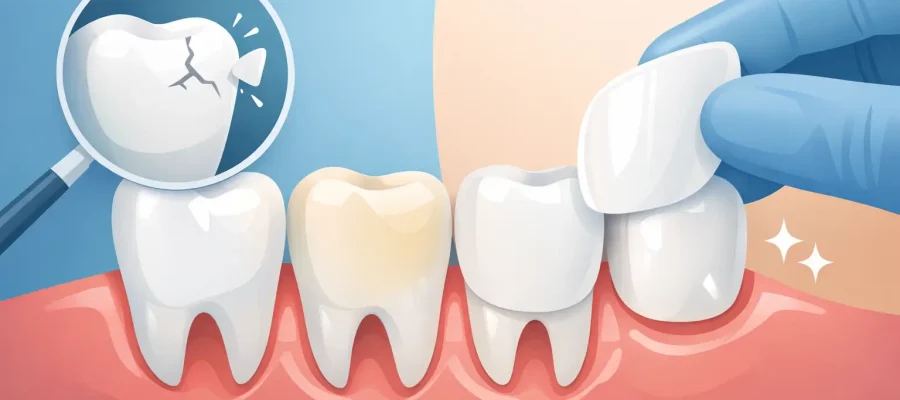
A bright, balanced smile should not come with a surprise years later. So, do veneers damage natural teeth? When veneers are planned conservatively and placed by an experienced cosmetic dentist, they are not designed to harm healthy teeth. However, they do permanently change the teeth they cover, and the quality of planning, preparation, materials, and aftercare determines whether that change remains healthy and beautiful.
For patients considering a Hollywood Smile, the real question is not simply whether veneers are safe. It is whether veneers are the right treatment for your enamel, bite, gum health, and aesthetic goals. A premium result starts with that distinction.
Do Veneers Damage Natural Teeth?
Veneers can require a small amount of enamel removal so the final teeth do not look thick, bulky, or artificial. This is an irreversible step. Once enamel is prepared, that tooth will generally need to remain protected by a veneer or another restoration for the long term.
That does not mean the tooth has been “ruined.” A properly prepared tooth remains alive, functional, and supported by its natural root. Modern ceramic veneers are bonded to enamel with advanced adhesive techniques, creating a strong, natural-looking restoration while preserving as much healthy tooth structure as possible.
Problems arise when teeth are over-prepared, when veneers are used to cover an issue that needs restorative treatment first, or when the bite is ignored. Aggressive drilling can weaken a tooth or bring the preparation too close to the nerve. Poorly fitted veneers can irritate gums, trap plaque at the margins, or chip under uneven pressure. These are planning and execution failures, not an unavoidable consequence of choosing veneers.
What Happens to Teeth During Veneer Preparation?
A veneer is a custom shell, usually crafted from high-quality porcelain such as E-Max ceramic, bonded to the front surface of a tooth. It can change color, shape, symmetry, length, and minor alignment in a way whitening or orthodontics alone cannot always achieve.
For conventional veneers, the dentist usually removes a thin layer from the front of the tooth, often around 0.3 to 0.7 millimeters depending on the case. The exact amount should never be decided with a one-size-fits-all approach. Teeth that are already small, worn, discolored, rotated, or positioned forward may need a different strategy than teeth that are naturally well aligned.
In some cases, no-prep or minimal-prep veneers are possible. They can preserve more enamel, but they are not automatically the superior option. If they are added to teeth without enough room, the result may look overly prominent or compromise the bite. The best treatment is the one that creates natural proportions with the least necessary alteration.
Enamel Is Worth Protecting
Enamel is the strongest outer layer of the tooth, and bonding to it is highly predictable. Conservative veneer dentistry respects that advantage. The aim is not to file every tooth into a small peg. It is to make precise, minimal adjustments that allow the ceramic to sit naturally and perform well.
That is why patients should be cautious of any plan that promises a dramatic smile transformation before examining enamel thickness, bite forces, gum levels, existing fillings, and tooth position. A dazzling before-and-after image is only valuable when the biology behind it is sound.
When Veneers Can Create Problems
Veneers are durable, but they are not indestructible, and they are not the right answer for every smile. Risk increases when a patient has untreated decay, active gum disease, severe grinding, large existing restorations, or teeth that have already lost substantial structure.
A patient who clenches or grinds at night may still be a veneer candidate, but the plan may require a protective night guard, bite adjustment, or a stronger restorative option for certain teeth. A tooth with a very large filling or a root canal may need a crown rather than a thin veneer because it needs more coverage and structural reinforcement.
Oral hygiene also matters. Veneers themselves cannot decay, but the natural tooth can still develop decay around the veneer edges if plaque is left to build up. Regular brushing, flossing, professional hygiene visits, and prompt attention to gum bleeding protect both the restoration and the tooth underneath.
A Digital Smile Plan Prevents Over-Treatment
The most reliable veneer journey begins before any tooth is prepared. Digital Smile Design allows the dentist to study facial proportions, lip movement, tooth display, smile line, and symmetry. With 3D planning and a smile preview, patients can see the intended direction before committing to treatment.
This planning stage helps answer practical questions that photos alone cannot: How much length can be added without affecting speech? Will the new teeth support the lips naturally? Does the bite create a risk of chipping? Can alignment or whitening reduce the number of veneers needed?
A diagnostic mock-up or try-in is equally valuable. It gives the patient and clinical team an opportunity to assess the proposed shape, brightness, and overall character of the smile. Small refinements at this stage can prevent unnecessary preparation later. The strongest cosmetic work does not look manufactured. It looks like the patient was born with exceptionally balanced teeth.
Veneers Versus Crowns: Why the Difference Matters
Veneers and crowns are often grouped together, but they preserve different amounts of natural tooth structure. A veneer mainly covers the visible front surface. A crown covers the entire tooth and usually requires more reduction to create space for the material.
For healthy front teeth with cosmetic concerns, veneers may be the more conservative option. For teeth that are heavily broken down, deeply decayed, severely worn, or structurally compromised, crowns may offer better protection. Choosing veneers simply because they are popular can be a mistake. Choosing crowns when a minimal veneer would work can also remove more healthy structure than necessary.
The right choice is based on what each individual tooth needs, not on a package label or a trend.
How Long Do Veneers Last?
Well-made porcelain veneers can last 10 to 15 years or longer, but they are not lifetime devices. Their longevity depends on ceramic quality, bonding technique, bite forces, oral hygiene, and habits such as nail biting or opening packages with teeth.
Over time, a veneer may eventually need replacement because of wear, chipping, gum recession, changes in the surrounding teeth, or simply an updated aesthetic preference. Replacement should be anticipated as part of a long-term dental plan, especially for younger patients.
This is another reason to avoid over-preparation. Preserving healthy tooth structure today keeps more restorative options available in the future.
Questions to Ask Before You Commit
Before traveling for a smile makeover, ask how your case will be planned and how much tooth reduction is expected. Request clarity about whether each tooth needs a veneer, a crown, orthodontic correction, whitening, or no treatment at all. Ask how the dentist evaluates your bite, handles grinding, and protects the gums around the final restorations.
You should also understand the material being proposed and why. High-translucency E-Max veneers can create exceptional natural detail for many front-tooth cases, while other materials may be better suited to specific strength or coverage needs. Premium dentistry is not about using the same solution for every patient. It is about making the right clinical decision look effortless.
At DRGO Smile Clinic, treatment planning combines digital smile previews with a careful assessment of tooth structure, gum aesthetics, and function, so international patients can make decisions with greater clarity before their visit.
A signature smile should feel as good as it looks. Choose a veneer plan that preserves what is healthy, corrects what truly needs correction, and gives you a result you can enjoy with confidence for years.