


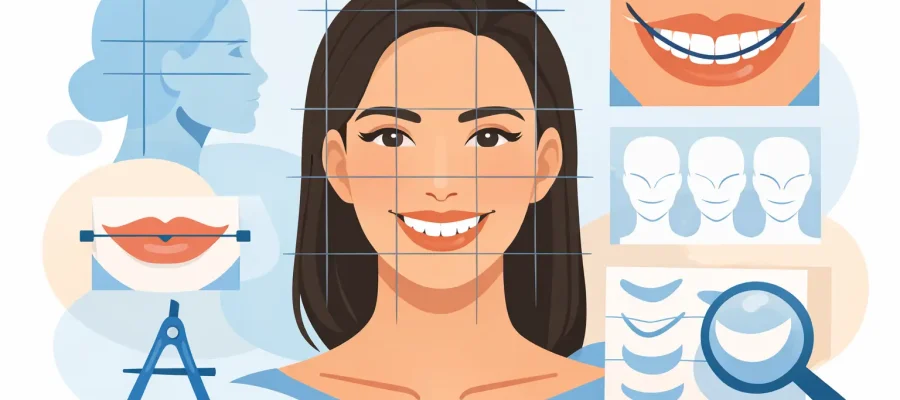
A veneer that looks perfect on a dental model can look too wide, too bright, or simply out of place on the wrong face. That is why how facial proportions influence smile design is not a minor detail in cosmetic dentistry. It is the foundation of a smile that looks naturally powerful in person, on video calls, and in every close-up photograph.
A premium smile makeover should never be designed by selecting a tooth shade and placing identical veneers. Your smile lives within your lips, cheeks, jawline, and facial expressions. The most convincing Hollywood Smile is one that has been engineered around those features – refined enough to make an impact, yet balanced enough to look like it belongs to you.
Why facial harmony matters more than “perfect” teeth
Many patients arrive with a reference photo of ultra-white, perfectly aligned teeth. It is useful as inspiration, but it cannot be copied exactly. A smile that complements a narrow, oval face may overpower a broad, angular face. Longer front teeth can bring elegance and youthful energy to one patient, while making another patient’s smile feel too dominant.
Facial analysis turns cosmetic dentistry from a standard procedure into a personalized aesthetic plan. It helps determine the right proportions for tooth length, width, shape, color, and gum visibility before treatment begins. The aim is not to create a generic smile. It is to create a signature smile with presence, balance, and natural movement.
This is particularly important for international patients investing in a fast, high-impact transformation. When your treatment timeline is carefully managed, planning must be precise from the start. Digital Smile Design and 3D previews help make those decisions visible before final restorations are created.
How facial proportions influence smile design decisions
A specialist evaluates the face as a whole, not only the teeth. There is no single formula that suits every patient, but several facial relationships guide the design.
Facial shape guides tooth shape
The outline of the face can influence the visual character of the teeth. Patients with softer, oval facial features often suit teeth with gently rounded line angles. A more square or defined jawline may support slightly more structured, squared tooth shapes. For a long face, a design with carefully controlled tooth length and width can prevent the smile from appearing overly vertical.
This does not mean teeth must mirror the face exactly. Overmatching can look artificial. The goal is controlled harmony: enough consistency to create balance, with small details that keep the result personal rather than manufactured.
The facial midline creates visual order
The facial midline is an imaginary vertical line that helps connect the center of the forehead, nose, lips, and chin. Ideally, the center line between the upper front teeth relates naturally to this line. But “ideal” does not always mean perfectly centered.
Many people have slight natural facial asymmetry. Forcing the dental midline into a mathematically perfect position can sometimes make the smile look less natural, especially if the lips or nose are slightly off-center. A skilled cosmetic plan considers the full face and prioritizes what the eye sees during speech and smiling.
Lip shape and movement frame the teeth
Your lips are the frame around your smile. Their width, fullness, symmetry, and movement determine how much tooth structure is visible at rest and when smiling. A patient with a high lip line may show more gum tissue, making gum contouring or crown length adjustments part of the aesthetic plan. A patient with fuller lips may need different tooth proportions to ensure the teeth remain visible and defined.
Lip support also matters. Restorations that are too flat can leave the smile looking unsupported, while teeth that are too bulky may create an unnatural profile. With veneers, E-Max restorations, zirconium crowns, or implant-supported teeth, the final contour must support the lips without adding excess volume.
Smile line affects tooth length and edge design
The smile line refers to the curve created by the edges of the upper teeth in relation to the lower lip. In many attractive smiles, the upper front teeth follow the gentle curvature of the lower lip. This creates a relaxed, youthful look.
If the teeth are too short, worn, or flat across the edges, the smile may appear older or less expressive. Lengthening teeth can be transformative, but it must be done with restraint. Excessively long incisors can look artificial, interfere with speech, or create an overly aggressive appearance. The right design considers your facial height, lip movement, bite, and the amount of tooth you show when speaking.
Gum display changes the overall balance
Teeth and gums are one visual unit. Even beautifully shaped veneers can look unfinished if the gumline is uneven, inflamed, or disproportionately visible. For patients with a gummy smile, gum aesthetics may involve reshaping the gumline, adjusting tooth proportions, or addressing the muscle activity that lifts the upper lip.
The right solution depends on the cause. Sometimes it is a gum contour issue. Sometimes the teeth are naturally short. In other cases, lip mobility or jaw position is a factor. This is why a quick visual assessment alone is not enough. A complete diagnostic plan protects both aesthetics and long-term oral health.
Color is a facial decision, not just a whitening decision
Brighter is not automatically better. The ideal shade should look fresh under daylight, flattering under indoor lighting, and believable on camera. Skin tone, eye color, lip color, and age can all influence what looks natural.
A high-value smile makeover often uses layers of color rather than one opaque white shade. Natural teeth have subtle translucency near the edges and controlled warmth closer to the gumline. E-Max veneers are especially valued for this light-reflecting quality when they are suitable for the clinical situation. Zirconium crowns may be selected when greater strength is needed, particularly for patients with heavier bite forces or more extensive restorative needs.
The decision is never only aesthetic. Material selection must also account for tooth preparation, bite alignment, existing restorations, gum health, and durability expectations.
Digital planning makes proportion visible before treatment
The best smile designs are tested before they are finalized. Digital Smile Design uses high-quality photos, videos, facial measurements, and scans to map the relationship between the teeth and the face. It allows the dental team to study your smile at rest, in conversation, and during a full expression – not just in a single still image.
A 3D preview gives you a clearer understanding of the proposed changes. You can see how tooth length, edge shape, symmetry, and shade may affect your overall appearance before the final veneers or crowns are placed. This is especially valuable when traveling for treatment, because it creates greater certainty before the clinical stages move forward.
At DRGO Smile Clinic, facially guided planning supports a treatment pathway that can include preparation, digital design, try-in, and final placement with modern CAD/CAM precision. Where clinically appropriate, this can help make an accelerated smile makeover possible without treating speed as a substitute for careful planning.
A beautiful smile must also function comfortably
Cosmetic outcomes should not compromise function. The teeth must meet correctly, support clear speech, and withstand daily chewing. A design that is visually attractive but ignores the bite can lead to chipping, jaw discomfort, or premature wear.
For patients with grinding, clenching, missing teeth, or severely worn enamel, the smile design may need a restorative foundation first. That could involve crowns, implants, bite adjustment, gum treatment, or protection against nighttime grinding. For full-arch cases, the relationship between facial proportions and tooth position becomes even more significant because implants and fixed bridges can restore not only teeth, but also lip support and lower-face structure.
This is where cosmetic dentistry and restorative dentistry meet. The strongest transformations are not created by hiding a problem. They are created by diagnosing it, treating it, and then designing the visible result with precision.
What to bring to a smile design consultation
Reference images can help communicate the feeling you want – softer, brighter, more youthful, more dramatic, or more natural. But be open to expert adjustment. The most flattering result may borrow the confidence of your inspiration image without copying its exact tooth shape or shade.
A thorough consultation should include photos, bite evaluation, gum assessment, digital scans, and a discussion of your timeline. Be honest about habits such as grinding, smoking, frequent coffee consumption, or past dental sensitivity. These details influence which treatment options can deliver the look you want while protecting your investment.
Your face already provides the blueprint. The right smile design simply reads it with precision, then turns it into a result that looks exceptional from every angle.