


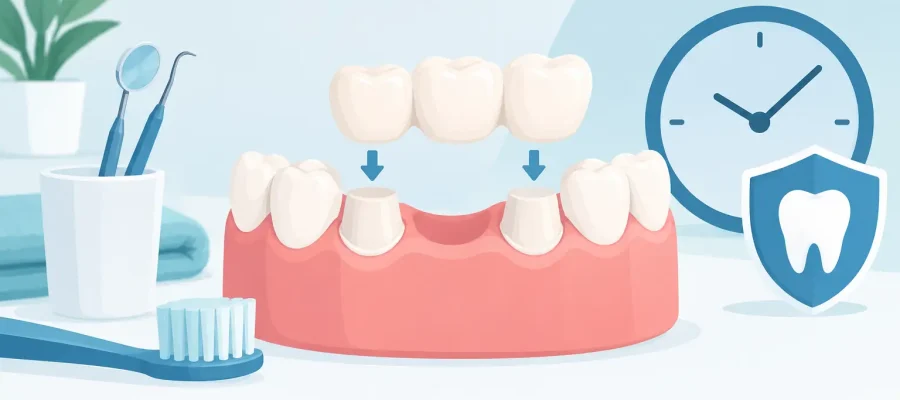
A dental bridge is designed to restore more than a missing tooth. It restores the way you speak, chew, smile in photographs, and show up with confidence. But how long does a dental bridge last? For most patients, a well-made bridge lasts around 5 to 15 years, and premium restorations with excellent home care and regular dental monitoring can last longer.
The number is useful, but it is not the whole story. A bridge is only as strong as the teeth, gums, bite, materials, and planning behind it. At a clinic focused on engineered smile outcomes, the goal is not simply to place a bridge quickly. It is to create a restoration that looks natural, feels stable, and performs beautifully over time.
How Long Does a Dental Bridge Last in Real Life?
A traditional dental bridge commonly lasts five to 15 years. Some bridges need replacement sooner due to decay, gum disease, damage, or changes in the supporting teeth. Others remain functional for 15 years or more when the fit is precise and the patient protects the restoration.
There is no honest one-size-fits-all promise. A bridge in the front of the smile may experience less chewing force than one replacing a molar. A patient who grinds at night has different demands than someone with a balanced bite. The starting condition of the supporting teeth also matters. If those teeth are healthy, strong, and surrounded by stable gum tissue, the bridge has a much better foundation.
For international patients planning a smile transformation, this is why the consultation stage matters so much. The visible result is only one part of the decision. Digital records, bite analysis, X-rays, and smile planning help determine whether a bridge is the right long-term choice or whether an implant-supported solution may better protect the surrounding teeth.
What Determines a Bridge’s Lifespan?
The material chosen
Modern bridge materials are selected based on where the restoration sits, the shade goals, and the forces it must handle. Zirconia is valued for its strength and is often an excellent choice for posterior teeth or patients with heavier bites. High-quality ceramic options can deliver exceptional translucency in the smile zone, where natural-looking color and light reflection matter most.
Material alone does not guarantee longevity. Even the strongest zirconia bridge needs a precise fit at the gumline and a design that respects the way your teeth come together. A poorly balanced bite can overload a premium restoration just as easily as it can damage a natural tooth.
The health of the supporting teeth and gums
A traditional bridge is anchored to teeth on either side of the gap. Those supporting teeth must stay healthy for the bridge to remain stable. Decay developing at the margins of crowns, gum recession, or periodontal disease can compromise the entire restoration.
This is one of the key trade-offs with a traditional bridge. It can be a fast, highly aesthetic way to close a gap, particularly when neighboring teeth already need crowns. However, it relies on those neighboring teeth. A dental implant replaces the missing tooth root independently, which may be preferable in some cases, though it requires surgery, healing considerations, and sufficient bone.
Bite pressure and teeth grinding
Bruxism, or habitual clenching and grinding, is a common reason restorations chip, loosen, or wear prematurely. Many patients do not realize they grind because it happens during sleep. Morning jaw tension, frequent headaches, flattened natural teeth, or broken restorations can all be clues.
A custom night guard is a small investment with a major protective role. It spreads pressure more safely across the teeth and bridge while you sleep. If jaw-muscle tension is severe, a clinician may also discuss approaches that reduce excessive bite force as part of a personalized plan.
Precision in design and placement
A bridge should not feel bulky, trap food unnecessarily, or alter the way you bite. Advanced digital workflows allow the dentist to evaluate proportions, tooth shape, contact points, and smile harmony before final placement. For aesthetic cases, a preview can help ensure the bridge blends into the larger smile design rather than looking like an isolated repair.
The final bonding or cementation stage also matters. A meticulous seal helps protect the supporting teeth from bacteria entering beneath the restoration. Speed is valuable for travelers, but speed should come from organized digital workflows and experienced clinical coordination, not from cutting diagnostic corners.
Signs Your Dental Bridge May Need Attention
Do not wait for significant pain before arranging an examination. Bridges can develop problems quietly, especially when decay begins beneath a crown margin.
Contact your dentist if you notice persistent sensitivity, pain when biting, bleeding gums around the bridge, a bad taste or odor that does not resolve, visible chips, or a bridge that feels loose. A change in your bite is also worth checking. If your teeth suddenly meet differently, the bridge may be worn, damaged, or affected by movement in the supporting teeth.
A dark line at the gumline is not always an emergency, but it should be assessed. It can reflect staining, gum recession, or an older restoration whose margin is becoming more visible. For patients focused on a polished, camera-ready smile, replacing an aging bridge can be as much about refreshed aesthetics as function.
How to Help Your Dental Bridge Last Longer
A bridge does not require complicated care, but it does require consistent care. Brush twice daily with a soft toothbrush and fluoride toothpaste, paying close attention to the gumline where the bridge meets the teeth. Daily cleaning under the artificial tooth is essential because plaque can collect beneath it.
Use floss threaders, super floss, or an interdental brush recommended for your bridge design. A water flosser can be a helpful addition, but it should not replace physical cleaning under the bridge. Your dentist or hygienist can show you the technique after placement, so it becomes a simple part of your routine rather than an afterthought.
Avoid using your bridge as a tool to open packaging or bite nails. Be cautious with ice, hard candy, and very hard foods, especially during the first weeks while you are adjusting to your new bite. If you are prone to grinding, wear your prescribed night guard consistently.
Professional hygiene visits are equally important. Regular examinations allow your dental team to assess gum health, polish the restoration appropriately, and detect early changes before they become a full replacement case.
Bridge Replacement or Dental Implant: Which Makes More Sense?
When an existing bridge reaches the end of its service life, replacement is not automatic. The right next step depends on why it failed and the condition of the supporting teeth.
If the bridge is still structurally sound but looks dated, a new ceramic or zirconia restoration may deliver a cleaner, more natural aesthetic. If the supporting teeth have become weak, repeatedly decayed, or heavily compromised, an implant may offer a more independent foundation. For multiple missing teeth or a full arch, implant-supported bridges can provide fixed teeth with greater stability and a more natural chewing experience.
The choice should be clinical first, aesthetic second, and never rushed by a single photograph. A proper treatment plan examines bone level, gum health, bite forces, the condition of adjacent teeth, and your timeline. For a patient traveling to Istanbul, coordinated planning before arrival can make the in-clinic phase clearer, faster, and more predictable.
Questions Patients Ask Before Choosing a Bridge
Can a dental bridge last 20 years?
Yes, it is possible, but it is not the average expectation or a guarantee. Long-lasting cases usually combine healthy gums, strong supporting teeth, careful bite design, daily cleaning beneath the bridge, and regular professional care.
Does a bridge need to be removed for cleaning?
No. A fixed dental bridge stays in place. You clean around it and under the replacement tooth with the tools recommended by your dentist. If it loosens or feels mobile, do not try to remove it yourself.
Is a bridge better than an implant?
Neither option is universally better. A bridge can be an efficient and aesthetic option when adjacent teeth already need crowns or when surgery is not suitable. An implant can preserve neighboring teeth because it stands independently. The best answer comes from your anatomy, oral health, aesthetic goals, and timeline.
A dental bridge should feel like a natural part of your smile, not a compromise you have to manage every day. With thoughtful planning, premium materials, and disciplined aftercare, it can support years of comfortable eating, confident speaking, and effortless photographs. If you are considering a bridge as part of a wider smile transformation, DRGO Smile Clinic can help you understand the options before you travel and design a result built around both beauty and long-term function.