


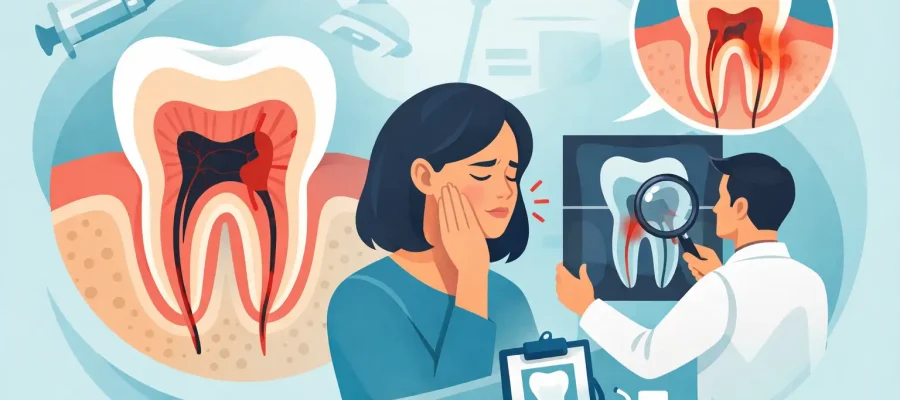
That sharp jolt when you sip coffee, the throbbing that wakes you at 2 a.m., the strange pressure when you bite down – these are not symptoms most people can afford to ignore. If you are wondering how to know if you need a root canal treatment, the answer usually starts with one fact: pain is only part of the picture. Infection, nerve damage, and deep decay can build quietly before the tooth reaches a crisis point.
A root canal is not a cosmetic procedure, but it often protects something just as valuable – the structure of your natural smile. For patients investing in their appearance, travel plans, or a time-sensitive treatment schedule, catching the problem early matters. The sooner a damaged tooth is diagnosed, the more predictable and comfortable the next step tends to be.
How to know if you need a root canal treatment
The clearest sign is persistent tooth pain, especially when it feels deep, pulsing, or concentrated in one area. This pain may come and go, or it may stay constant and intensify when you chew, lie down, or drink something hot or cold. Not every toothache means you need endodontic treatment, but pain that lingers instead of fading is a strong reason to get evaluated.
Sensitivity is another clue, but the timing matters. A quick sting from ice cream can happen with minor enamel wear or gum recession. What raises concern is sensitivity that hangs on for several seconds or more after the hot or cold trigger is gone. That pattern can point to inflammation or infection inside the pulp, where the tooth’s nerve and blood supply live.
Swelling around the tooth or gums can also signal a deeper issue. Sometimes the gum near the painful tooth looks puffy, tender, or slightly raised. In more advanced cases, a small bump can form on the gum. That bump may release fluid or pus, which suggests the infection has created a drainage point. At that stage, the problem is no longer superficial.
Discoloration matters too. A tooth that starts turning gray, brown, or darker than neighboring teeth may have lost healthy blood flow after trauma or internal damage. This can happen after an accident, a sports impact, or even a crack that was not obvious at first. A darker tooth does not always require a root canal, but it should never be brushed off as a purely aesthetic issue.
Then there is pressure. If biting feels oddly high, sore, or unstable on one tooth, the inflammation may be affecting the tissues around the root. Some patients describe it as a bruised feeling rather than sharp pain. Others say the tooth feels fine until they chew. Those distinctions matter because root canal problems do not present the same way in every patient.
The signs that deserve fast attention
Some symptoms are easier to monitor. Others should move you toward a dental appointment quickly.
Severe, spontaneous pain is one of them. If the tooth hurts without any obvious trigger, the nerve may be inflamed beyond recovery. Night pain is another red flag. Teeth that throb more intensely when you lie down often have internal pressure building inside the pulp chamber.
Facial swelling, gum swelling, or a bad taste in your mouth can suggest active infection. So can persistent bad breath that does not improve with brushing and flossing. If you also feel feverish or notice swelling spreading into the cheek or jawline, that moves from inconvenient to urgent.
A cracked tooth should be treated seriously, even if the pain is inconsistent. Cracks create an opening for bacteria to enter the inner layers of the tooth. In some cases, early treatment can stabilize the situation before infection reaches the nerve. In others, a root canal becomes the best way to save the tooth rather than remove it.
What actually causes the need for a root canal?
The basic reason is damage or infection inside the pulp. Deep decay is the most common cause. When a cavity keeps progressing, bacteria move through the enamel and dentin until they reach the soft tissue inside the tooth. At that point, a filling is usually no longer enough.
Repeated dental work on the same tooth can also irritate the pulp over time. Large fillings, replacement fillings, or extensive restorative treatment sometimes leave the nerve less able to recover. Trauma is another major factor. A tooth does not need to break dramatically to suffer internal injury. A sudden hit can disrupt the nerve even when the outer surface looks relatively intact.
Grinding can contribute as well, especially when it leads to cracks or accelerated wear. For patients focused on veneers, crowns, or full smile rehabilitation, this is why diagnostic planning matters. Healthy aesthetics start with a stable biological foundation. A tooth with hidden nerve damage needs treatment before it becomes part of a broader cosmetic plan.
How dentists confirm whether you need one
A root canal is never diagnosed by pain alone. A proper exam combines symptoms, imaging, and response testing.
Your dentist will usually ask what triggers the pain, how long it lasts, whether it wakes you up, and if the tooth feels different when you bite. Then comes the clinical exam. The tooth may be tapped, checked for mobility, and evaluated for cracks, deep decay, or swelling in the surrounding gum.
X-rays are essential because they can reveal infection near the root tip, deep cavities, bone changes, or older dental work that may be failing underneath. In some cases, early pulp damage will not look dramatic on an X-ray, which is why vitality testing is also useful. Cold tests and similar assessments help determine whether the nerve is still healthy, inflamed, or no longer viable.
This is where self-diagnosis has limits. You can absolutely recognize warning signs, but only a clinical assessment can tell you whether the tooth needs a filling, a crown, root canal treatment, or extraction.
When it is not a root canal problem
Not every symptom points to infected pulp. Short, mild sensitivity can come from enamel erosion, gum recession, or whitening treatments. Pain while chewing can sometimes come from a high filling, clenching, sinus pressure, or a hairline crack that has not reached the nerve.
Gum disease can also mimic tooth pain. So can referred pain from another tooth entirely. That is why waiting for the pain to become unbearable is not a smart filter. Some infected teeth become less painful as the nerve dies, but the infection remains active underneath.
The absence of pain is not proof that everything is fine. That is one of the more dangerous misunderstandings around root canals.
What treatment usually looks like
If the tooth can be saved, root canal treatment removes the infected or damaged pulp, disinfects the inside of the tooth, and seals the root canals. After that, the tooth is typically restored with a filling or crown, depending on how much structure remains.
For many patients, the phrase sounds worse than the procedure itself. Modern root canal treatment is usually far more comfortable than its reputation suggests. The real discomfort often comes from delaying care until the infection escalates.
Timing matters here. A tooth treated early is often simpler to restore and easier to keep functional long term. A tooth left untreated may become too weak, too infected, or too structurally compromised to save predictably.
For international patients or anyone on a compressed timeline, this is especially relevant. If you are traveling for cosmetic dentistry or restorative work, hidden infection can disrupt the sequence of treatment. At a clinic such as DRGO Smile Clinic, where planning, speed, and outcome control matter, identifying underlying endodontic issues early helps protect the final result.
Should you wait and see?
Sometimes a dentist may monitor a tooth if symptoms are mild and the nerve appears irritated rather than irreversibly damaged. That can happen after recent dental work or minor trauma. But this is a decision based on testing, not guesswork.
If the pain is escalating, the tooth is darkening, the gum is swelling, or temperature sensitivity lingers, waiting usually works against you. Root canal problems do not typically resolve on their own. The infection may temporarily quiet down, but it does not disappear without treatment.
If you are asking how to know if you need a root canal treatment, trust the pattern more than any single symptom. Lingering sensitivity, deep pain, swelling, pressure when chewing, discoloration, and a history of trauma or deep decay all deserve a closer look. The smartest move is not to panic – it is to get a precise diagnosis while the tooth is still worth saving.
A healthy smile is not just about shape and color. It is also about preserving the teeth that make a confident result last.