


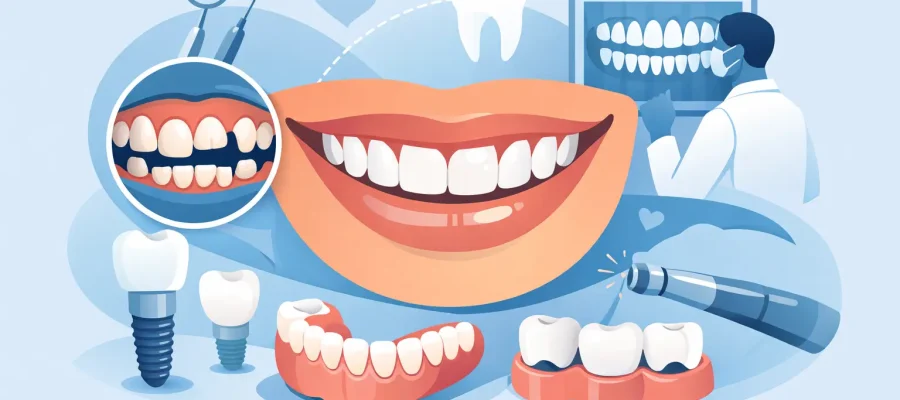
A smile stops feeling optional when every photo gets edited, every meeting starts with self-consciousness, or chewing on one side becomes normal. This guide to full smile rehabilitation is for patients who want more than patchwork dentistry. It is for people looking for a complete, engineered result – one that restores function, upgrades aesthetics, and gives them a smile that feels intentional.
Full smile rehabilitation is not one treatment. It is a customized plan that rebuilds the look, health, and performance of the teeth and gums as a whole. For some patients, that means veneers and whitening. For others, it means crowns, gum contouring, implants, or full-arch restorations. The right plan depends on what is damaged, what is missing, how the bite functions, and how dramatic the cosmetic goal really is.
What full smile rehabilitation really means
A true full smile rehabilitation treats the smile as a system, not a set of separate problems. If the front teeth are bright but the bite is unstable, the result will not last. If missing molars are ignored while veneers are placed in the front, both appearance and chewing strength suffer. That is why high-end rehabilitation starts with diagnosis and design, not guesswork.
The process usually combines restorative dentistry and cosmetic dentistry. Restorative work brings back structure and function through crowns, implants, or full-arch solutions. Cosmetic work refines proportion, shade, shape, and gum symmetry through veneers, whitening, and smile design. The best cases balance both. Patients want a smile that looks premium, but it also has to feel natural when they speak, eat, and live with it every day.
Who is a candidate for a guide to full smile rehabilitation
This kind of treatment is usually right for patients with multiple concerns happening at once. That may include worn teeth, old crowns, chipped edges, spacing, discoloration that whitening cannot fix, gum imbalance, missing teeth, or a bite that has collapsed over time. It is also common for patients who want a major aesthetic upgrade before a wedding, media appearance, business milestone, or public-facing career move.
Age is less important than condition. Some patients in their 30s need complete rehabilitation because of grinding, erosion, or trauma. Others in their 50s or 60s are replacing failing dental work and restoring lost function. The key question is not whether the smile can be improved. It is whether a staged, comprehensive plan will deliver a better long-term result than doing one tooth at a time.
The planning stage sets the result
The luxury version of dentistry is not about a nicer waiting room. It is about precision before treatment starts. A proper workup includes digital scans, facial analysis, bite evaluation, X-rays or 3D imaging when needed, and a discussion of what you want the smile to say. Natural and refined? Bright and camera-ready? Stronger and more masculine? Softer and more balanced? Those choices matter.
Digital Smile Design has changed this stage completely. Instead of committing to a vague promise, patients can review a proposed smile in advance using 3D previews and mockups. That makes the process more predictable and reduces one of the biggest fears in cosmetic dentistry – spending time and money only to end up with teeth that do not suit the face.
This is also the point where trade-offs get discussed honestly. Ultra-white teeth can look striking on camera, but they do not suit every skin tone or age. Veneers can create a dramatic transformation quickly, but if there is major structural damage or missing teeth, crowns or implants may be the better foundation. Speed matters, but sequencing matters more.
What treatments may be included
A full rehabilitation plan can look very different from one patient to the next. For aesthetic-heavy cases, porcelain veneers or E-Max veneers may reshape the smile line, close spaces, and create a brighter, more symmetrical look. If teeth are heavily restored, weak, or significantly worn, zirconium crowns may offer more full-coverage support.
When teeth are missing, implants often become the anchor of the case. A single implant replaces one tooth without involving neighboring teeth. Full-arch systems such as All-on-4 or All-on-6 are designed for patients missing most or all teeth in one arch who want a fixed solution instead of removable dentures. In the right case, immediate loading can allow fixed teeth much faster than many patients expect.
Gum aesthetics can be just as important as the teeth themselves. If the gums are uneven or excessive, a smile can look off-balance even with beautiful ceramics. Contouring the gums often creates a cleaner, more expensive-looking frame. Whitening may also be used when the goal is to elevate natural teeth rather than cover them.
Timeline: one trip or multiple visits?
This is where expectations need to be sharp. Some smile makeovers can be completed quickly, especially when a clinic uses in-house CAD/CAM systems, digital planning, and same-day workflows. Veneers, crowns, and some immediate implant cases may move far faster than patients assume.
But not every case should be rushed. If there is active infection, severe bone loss, or a need for grafting and healing, a two-phase plan is safer and more durable. The smartest clinics are not the ones that promise the fastest answer to everyone. They are the ones that know when speed serves the case and when it compromises it.
For international patients, this matters even more. Travel-based dentistry works best when diagnostics, treatment design, and logistics are tightly coordinated in advance. That includes remote consultation, review of scans and photos, a realistic treatment schedule, and clear communication about whether the case can be completed in one stay or needs a return visit.
Cost depends on complexity, not just the number of teeth
Patients often ask for a price before they ask for a plan. That is understandable, but full smile rehabilitation is not priced like a single procedure. The final figure depends on the number of teeth involved, the materials selected, whether implants are needed, whether surgery is required, and how much corrective work has to happen before aesthetics begin.
This is why package transparency matters. A serious clinic should explain what is included, what is optional, and what could change once diagnostics are complete. For traveling patients, value is not just about a lower clinical fee. It is also about reducing friction – fewer visits, faster workflows, coordinated hotel and transfer support, and a treatment path that feels organized from the first message.
How to choose the right clinic
If you are comparing providers, look past before-and-after photos alone. Good marketing can make average work look impressive for one angle and one day. Ask how the smile is planned, what materials are used, who handles surgical and restorative phases, and whether you will see a digital preview before treatment starts.
You should also pay attention to the clinic’s philosophy. Some providers push every patient toward the same look – very white, very uniform, very obvious. Others build a signature smile around facial proportions and lifestyle. The best result is not always the most dramatic one. It is the one that looks elevated, functions well, and still feels like you.
For international patients, the experience around the dentistry matters too. A smooth airport pickup, hotel coordination, interpreter support, and a single team managing the process can remove a surprising amount of stress. At a clinic like DRGO Smile Clinic, that concierge layer is part of the value because it protects the treatment timeline and makes a high-stakes decision feel far more controlled.
Guide to full smile rehabilitation: questions to ask before you commit
Before saying yes, ask what problem the treatment plan is solving first. Is it aesthetics, function, missing teeth, worn bite, or all of the above? Ask whether the proposed result is reversible, how long the materials typically last, what maintenance will be needed, and what happens if a tooth or implant needs revision later.
You should also ask to see the staging of the case. What happens on day one, day two, and after you return home? If the plan includes temporary restorations, know how they differ from the final ones. If implants are involved, ask whether the fixed teeth are immediate temporaries or definitive restorations. These details shape both your expectations and your travel planning.
A premium smile should not feel mysterious. It should feel measured.
The right rehabilitation changes more than teeth. It changes how confidently you speak, how openly you laugh, and how little mental energy you spend hiding your mouth. When the planning is precise and the treatment is matched to the case, the result does not feel artificial or overdone. It feels like the version of your smile that should have been there all along.