


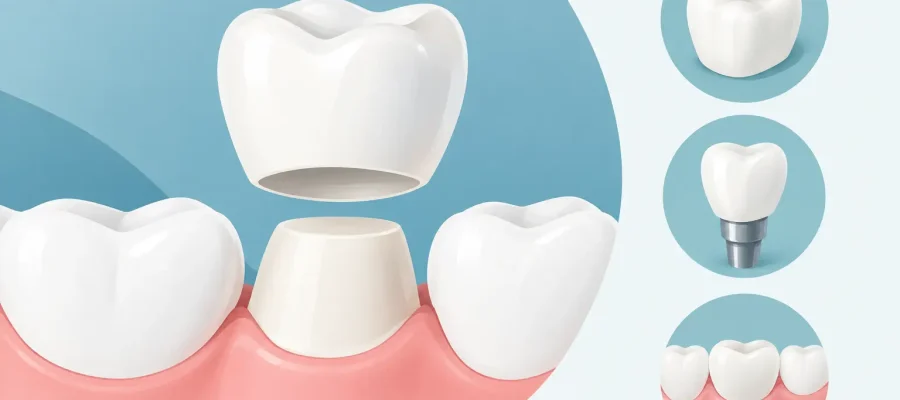
A front tooth that has darkened after root canal treatment, a cracked molar, or a smile disrupted by old metal crowns can change how confidently you speak, laugh, and appear in photos. The question, what are zirconium crowns and when are they recommended?, matters because the right crown is not simply about covering a tooth. It is about restoring strength while making the result look intentional, balanced, and natural.
Zirconium crowns are a popular choice for patients who want a high-performance restoration without the gray shadows or opaque appearance associated with older metal-based crowns. They are especially relevant for international smile makeover patients who need a precise, visible transformation on a clear treatment timeline.
What Are Zirconium Crowns?
The name “zirconium crown” commonly refers to a crown made from zirconia, also called zirconium dioxide. Zirconia is a highly durable ceramic material used in modern restorative dentistry. It can be milled with digital CAD/CAM technology into a custom crown designed to fit your prepared tooth, implant, bite, and smile line.
Unlike traditional porcelain-fused-to-metal crowns, zirconia crowns contain no metal framework. That means there is no dark metal edge near the gums and no risk of a gray cast showing through thin gum tissue. For patients pursuing a bright, clean, camera-ready smile, this metal-free construction can make a meaningful aesthetic difference.
Zirconia is not one single look or formula. Dental laboratories and clinics may use more opaque high-strength zirconia for back teeth, more translucent zirconia for visible teeth, or layered zirconia with porcelain artistry for additional depth and light reflection. The best option depends on where the crown sits, how much force it must tolerate, and how closely it needs to match neighboring natural teeth.
Why Patients Choose Zirconia Crowns
A crown has two jobs: protect the tooth and belong naturally in the smile. Zirconia performs well because it addresses both, though the balance between strength and esthetics should always be planned case by case.
The material is exceptionally strong. This makes it a dependable option for molars and premolars, where chewing pressure is greatest. It is also useful for patients who grind or clench their teeth, provided the bite is carefully adjusted and a night guard is considered when appropriate.
From an aesthetic perspective, modern zirconia can be color-matched and shaped to complement your facial features, lip line, gum display, and adjacent teeth. A skilled team does not select a bright shade in isolation. They evaluate translucency, surface texture, tooth proportions, and the way the smile reads in natural light and photographs.
Zirconia is also biocompatible, meaning it is generally well tolerated by surrounding gum tissue. Its smooth, polished surface can support gum health when the crown margins are accurately designed, placed, and maintained with excellent home care.
For many patients, the real advantage is predictability. With digital scans, 3D treatment planning, and CAD/CAM workflows, crowns can be designed with greater precision than conventional impression-based methods. In suitable cases, this can support a faster clinical timeline without treating a smile makeover like a shortcut.
When Are Zirconium Crowns Recommended?
Zirconia crowns are recommended when a tooth needs more coverage and protection than a veneer or filling can provide. A veneer changes the visible front surface of a tooth. A crown surrounds the entire prepared tooth, which makes it appropriate when the underlying structure is weakened, heavily restored, fractured, or severely discolored.
For cracked, worn, or heavily filled teeth
A large filling can leave the remaining tooth walls vulnerable to fracture. The same applies to teeth worn down by grinding, erosion, or years of heavy bite pressure. A zirconia crown reinforces the tooth and restores its shape so it can function more comfortably.
When a crack is involved, timing matters. Not every cracked tooth can be saved with a crown, especially if the fracture extends deeply below the gumline or into the root. Detailed examination and X-rays determine whether the tooth is restorable or whether an implant may be the more predictable long-term option.
After root canal treatment
Teeth that have had root canal therapy can become more brittle, particularly back teeth that absorb heavy chewing force. A zirconia crown is often recommended to protect the remaining tooth structure and reduce the risk of future fracture.
For a front tooth, the restorative plan may require extra aesthetic consideration. If the tooth has become dark underneath, the crown must mask that discoloration without looking flat or unnaturally opaque compared with the surrounding teeth.
To replace old crowns
Older crowns may develop visible margins, chipped porcelain, leakage, recurrent decay, or a shade that no longer suits the smile. Replacing them with zirconia can improve both function and visual harmony.
This is particularly valuable when patients have several aging crowns across the smile zone. A coordinated plan can create consistency in shape, shade, and gumline symmetry rather than making each tooth appear individually restored.
For dental implants
Zirconia crowns can also be used as the visible tooth portion placed over a dental implant. Because implants do not have natural tooth enamel, the crown design must be highly precise. It needs to support a balanced bite, allow cleanability around the implant, and create natural-looking emergence from the gumline.
Single implant crowns and full-arch implant restorations require different materials and designs. Your dentist will assess bite forces, available space, gum contours, and the type of final restoration needed before recommending zirconia.
As part of a smile makeover
For patients seeking a Hollywood Smile, crowns may be recommended instead of veneers when teeth are extensively damaged, heavily filled, rotated, very dark, or structurally compromised. The goal is not to place crowns on every tooth automatically. The goal is to choose the most conservative treatment that can still deliver a stable, high-impact result.
A digital smile design preview helps establish the desired tooth length, width, shade, and smile arc before preparation begins. This gives patients a clearer view of the destination and allows the clinical team to plan the restorative work around facial balance, not just individual teeth.
Zirconia Crowns vs. E-Max Veneers and Crowns
Patients often compare zirconia with E-Max, another popular all-ceramic material. Neither is universally “better.” They serve different clinical and aesthetic priorities.
E-Max is prized for its translucency and enamel-like light behavior, making it an excellent option for many front-tooth veneers and crowns where maximum natural brightness is the priority. Zirconia generally offers greater strength, which can make it more suitable for posterior teeth, patients with strong bites, and teeth that need substantial reinforcement.
Highly translucent zirconia has narrowed the aesthetic gap in recent years. Still, if a front tooth has plenty of healthy structure and only needs a minimal cosmetic correction, an E-Max veneer may preserve more natural tooth enamel than a full crown. Conversely, choosing a thin veneer for a weak, fractured tooth simply because it is conservative may create a less durable outcome.
The decision should be based on the tooth’s condition first, then esthetics, bite, and your treatment timeline. A premium smile is not defined by using one material everywhere. It is defined by using the right material in the right place.
What the Zirconia Crown Process Looks Like
Treatment begins with a clinical examination, digital scans, photographs, and bite analysis. For international patients, initial records can often be reviewed remotely to create a preliminary treatment direction, but the final plan should always be confirmed in person after examination.
Once the plan is approved, the tooth is prepared by removing a controlled amount of structure to make room for the crown. If decay, an old filling, or damaged tissue is present, it is treated first. Digital scanning then captures the prepared tooth and surrounding bite with high accuracy.
The crown is designed around more than a single tooth. The team considers the opposing teeth, your chewing pattern, the shade of adjacent teeth, and how the crown will meet the gumline. A temporary crown may be used while the final restoration is produced, depending on the workflow and complexity of the case.
At the final fitting, the dentist checks the color, contours, contact points, bite, and comfort before permanently cementing the crown. Small bite adjustments are normal and essential. A crown should feel like part of your mouth, not a new object you have to learn to tolerate.
What Zirconia Crowns Cannot Fix
A zirconia crown can restore a damaged tooth, but it cannot cure untreated gum disease, active tooth grinding, poor oral hygiene, or an unstable bite. Placing beautiful crowns over inflamed gums or unresolved decay risks compromising the result.
Patients with severe grinding may need a protective night guard. Patients with advanced gum recession may need periodontal planning before cosmetic work. And if a tooth cannot be predictably restored, an implant-based solution may offer a stronger foundation than repeatedly repairing a failing tooth.
The longevity of a crown depends on fit, bite design, material quality, oral hygiene, and routine dental visits. Avoid using crowned teeth to open packaging or bite hard objects, and maintain daily brushing and flossing around the crown margin just as you would around natural teeth.
A zirconia crown should never be selected from a menu alone. The most confidence-building result comes from a plan that respects your natural teeth, your bite, and the way you want your smile to look years from now. If you are considering treatment abroad, ask to see your digital plan, understand why each tooth needs a crown, and choose a clinic that treats precision as part of the luxury experience.