


A tooth can be healthy and still distract from your smile. Maybe the edges look worn after years of grinding, one front tooth is shorter than the other, or naturally small teeth leave visible spaces. If you are asking what dental treatments can improve the shape of your teeth?, the answer depends on what is creating the imbalance – the tooth structure, tooth position, gumline, bite, or several factors at once.
The most refined results do not come from choosing the fastest cosmetic procedure by name. They come from designing the right proportions first, then selecting treatments that protect your bite and preserve as much healthy tooth structure as possible. For international patients planning a high-impact smile makeover, this is where digital planning makes the difference between a generic result and a signature smile.
What Dental Treatments Can Improve the Shape of Your Teeth?
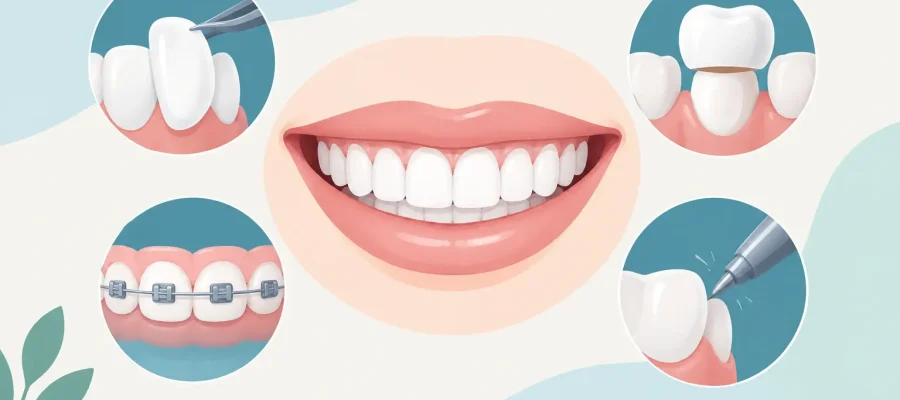
Cosmetic dentistry offers several ways to change tooth length, width, symmetry, edge shape, and overall smile balance. The leading options are composite bonding, porcelain veneers, E-Max veneers, zirconium crowns, orthodontic treatment, gum contouring, and implants for teeth that cannot be saved. In many smile makeovers, two or more treatments work together.
A detailed consultation should start with photographs, X-rays, an evaluation of your gums and bite, and a conversation about the look you want. Digital Smile Design can then map your facial proportions, lip movement, tooth display, and ideal tooth dimensions. A 3D preview gives you a clearer idea of the planned direction before treatment begins.
Composite bonding for smaller corrections
Composite bonding reshapes teeth with a tooth-colored resin applied directly to the enamel. It can lengthen a short tooth, soften a pointed canine, close a modest gap, repair a chipped edge, or make neighboring teeth appear more symmetrical.
Its biggest advantage is conservatism. Often, little to no enamel needs to be removed, and treatment can be completed quickly. Bonding is an attractive choice if you want a subtle refresh, are testing a new shape before committing to veneers, or need a targeted correction rather than a full smile transformation.
There are trade-offs. Composite material can stain, chip, and lose polish sooner than high-quality ceramic, especially if you drink coffee, smoke, or bite hard foods. It also may not be the best option for major shape changes or for patients with heavy grinding habits. Regular polishing and occasional repairs are part of the long-term plan.
E-Max veneers for precision and translucency
E-Max veneers are ultra-thin ceramic shells bonded to the front surface of teeth. They are designed to change visible shape with more control than bonding, creating consistent length, balanced contours, and a brighter, more uniform color at the same time.
This treatment is especially effective when front teeth are naturally narrow, uneven, mildly worn, chipped, or disproportionate to the face. The ceramic has a lifelike translucency that makes it a strong choice for a polished Hollywood Smile that still looks natural in close-up photos and video.
The process begins with smile planning and shade selection. Depending on the design, a minimal amount of enamel may be prepared to create room for the veneer. You review the proposed shape during a mock-up or try-in stage, then the final veneers are bonded once the proportions and bite feel right.
Veneers are a long-term restoration, not a reversible beauty accessory. They require skilled planning because overly bulky veneers can look artificial and may irritate gums. Patients who clench or grind may also need a night guard to protect the ceramic. When indications are right, however, veneers offer one of the most dramatic ways to refine tooth shape without covering the entire tooth.
Zirconium crowns when teeth need strength as well as shape
A crown covers the full visible portion of a tooth. It is usually recommended when a tooth has extensive decay, a large old filling, a fracture, root canal treatment, significant wear, or structural weakness that a veneer cannot safely manage.
Modern zirconium crowns can create excellent shape and color while adding substantial strength. They are often used in full-mouth rehabilitation, where teeth have been shortened by severe wear or weakened by years of dental work. They can also support a consistent smile design when multiple teeth need restorative treatment.
The key distinction is simple: veneers are generally chosen for healthy teeth that need aesthetic improvement, while crowns are chosen when a tooth also needs full coverage and reinforcement. Preparing a tooth for a crown requires more reduction than a veneer, so crowns should never be selected only because they are popular or fast. The best treatment is the least invasive option that still delivers a durable result.
At DRGO Smile Clinic, CAD/CAM workflows can support one-visit crown treatment in suitable cases, helping international patients fit restorative care into a structured travel schedule. Eligibility still depends on the complexity of the case, gum health, and whether any preliminary treatment is required.
When tooth position is the real shape problem
Sometimes teeth look misshapen because they are rotated, crowded, tilted, or spaced too far apart. Adding material over a poorly positioned tooth can improve appearance temporarily, but it may create excessive bulk or complicate your bite. Orthodontic treatment, including clear aligners in appropriate cases, can move teeth into a better foundation before cosmetic finishing.
Orthodontics takes longer than veneers or bonding, but it preserves natural tooth structure and can make the final cosmetic work more conservative. A small amount of bonding after aligners may be all that is needed to perfect worn edges or adjust minor asymmetry.
For a patient with one tooth sitting behind the smile line, for example, moving it forward first may produce a far more natural outcome than placing a thick veneer over it. This is why proper diagnosis matters more than a one-size-fits-all treatment menu.
Gum contouring can transform tooth proportions
Your gums frame every tooth. If the gumline is uneven, covers too much of certain teeth, or creates a “gummy” smile, teeth may appear short even when their actual structure is normal. Gum contouring, also called gingival reshaping, carefully adjusts the gumline to reveal more balanced tooth proportions.
This procedure may be performed alone or combined with veneers, crowns, or whitening. The goal is not to remove gum tissue aggressively. It is to create symmetry while respecting the biological space around each tooth and the health of the supporting bone.
For a gummy smile caused partly by strong upper-lip movement, masseter or lip-focused Botox may be considered only after a clinical assessment. Botox is not a substitute for dental treatment where gum shape, tooth position, or bone levels are the underlying issue. The best plan addresses the actual cause.
Implants for teeth that are missing or beyond repair
A missing tooth changes more than the gap in your smile. Neighboring teeth can shift, the bite can change, and the surrounding bone may gradually lose volume. A dental implant replaces the missing root and supports a custom crown designed to match the shape, color, and character of surrounding teeth.
For a single missing front tooth, the crown design is particularly important because even a small difference in length or contour can be noticeable. For patients missing several teeth or an entire arch, All-on-4 or All-on-6 treatment can restore a fixed smile with immediate teeth in selected cases. This is a restorative solution first, but the aesthetic impact can be life-changing when planned around facial proportions and function.
How to choose the right path for your smile
The right treatment is not always the least expensive, fastest, or most dramatic option. Start by identifying your primary concern: short edges, uneven widths, chips, gaps, crowding, a gummy smile, discoloration, or missing teeth. Then assess the condition underneath. Healthy enamel, stable gums, and a balanced bite create the best foundation for cosmetic work.
A high-quality smile design should also reflect how you live. A creator preparing for frequent camera work may prioritize uniform brightness and symmetry. A professional with minor edge wear may prefer conservative bonding that preserves nearly all natural enamel. Someone with years of grinding may need bite protection and restorative crowns before pursuing cosmetic details.
Bring reference images if you have them, but do not expect another person’s smile to fit your face. The most convincing result is personalized: teeth that complement your lips, facial features, age, and expression while still feeling like your own.
Before committing, ask to see the planned tooth shapes, understand how much natural structure will be altered, and discuss maintenance honestly. A beautiful smile should be designed for years of real life, not just the first before-and-after photo. The right next step is a personalized assessment that turns the shape you imagine into a result that looks effortless every time you smile.