


A missing tooth can change more than a photo. It can make you favor one side when you chew, hide your smile in meetings, or wonder whether the space will become more noticeable over time. If you are asking, “what is a dental implant and how does it replace a missing tooth?” the short answer is that it replaces the tooth from the root upward, with a custom restoration designed around your bite, gumline, and smile.
For many patients, an implant is the closest fixed alternative to a natural tooth because it is anchored in the jawbone rather than attached to neighboring teeth. The result can look refined, feel stable, and restore everyday confidence, whether you are preparing for a major event or simply ready to stop planning around a gap in your smile.
What Is a Dental Implant?
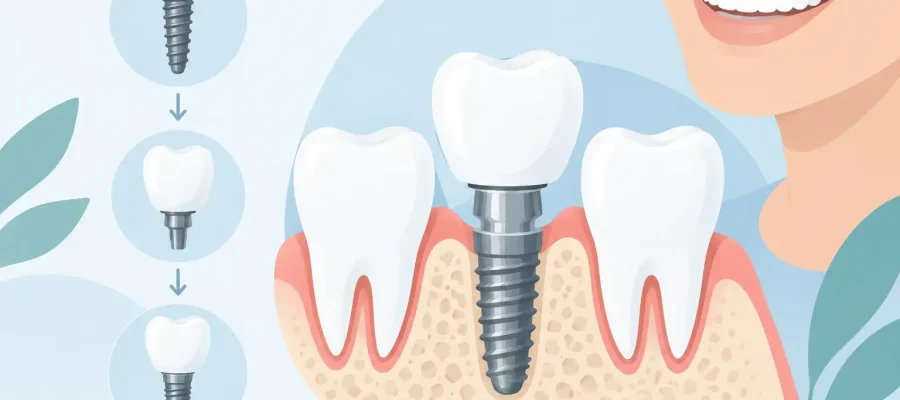
A dental implant is a small medical-grade post, most often made from titanium, that is placed into the jawbone where a tooth root once sat. After placement, the bone heals around the implant in a process called osseointegration. This creates a stable foundation for the visible tooth restoration.
The finished treatment usually has three parts. The implant post sits below the gumline, an abutment connects the post to the restoration, and the crown is the visible tooth-shaped piece. For a front tooth, the crown is designed with particular attention to translucency, color, contour, and the way it meets the gumline. For a molar, strength and bite function take priority, while the crown is still matched to blend naturally with surrounding teeth.
An implant is not a removable denture and it is not a bridge that relies on adjacent teeth for support. It stands independently. That distinction matters because a traditional bridge often requires reshaping the teeth on either side of the gap, while a single implant usually preserves them.
How Does a Dental Implant Replace a Missing Tooth?
A natural tooth has a crown above the gums and roots below them. When a tooth is lost, the visible gap is only part of the problem. Without root stimulation from chewing, the bone in that area may gradually lose volume. An implant replaces the root structure first, then supports a crown that restores the visible part of the tooth.
Once the implant has integrated with the bone, it transfers chewing forces into the jaw in a similar way to a tooth root. This can help maintain the area and gives the final crown a fixed, stable base. The crown is then shaped and positioned so it works with your natural bite rather than disrupting it.
That does not mean an implant is biologically identical to a natural tooth. Natural teeth have a periodontal ligament, a small tissue structure that provides fine sensory feedback. An implant does not. Still, most patients adapt quickly and can chew, speak, smile, and live normally with a properly planned implant restoration.
The quality of the final result depends on more than placing a post in bone. Implant dentistry is a precision exercise involving bone volume, gum thickness, bite forces, neighboring teeth, facial proportions, and the aesthetic demands of the smile zone. The crown may be small, but the planning behind it should be comprehensive.
The Implant Treatment Journey, Step by Step
1. Digital planning and candidacy assessment
A predictable implant starts with diagnostics, not surgery. Your dentist evaluates the missing-tooth site, your gums, your bite, and the health of the surrounding teeth. Digital scans and 3D imaging can show the amount and quality of available bone, as well as the location of nerves and sinus spaces.
For international patients, this planning phase is especially valuable. Sharing clear records before travel can help the clinical team determine whether your case may be suitable for immediate treatment, whether a graft is likely, and how many visits may be needed. Final decisions are made only after an in-person examination and imaging.
2. Preparing the foundation
If the tooth has recently been removed, the implant may sometimes be placed at the same appointment. This is called immediate implant placement. It can reduce the number of surgical stages, but it is not right for every case. Active infection, limited bone, poor gum conditions, or bite pressure may make a delayed approach safer.
When the jawbone has lost volume, bone grafting may be recommended before or during implant placement. In the upper back jaw, a sinus lift may be needed to create enough vertical bone for a secure implant. These steps can extend the timeline, but they are often what make a strong long-term result possible.
3. Implant placement
During placement, the implant is carefully positioned in the jawbone according to the digital plan and clinical conditions. Local anesthesia is standard, and sedation options may be available depending on the treatment plan. Most patients describe more pressure and vibration than pain during the procedure.
After the implant is placed, the site is closed or fitted with a healing component that guides the gum tissue. Some patients receive a temporary tooth on the same day, particularly in visible areas. This temporary restoration is usually designed for appearance and light function while the implant heals. It should not be mistaken for permission to bite into hard foods immediately.
4. Healing and integration
Healing is where the implant earns its stability. Osseointegration commonly takes several months, though the exact timeline depends on bone quality, the implant location, your overall health, and whether grafting was required. A lower jaw implant may heal differently from an upper jaw implant, and a full-arch case follows its own clinical protocol.
Smoking, uncontrolled diabetes, untreated gum disease, and poor oral hygiene can increase the risk of complications. A premium result requires patient participation: follow post-treatment instructions, attend reviews as advised, and give the surgical site time to heal without excessive force.
5. Custom crown design and final placement
When the implant is ready, the dentist takes digital impressions to design the final crown. This is where restorative artistry becomes highly visible. The crown should match the neighboring teeth in color and shape, while also supporting a natural-looking gum contour and balanced bite.
Modern CAD/CAM workflows can improve precision and reduce turnaround time in selected cases. At DRGO Smile Clinic, digital planning can be integrated with aesthetic smile design so the implant crown is considered as part of the full smile, not treated as an isolated tooth. For patients combining implant treatment with veneers, crowns, or a broader smile makeover, that coordinated approach helps create a more consistent final look.
Is an Implant Better Than a Bridge or Denture?
It depends on your oral health, timeline, budget, and aesthetic goals. A single implant often offers the advantage of preserving adjacent teeth and providing a fixed tooth replacement. It can also feel more natural than a removable partial denture for many patients.
A bridge may be a practical option when the neighboring teeth already need crowns or when surgery is not advisable. A removable denture can be the fastest and least invasive solution, but it may move during function and does not provide the same root-level stimulation to the jawbone. There is no one-size-fits-all answer. The right choice is the one that protects your oral health while meeting your expectations for function, appearance, and treatment timing.
For patients missing several teeth or an entire arch, individual implants may not always be necessary. Full-arch options such as All-on-4 or All-on-6 use strategically placed implants to support a fixed full set of teeth. These solutions can be transformative, but they require detailed surgical and prosthetic planning, especially when immediate fixed teeth are considered.
How Long Do Dental Implants Last?
With strong planning, healthy gums, and consistent maintenance, dental implants can last many years and often far longer. The implant post and the crown do not face the same wear patterns. The post may remain stable for decades, while the crown may eventually need repair or replacement because of normal wear, bite forces, or changes in the surrounding mouth.
Care is straightforward but non-negotiable. Brush twice daily, clean around the implant carefully, use the hygiene tools recommended by your dentist, and maintain regular professional checkups. An implant cannot get a cavity, but the gums and bone around it can become inflamed. That condition, called peri-implant disease, can threaten the implant if ignored.
A missing tooth does not have to remain a compromise in your smile or daily routine. The best next step is a focused evaluation that looks beyond the gap itself – at your bone, gums, bite, and the result you want to see when you smile with complete confidence.