


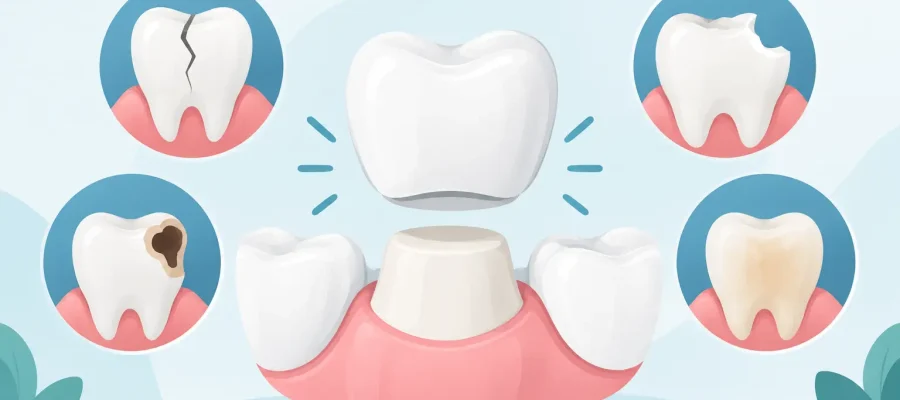
A tooth can look acceptable in the mirror and still be one hard bite away from cracking. That is often when patients ask, when do you need a dental crown? A crown is not simply a cosmetic cover. It is a precisely designed restoration that surrounds a weakened tooth, protects what remains, and restores the shape, strength, and visual balance of your smile.
For international patients planning a smile makeover, the decision matters. A crown may be the difference between preserving a natural tooth with confidence and facing a more complex treatment later. The right choice comes from a detailed clinical assessment, not a one-size-fits-all cosmetic plan.
When Do You Need a Dental Crown?
You may need a dental crown when the natural tooth no longer has enough healthy structure to function safely with a filling, bonding, or veneer alone. The crown fits over the prepared tooth like a custom shell, distributing bite pressure across the restoration rather than concentrating force on fragile enamel.
A dentist will evaluate the tooth itself, the health of the root and surrounding gum tissue, your bite, and the role the tooth plays in your smile. Back teeth absorb significant chewing pressure, while front teeth require exceptional attention to color, translucency, proportions, and facial harmony. The material and design should reflect both needs.
A large filling has weakened the tooth
A filling repairs decay, but it does not always restore the tooth’s original strength. When decay or an old restoration occupies a large portion of the tooth, the remaining walls can flex under pressure. Over time, that flexing can lead to a crack or fracture.
A crown may be recommended before the tooth breaks, particularly for molars and premolars. This is a protective decision: preserving a restorable tooth is generally more conservative and predictable than waiting for damage to extend below the gumline.
The tooth is cracked, fractured, or badly worn
A sharp pain when biting, sensitivity that comes and goes, or a visible line in a tooth can signal a crack. Not every crack needs a crown, but a tooth with a fracture that affects its structural stability often does. A crown holds the tooth together and reduces the risk that the crack spreads.
Severe wear from grinding, clenching, acid erosion, or years of heavy bite pressure can create a similar problem. Teeth may become shorter, flatter, more sensitive, and vulnerable to fracture. In a carefully planned full-smile rehabilitation, crowns can rebuild lost height and restore a more balanced bite. If grinding is present, a custom night guard is often part of protecting the final result.
You have had root canal treatment
After root canal treatment, a tooth can become more vulnerable because decay, previous fillings, and the access opening may have already removed substantial structure. This is especially true for back teeth, which must tolerate powerful chewing forces.
A crown is commonly placed after a root canal to seal and reinforce the tooth. In some front teeth with limited damage, a more conservative restoration may be possible. The deciding factor is not the root canal alone, but how much healthy tooth remains and how much force that tooth receives.
Your tooth is severely discolored or misshapen
Some cosmetic concerns can be corrected with whitening, composite bonding, or E-Max veneers. But if a tooth is deeply discolored from within, heavily misshapen, extensively restored, or structurally compromised, a crown may offer the more durable aesthetic solution.
This is where treatment planning must be honest. A veneer preserves more natural enamel and can be ideal for a healthy front tooth that needs a visual upgrade. A crown provides fuller coverage and greater structural support, but it requires more preparation. The most beautiful result is not always the treatment with the most coverage. It is the treatment that protects the tooth while achieving the desired smile design.
You are replacing a missing tooth with an implant or bridge
A dental implant replaces a missing tooth root, but it still needs a visible tooth restoration on top. That restoration is an implant crown. It is custom-shaped to match your neighboring teeth and engineered to support comfortable chewing and natural-looking aesthetics.
Crowns are also used as anchors for traditional dental bridges, although implants may be preferable when adjacent teeth are healthy and do not need crowns themselves. The best option depends on bone quality, gum health, the location of the missing tooth, your timeline, and your long-term goals.
Signs You Should Book a Crown Assessment
Not every toothache means you need a crown, but certain symptoms deserve prompt evaluation. Pain when biting or releasing your bite, repeated loss of a filling, a chipped tooth, persistent sensitivity, and food constantly catching around an old restoration can all indicate structural weakness.
You should also seek an assessment if an existing crown feels loose, has a dark line near the gumline, causes pain, or is more than a decade old. Crowns can last for many years with attentive hygiene and a stable bite, but they are not permanent. Wear, gum recession, cement failure, decay at the margin, and bite changes can affect their lifespan.
Ignoring symptoms can turn a manageable crown case into an emergency. If a fracture reaches the root or extends too far below the gumline, saving the tooth may no longer be possible. Early diagnosis protects your options.
What Happens During Dental Crown Treatment?
A premium crown process begins before any tooth is prepared. Your dentist takes digital scans, photographs, X-rays when clinically necessary, and records of your bite. For visible teeth, Digital Smile Design can help plan the color, length, contours, and relationship between the teeth, lips, and gums before finalizing treatment.
The tooth is then gently shaped to create room for the crown. If it has lost significant internal structure, the dentist may rebuild it with a core foundation first. Modern anesthesia and comfort-focused techniques make this stage more controlled than many patients expect.
Next comes the design phase. Digital impressions replace the discomfort of traditional molds for many cases, allowing the dental team to create a highly accurate restoration. Depending on your case and material selection, a temporary crown may protect the tooth while the final crown is crafted. In appropriate cases, CAD/CAM technology can make one-visit crown treatment possible.
At the final appointment, the dentist checks the crown’s fit, bite, color, and contour before bonding it securely. A crown should feel like part of your natural smile, not bulky, high, or artificial. Fine adjustments matter because even a small bite imbalance can create discomfort or stress the restoration over time.
Choosing the Right Crown Material
The best crown material depends on where the tooth sits, your bite forces, and your aesthetic expectations. Zirconium crowns are known for high strength and can be an excellent choice for back teeth or full-mouth restorations. Modern multilayer zirconium can also create a natural appearance in visible areas.
E-Max, a high-strength ceramic, is valued for lifelike translucency and color depth. It is often considered for front teeth and carefully selected cosmetic cases. For some patients, the answer is not one material across every tooth. A tailored treatment plan may use materials strategically to balance beauty, strength, and longevity.
A well-designed crown should never look uniformly opaque or overly white just because it is new. The most refined result considers skin tone, lip line, neighboring teeth, gum contours, and the level of brightness that looks polished in real life and on camera.
How to Protect Your Crown After Treatment
A crown cannot decay, but the natural tooth at its edge can. Brush twice daily with fluoride toothpaste, clean between teeth every day, and maintain regular professional checkups. Gum health is essential because the gumline frames the crown and helps protect the tooth beneath it.
Avoid using crowned teeth to open packages or bite hard objects. If you clench or grind, wear the night guard prescribed for you. Patients who invest in a full smile transformation should view maintenance as part of the treatment, not an afterthought.
At DRGO Smile Clinic, crown treatment is planned as part of the entire smile and bite, whether you need one damaged tooth restored or a coordinated aesthetic transformation. Your final crown should do more than cover a problem. It should let you eat, speak, smile, and travel home with confidence in a result built to last.