


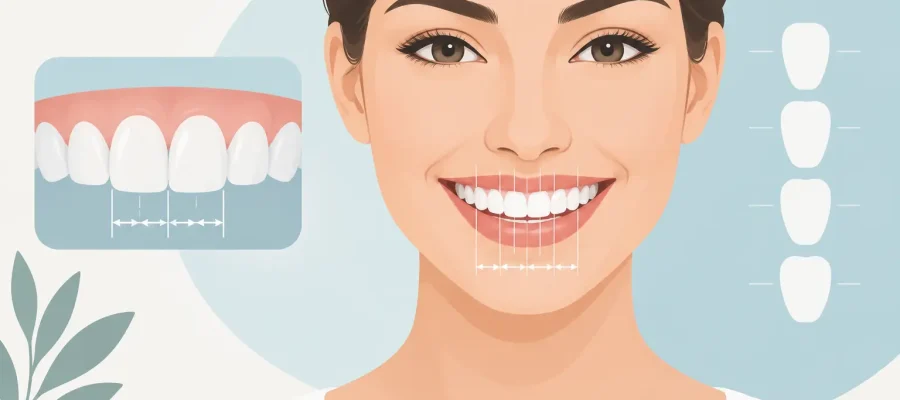
A smile can look brilliantly white and still feel slightly wrong. Usually, the issue is not the shade of the veneers or crowns. It is the balance of the teeth themselves. That is why tooth proportions matter in smile design: they determine whether a new smile appears naturally refined, boldly glamorous, or visibly artificial.
For a high-impact Hollywood Smile, every front tooth must work as part of a complete facial composition. The width, length, shape, spacing, gumline, and position of each tooth influence the next. At DRGO Smile Clinic, this is planned before treatment begins, so the final result is designed for your face, your features, and the way you want to be seen.
Smile Design Is More Than Straight, White Teeth
People often arrive with a reference photo: a celebrity smile, a creator’s transformation, or a bright set of ultra-even veneers. These images can be useful for understanding your aesthetic goals, but they cannot be copied tooth for tooth. A smile that suits one face may look oversized, flat, or overly aggressive on another.
Real smile design starts with proportion. Your dentist considers the visible teeth in relation to your lips, facial width, skin tone, age, and natural expression. The goal is not to create identical teeth. It is to create intentional harmony.
The two upper central incisors, the front teeth most visible when you smile, set the visual standard. Their length and width establish the character of the smile. If they are too short, the smile may look aged or compressed. If they are too long, the result can feel dominant. If they are too wide, the teeth may appear blocky. If they are too narrow, gaps and dark spaces can become more noticeable.
Why Tooth Proportions Matter in Smile Design
Tooth proportions are the relationship between the height and width of each tooth, as well as the relationship among the teeth across the smile. In aesthetic dentistry, the central incisors often appear most balanced when their visible width is roughly 75% to 80% of their length. This is a useful clinical reference, not a formula to apply blindly.
A patient with a broad face, strong jawline, and fuller lips may suit slightly wider, more powerful-looking teeth. A patient with finer facial features may prefer a softer shape with more delicate transitions. The ideal proportion depends on what is visible in conversation, at rest, and in a full smile.
This is where a premium smile makeover separates itself from a one-size-fits-all veneer set. A technically good crown can still disappoint if its dimensions do not suit the patient. A well-planned smile should look polished in photographs, but it should also look believable at a business lunch, on a video call, and from close range.
The Central Incisors Set the Pace
The upper central incisors are the visual anchors of the smile. Their length helps determine how youthful, bright, and expressive the smile feels. They also influence the apparent proportions of the lateral incisors and canines beside them.
When central teeth are too similar in size to the neighboring teeth, the smile can lose hierarchy and look flat. When the difference is exaggerated, the result may feel unnatural. The right progression creates movement: the central incisors lead, the lateral incisors soften the transition, and the canines provide definition at the corners of the smile.
Width Is Not Just About Tooth Size
Visible tooth width changes with angle and position. Teeth naturally appear narrower as they move away from the center of the smile, creating a gradual perspective effect. If every veneer is made with the same width and shape, that effect disappears. The smile can look like a straight row of tiles rather than a natural dental arch.
Dentists also assess the spaces between teeth, known as embrasures. These small triangular areas become more open toward the back of a natural smile. Closing them too completely may create a heavy, uniform look. Leaving them too open can create unwanted dark shadows. Precision lies in controlling these details without making them obvious.
Gum Proportions Can Change the Entire Result
Teeth are only part of what the eye sees. The gumline frames the smile, and uneven gum levels can make teeth appear shorter, longer, or misaligned even when they are structurally healthy.
A gummy smile may reduce the visible length of the teeth. In some cases, gum contouring can reveal more tooth structure and improve the tooth-to-gum balance before veneers or crowns are placed. In other cases, changing the gumline is unnecessary or not appropriate. Healthy tissue, stable bone support, and a realistic assessment of facial movement must guide the decision.
The most attractive gumline is not always perfectly level. It typically follows a gentle pattern that supports the shape of the teeth and the curve of the lower lip. This is one reason digital planning is valuable: patients can see how gum aesthetics, tooth length, and smile width affect the complete image before committing to final restorations.
Facial Proportions Matter as Much as Dental Proportions
A smile is viewed within a face, not on a dental model. The best plan accounts for lip mobility, the amount of tooth display at rest, the smile line, and the balance between the upper and lower teeth.
For example, longer upper front teeth can be highly flattering for someone who shows very little tooth when their face is relaxed. Yet the same length may look excessive for someone with a high lip line who shows a large amount of tooth and gum naturally. There is no universal perfect veneer length.
Age matters too. Natural teeth often become shorter through wear, and restoring appropriate length can create a fresher appearance. But chasing an overly youthful look without respecting speech, bite, and facial character can lead to a result that feels disconnected from the patient. Great cosmetic dentistry improves presence without erasing individuality.
Proportions Must Also Protect Function
A signature smile has to do more than photograph well. Veneers, E-Max crowns, zirconium crowns, and implant restorations must support a stable bite and comfortable function. A front tooth that is lengthened for aesthetics must be assessed for how it contacts the lower teeth during speaking and chewing.
Ignoring function can lead to chipping, discomfort, altered speech, or excessive pressure on restorations. Patients who grind their teeth, have a deep bite, or need full-mouth reconstruction require especially careful planning. In these cases, the aesthetic plan and restorative plan must be created together, sometimes with protective night guards or bite adjustments included in the treatment strategy.
For implant patients, proportions are equally critical. An implant crown must fit the available bone, gum tissue, and surrounding teeth while still looking natural. If bone loss or gum recession is present, the design may need to balance ideal appearance with what can be safely and predictably achieved. Honest planning matters more than promising an identical result in every situation.
How Digital Smile Design Creates More Predictable Results
Digital Smile Design turns subjective preferences into a visual treatment plan. High-quality photographs, facial analysis, digital scans, and bite records allow the clinical team to map the proposed smile in relation to your face.
The planning process can evaluate tooth length, width, symmetry, midline, smile curve, and gum display before final preparation. A 3D preview or mock-up gives patients a meaningful chance to react to the direction of the design. Do you want a softer, natural-luxury finish? A more defined, camera-ready Hollywood Smile? These decisions are easier to make when you can see the proportions rather than imagine them.
The preview is not merely a sales image. It is a communication tool between patient and dentist. It helps refine expectations before the final veneers or crowns are made, reducing surprises and creating a more confident treatment journey for international patients working within a planned travel schedule.
The Best Smile Looks Designed, Not Manufactured
Symmetry is powerful, but perfect mirror-image teeth are not always the answer. Small variations in line angles, incisal edge texture, and tooth shape can make ceramic restorations look more lifelike. The goal is controlled refinement, not visual perfection that looks manufactured.
Color works the same way. Very bright shades can be striking, but brightness should support the chosen tooth shape and the patient’s complexion. A cool, ultra-white shade on oversized teeth may amplify an artificial effect. Carefully proportioned teeth with subtle translucency often create the more expensive-looking result.
Before choosing veneer shapes or requesting a specific celebrity-style smile, ask to see how the design works with your own face. The right question is not, “Can you make my teeth bigger and whiter?” It is, “What proportions will make my smile look confident, natural, and unmistakably mine?”
That is the standard worth traveling for: a smile planned with clinical discipline, tested visually before treatment, and finished with the kind of detail that still feels right long after the first reveal.