


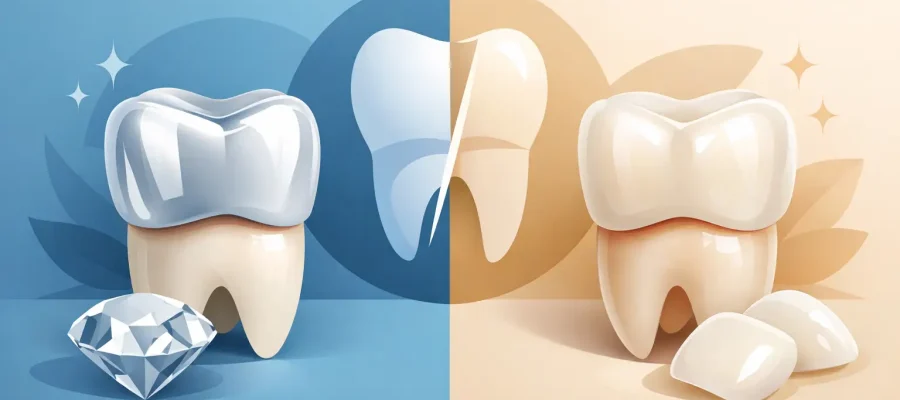
If you are choosing between a zirconium crown vs ceramic restoration, the decision usually comes down to one thing: how much do you want to prioritize strength, and how much do you want to prioritize the most natural light-reflecting look. Both can create a beautiful smile. The better choice depends on where the crown sits, how you bite, and how exacting your cosmetic goals are.
For patients planning a smile upgrade, this is not a small detail. A crown is not just a repair. It becomes part of your face, your photos, your first impression, and your day-to-day confidence. That is why the right material matters as much as the shape and shade.
Zirconium crown vs ceramic: the real difference
At a glance, both zirconium and ceramic crowns are tooth-colored and highly aesthetic. But they behave differently.
A zirconium crown is made from zirconia, a very strong dental material known for durability and fracture resistance. It is often chosen when a tooth needs more structural support or when the patient has a heavier bite. Ceramic crowns, especially all-ceramic options, are often chosen for their refined translucency and lifelike appearance, especially in the front of the mouth where detail matters most.
So the comparison is not really about good versus bad. It is about performance versus optical realism, with some overlap between the two.
Which looks more natural?
If your only goal is the most enamel-like finish possible, ceramic often has the edge. High-quality ceramic can mimic the way natural teeth catch and reflect light. This matters most for front teeth, where even small differences in translucency are visible in close conversation, photography, and video.
That said, modern zirconium crowns have improved dramatically. Premium multilayer zirconia can now deliver a very polished, aesthetic result that looks far more natural than older versions. For many patients, especially those replacing several teeth or doing a full smile design, zirconium can provide an excellent balance between beauty and resilience.
The key is expectations. If you are highly image-conscious and focused on ultra-natural detail in one or two front teeth, ceramic may be the more refined cosmetic option. If you want a bright, symmetrical, camera-ready smile with dependable strength, zirconium often performs extremely well.
Which is stronger?
This is where zirconium usually leads.
Zirconia is known for exceptional toughness. It handles chewing pressure very well and is less likely to chip or crack under force. That makes it a strong candidate for back teeth, for patients who grind or clench, and for larger restorative cases where durability matters over many years.
Ceramic is still a reliable crown material, but it is generally more delicate than zirconia. In the right case, that is not a problem. A carefully designed ceramic crown on a front tooth can last beautifully. But if you have a strong bite, a history of grinding, or need crowns in stress-heavy areas, zirconium may offer more security.
This is one of the most important trade-offs in the zirconium crown vs ceramic debate. The more force the crown must handle, the more relevant material strength becomes.
Which option is better for front teeth?
Front teeth are where cosmetic nuance matters most. These teeth sit in direct view, and they interact with lip shape, skin tone, face symmetry, and smile line. That is why many dentists favor ceramic for single front-tooth restorations when the goal is a highly natural match with neighboring teeth.
Ceramic can be layered and characterized with remarkable detail. It can reproduce tiny color shifts, soft translucency near the edge, and a more natural depth.
But not every front-tooth case points to ceramic. If the patient has edge-to-edge bite pressure, parafunctional habits, or multiple crowns across the visible smile zone, zirconium may be the more dependable choice. In those cases, the slight compromise in translucency can be worth the added structural confidence.
The right decision often depends on whether you are matching one tooth or designing an entire smile. In full smile makeovers, a controlled, uniform result is often the priority, and zirconium can be a smart aesthetic solution.
Which option is better for back teeth?
For molars and premolars, zirconium is often the practical winner. Back teeth absorb much higher chewing forces, and the visual demands are usually lower than in the front.
That does not mean aesthetics stop mattering. Patients still want crowns that look clean, bright, and natural when they laugh. Zirconium can absolutely deliver that. It simply brings extra reassurance in high-pressure areas.
Ceramic can still be used for back teeth in selected cases, especially if bite forces are moderate. But if a patient wants the safest long-term choice for durability, zirconium is usually preferred.
What about tooth preparation?
Both zirconium and ceramic crowns require reshaping of the natural tooth, but the amount can vary based on the material, the tooth position, and the treatment plan.
Some ceramic restorations may require more room to achieve the ideal esthetic layering. Zirconium can sometimes allow for a more conservative design because of its strength. Still, this is not a fixed rule. Good preparation is driven by precision, not by reducing as much tooth structure as possible.
In premium smile design, the material choice should be planned together with digital measurements, bite analysis, and facial aesthetics. The crown should not just fit the tooth. It should fit the whole smile.
Longevity and maintenance
Both materials can last many years when they are well-made, correctly bonded or cemented, and supported by good oral care. Longevity depends on more than the material itself. It also depends on bite forces, hygiene, gum health, and whether the crown was designed properly from the start.
Zirconium has a reputation for longevity because of its resistance to fracture. Ceramic has a strong track record too, particularly in lower-stress esthetic cases. What shortens the life of a crown is often not the crown material alone, but poor planning, untreated grinding, or crowns placed without precise bite adjustment.
Patients often ask which one is more “worth it.” The honest answer is that the best value comes from choosing the right material for the right tooth. A stronger material in the wrong esthetic case can disappoint visually. A more delicate material in the wrong functional case can create avoidable risk.
Zirconium crown vs ceramic for a smile makeover
For international patients traveling for cosmetic dentistry, speed and predictability matter almost as much as appearance. That is where case design becomes critical.
If you are getting several crowns or a full smile transformation, the choice between zirconium and ceramic should be made within a larger plan. Your dentist should evaluate the proportions of your teeth, the visibility of your smile, your bite strength, and the finish you want on camera and in person. Digital Smile Design and 3D previews can make this much easier because you are not choosing blindly.
At DRGO Smile Clinic, this kind of planning is part of how premium smile cases stay controlled and consistent. The material is selected to serve the final outcome, not the other way around.
How to choose the right crown material
The fastest way to make the right decision is to stop thinking in general terms and start thinking in your terms.
If you want the most natural translucency for one visible front tooth, ceramic may be the better fit. If you need a durable, highly aesthetic option for multiple teeth or back teeth, zirconium may be the stronger move. If you grind your teeth, zirconium deserves serious consideration. If your priority is a refined, delicate front-tooth match, ceramic often stands out.
This is also why online comparisons can only take you so far. Two patients can ask the same question and need completely different answers. The best crown is not the one with the best reputation. It is the one that matches your anatomy, your habits, and your aesthetic standard.
A great smile should look effortless, but the planning behind it should be exact. When your dentist evaluates material, bite, symmetry, and smile design together, the choice between zirconium and ceramic becomes much clearer. If you are investing in a new smile for a wedding, a public-facing career, or simply a more confident version of yourself, ask for a treatment plan that shows not just what will be placed, but why. That is where confidence starts.