


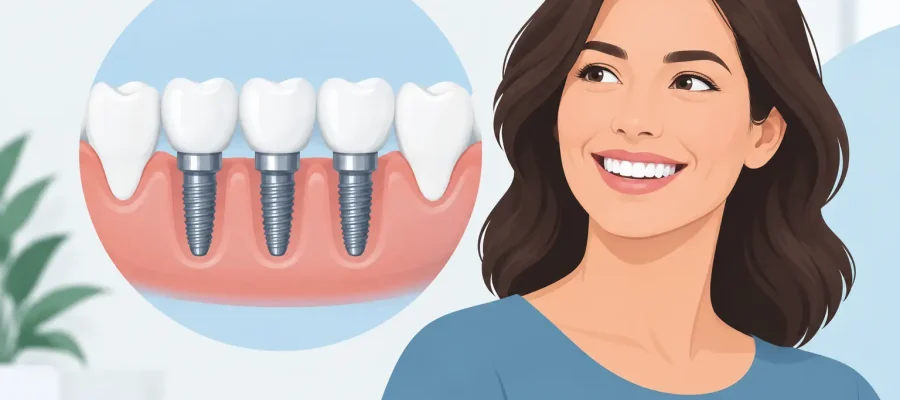
A gap in your smile rarely stays just a gap. Adjacent teeth can drift, the jawbone beneath the missing teeth can begin to shrink, and eating or speaking may become less comfortable over time. So, can you replace multiple missing teeth with dental implants? Yes. From two missing teeth to a complete upper or lower arch, implants can support fixed teeth designed to look natural, feel stable, and restore the confidence to smile without holding back.
The right solution depends on where the teeth are missing, how many need to be replaced, the condition of your bone and gums, and whether you want a removable or fixed result. The goal is not simply to fill spaces. It is to rebuild your bite, facial support, and smile design with a plan that makes sense for your lifestyle.
Can You Replace Multiple Missing Teeth With Dental Implants?
Dental implants are small titanium posts placed in the jawbone to act as replacement tooth roots. Once they are stable, they can support individual crowns, a multi-tooth bridge, or a full-arch restoration. Because implants are anchored in bone, they do not rely on neighboring natural teeth for support.
That distinction matters. A conventional bridge often requires the dentist to reshape healthy teeth on either side of a gap. An implant-supported bridge is supported by implants instead, preserving more of your remaining tooth structure. It also directs chewing forces into the jawbone, which can help limit the bone loss that follows tooth loss.
For patients considering treatment abroad, the most valuable first step is precise digital planning. A clinical examination, 3D scan, bite analysis, and smile assessment reveal what is possible before treatment begins. At DRGO Smile Clinic, this planning can also connect implant treatment with Digital Smile Design, so function and aesthetics are considered together rather than as separate decisions.
The Best Implant Option Depends on Your Pattern of Tooth Loss
There is no single implant treatment for multiple missing teeth. A premium result comes from choosing the least invasive solution that delivers stable function and a balanced smile.
Two or three missing teeth in one area
If you are missing several teeth side by side, two implants may support a fixed bridge. For example, two implants can often replace three consecutive teeth with a custom bridge attached to them. This avoids placing an implant for every individual missing tooth while still providing a secure, non-removable restoration.
The final bridge is shaped and shaded to blend with your natural teeth or with a broader smile makeover plan. This is especially useful when missing teeth sit in the visible smile zone, where gum contours, tooth proportions, and color need careful attention.
Several missing teeth in different areas
When gaps appear in separate parts of the mouth, individual implants with crowns may be the better choice. Each implant replaces one tooth independently, which can make cleaning straightforward and keeps the restoration plan flexible if future dental work is needed.
This approach can take more surgical planning and may not be necessary in every case. If teeth are missing next to one another, an implant bridge can be more efficient. The choice comes down to bite forces, available bone, the health of surrounding teeth, and the visual outcome you want.
Most or all teeth missing in one arch
For a full upper or lower arch, full-arch implant treatment can replace an entire row of teeth using a strategic number of implants. All-on-4 and All-on-6 are two well-known options. Rather than placing an implant under every missing tooth, four or six implants support a fixed full-arch bridge.
All-on-4 may be appropriate when bone is limited because the back implants can be placed at an angle to use available bone efficiently. All-on-6 uses additional implant support and may be recommended when bone quality, bite strength, or long-term load distribution calls for it. Neither option is automatically better. The right choice is the one that offers stable support for your anatomy and restoration design.
For eligible patients, immediate implants and a fixed temporary bridge may allow teeth to be placed shortly after surgery. This means you can leave with a complete smile while your implants heal. The final bridge is created later, once the tissues and implant integration are stable.
What Happens Before Implant Surgery
A predictable implant result begins long before the procedure. Your dentist needs to assess the bone volume, gum health, sinus position in the upper jaw, bite relationship, and the condition of any teeth that remain.
The process typically begins with a 3D CBCT scan and digital impressions. These allow the clinical team to measure bone precisely and plan implant positions around the final teeth, not the other way around. This prosthetically driven approach helps create restorations that look proportional, support a comfortable bite, and are practical to clean.
If bone has reduced after years of tooth loss, additional preparation may be needed. Bone grafting can rebuild areas that lack sufficient volume, while a sinus lift may create space for implants in the upper back jaw. These procedures can extend the timeline, but they can also make a stronger, more natural-looking restoration possible.
Not every patient needs grafting. In some full-arch cases, angled implant placement or longer implants may reduce the need for it. A scan, rather than guesswork, determines the path forward.
Your Treatment Journey: From Scan to Fixed Teeth
For international patients, treatment needs to be planned around both biology and travel. Some treatments can be completed quickly, while others require healing time before the final teeth are placed.
During the first visit, the team confirms the digital plan, prepares the site if needed, places implants, and fits a temporary restoration when immediate loading is clinically appropriate. Temporary teeth are not a compromise in appearance. They are carefully designed to give you a confident, functional smile during healing, though you will need to follow dietary instructions and avoid placing excessive force on them.
Over the next few months, the implants integrate with the jawbone. This biological process, called osseointegration, creates the foundation for long-term stability. After healing, you return for final scans, bite refinement, a try-in when needed, and placement of your final bridge or crowns.
For a full-arch transformation, the final restoration may be made from high-strength zirconia or another material selected for your bite, aesthetic goals, and maintenance needs. Zirconia is valued for its durability and polished appearance, but material selection should never be based on trends alone. The ideal option depends on the architecture of the bridge, opposing teeth, and how you bite.
The Trade-Offs Worth Understanding
Implants are designed to be a long-term solution, but they are still a medical and restorative treatment. Surgery, healing, hygiene, and regular professional maintenance all matter.
Immediate fixed teeth are appealing, particularly if you are traveling for treatment or preparing for a major event. However, not everyone is a candidate for immediate loading. Implant stability at placement, bone density, bite forces, and habits such as teeth grinding affect whether it is safe to place fixed temporary teeth right away.
Smoking, uncontrolled diabetes, active gum disease, and poor oral hygiene can raise the risk of complications. These factors do not always rule out implant treatment, but they must be addressed honestly. A luxury result requires clinical discipline, not rushed promises.
Cost also varies significantly. Replacing several missing teeth with an implant-supported bridge usually costs less than placing individual implants for every gap, while full-arch treatment has a different cost structure because it includes surgery, temporary teeth, the final bridge, and extensive planning. The most useful quote is one that clearly states what is included and explains whether grafting, temporary restorations, final teeth, and follow-up care are part of the plan.
How to Protect Your New Smile
Implant-supported teeth cannot develop cavities, but the gums and bone around implants still require care. Brush thoroughly, clean beneath bridges with the tools recommended by your dentist, attend hygiene appointments, and wear a night guard if you clench or grind your teeth.
A well-made implant bridge should also be designed for maintenance. Beautiful contours matter, but there must be enough access to clean around the restoration. This is one reason detailed digital planning and an experienced restorative team make such a difference.
If multiple missing teeth are changing how you eat, speak, or feel in photos, you do not need to settle for a removable solution or a smile that feels unfinished. A 3D implant consultation can show you which fixed option fits your anatomy, your timeline, and the signature smile you want to carry home.