


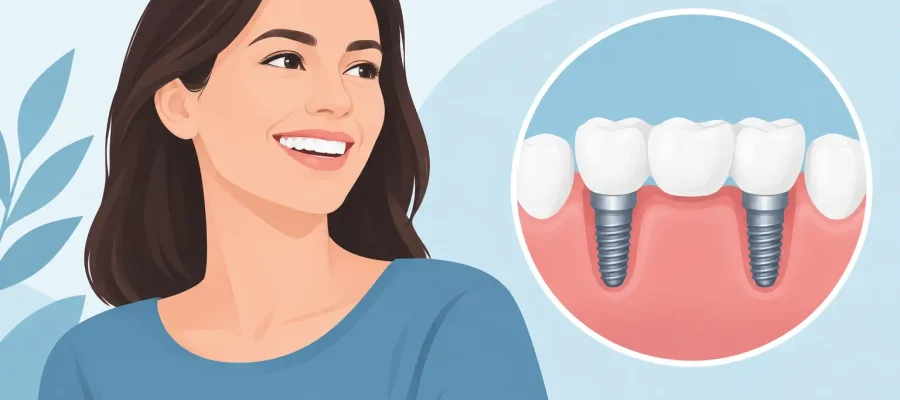
A gap from one missing tooth changes the way you smile. Several missing teeth can change the way you eat, speak, and show up in photos. So, can dental implants replace multiple missing teeth? Yes. From two neighboring gaps to an entire upper or lower arch, implants can support fixed teeth designed to look natural, feel secure, and restore real chewing power.
The right solution is not always one implant for every missing tooth. A precision-planned implant bridge may replace several teeth with fewer implants, while a full-arch treatment such as All-on-4 or All-on-6 can replace an entire row of failing or missing teeth. The best choice depends on your bone, bite, gum health, smile goals, and timeline.
How dental implants replace multiple missing teeth
A dental implant is a small titanium post placed in the jawbone to act like a tooth root. After it integrates with the bone, it can support a custom crown, bridge, or full fixed arch. The visible teeth are engineered around the implants, creating a stable restoration without relying on adjacent natural teeth for support.
This matters because traditional bridges typically require reshaping the teeth beside a gap. With implant-supported treatment, healthy neighboring teeth may be left untouched. Implants also deliver stimulation to the jawbone, helping limit the bone loss that often follows tooth loss.
For multiple missing teeth, the clinical goal is to place enough implants in the right positions to distribute biting forces safely. More implants are not automatically better. Strategic placement, bone quality, the type of final teeth, and how you bite matter more than a one-size-fits-all number.
Can dental implants replace multiple missing teeth in every case?
They can in most cases, but the treatment design varies. Some patients have lost two or three teeth in one area. Others have extensive damage from gum disease, old bridges, repeated dental work, or long-term tooth loss. These situations need different levels of support.
A 3D scan is the starting point. It shows available bone volume, sinus position in the upper jaw, nerve pathways in the lower jaw, and the healthiest locations for implants. Digital smile planning then helps align function with what you see in the mirror – tooth shape, lip support, bite position, and the amount of gum that shows when you smile.
If bone has shrunk after years without teeth, bone grafting or a sinus lift may be recommended before implants. In other cases, angled implant placement and full-arch protocols make it possible to avoid grafting. A proper examination determines which approach protects both your timeline and your long-term result.
The main options for replacing several missing teeth
Implant-supported bridge for a few missing teeth
When two, three, or several teeth are missing side by side, an implant-supported bridge is often the most conservative fixed option. For example, two implants may support a three- or four-tooth bridge, depending on the location and bite forces. The bridge is attached to the implants rather than your natural teeth.
This approach works well when the surrounding teeth are healthy and you want a fixed result that does not come out at night. The final bridge can be designed in high-strength ceramic materials, with color and contour matched to the rest of your smile.
Separate implants for teeth in different areas
When missing teeth are spaced apart, separate implants may offer more control. Each implant can support an individual crown, allowing the dentist to restore each gap without connecting teeth that do not need to be connected.
This can be ideal for patients who have lost teeth in different quadrants but still have a strong foundation of healthy natural teeth. It also gives the smile designer greater flexibility when refining proportions and symmetry in visible areas.
Implant-supported denture for a removable option
An implant-supported denture uses implants for retention, so the denture clicks or attaches into place instead of resting loosely on the gums. It is more stable than a conventional denture and can improve confidence while eating and speaking.
It remains removable for cleaning, which some patients prefer. However, patients seeking a premium fixed-teeth experience often choose a fixed full-arch option instead, especially if they are tired of removing dentures or dealing with movement during meals.
All-on-4 or All-on-6 for a full arch
If most or all teeth in one jaw are missing, loose, severely worn, or no longer predictable, All-on-4 or All-on-6 can restore a complete fixed arch. Four or six implants support a full bridge of teeth, replacing the visible smile zone and the back teeth needed for chewing.
All-on-4 uses four strategically placed implants, often with rear implants tilted to make use of available bone. All-on-6 uses six implants for additional support when anatomy and treatment goals call for it. Neither option is universally superior. The right protocol is based on bone density, arch shape, bite force, and the material selected for the final bridge.
For qualified patients, immediate implants and a fixed temporary bridge may be possible shortly after surgery. This means you can leave with fixed teeth during the healing phase rather than spending months without a smile. The final bridge is then designed after healing, when the gums and bone have stabilized.
What the treatment journey looks like
Replacing multiple teeth should feel planned, not rushed. At DRGO Smile Clinic, the process begins with clinical records, 3D imaging, and Digital Smile Design. This stage creates a blueprint for implant placement and the final appearance of your teeth before treatment begins.
If immediate loading is appropriate, failing teeth may be removed, implants placed, and a temporary fixed bridge fitted in the same treatment phase. Not every patient is a candidate for same-day fixed teeth. Factors such as infection, low bone density, uncontrolled gum disease, grinding, and implant stability may require a staged approach. A specialist should never promise immediate teeth before evaluating the scan and your bite.
After a healing period, your final teeth are crafted for durability and aesthetics. The design process considers more than whiteness. It includes tooth proportions, translucency, gum line balance, speech, lip support, and how the teeth meet when you chew. A beautiful result must also be comfortable enough to live with every day.
International patients can coordinate clinical appointments around travel with a clear plan from the start. Complex cases may require two visits, particularly when grafting or extended healing is necessary. That is a trade-off worth accepting when it protects the strength and longevity of the final result.
Benefits that matter beyond the gap
Multiple-tooth implant treatment can restore far more than a complete-looking smile. Fixed teeth can make it easier to eat confidently, pronounce words clearly, and stop planning meals around what is easy to chew. They can also prevent remaining teeth from drifting into empty spaces, which may alter the bite over time.
Aesthetic benefits are equally personal. Missing teeth can make the cheeks and lips look less supported, especially when many teeth have been lost. A well-designed full arch can restore facial support while creating a smile that looks refined rather than artificial.
Still, implants are a long-term commitment. They need excellent home care, professional hygiene visits, and protective habits. If you grind your teeth, a night guard may be essential. Smoking, untreated diabetes, active periodontal disease, and poor cleaning routines can raise the risk of complications. Premium dentistry starts with disciplined planning, but it lasts through maintenance.
How to know which implant solution is right for you
The decision comes down to the condition of your remaining teeth and the future you want for your smile. If only a few teeth are missing and the rest are healthy, an implant bridge or individual implants may preserve what is working. If many teeth are loose, painful, heavily restored, or cosmetically compromised, rebuilding the full arch can be a more predictable investment than repairing one problem at a time.
Ask to see your treatment plan in 3D and understand whether your proposed teeth are temporary or final, fixed or removable, and made for immediate placement or a staged timeline. You should also know whether grafting is needed, what material will be used for the final bridge, and how your bite will be protected.
The strongest result is not simply a row of new teeth. It is a smile engineered around your anatomy, your lifestyle, and the confidence you want every time you speak, eat, or step in front of a camera.