


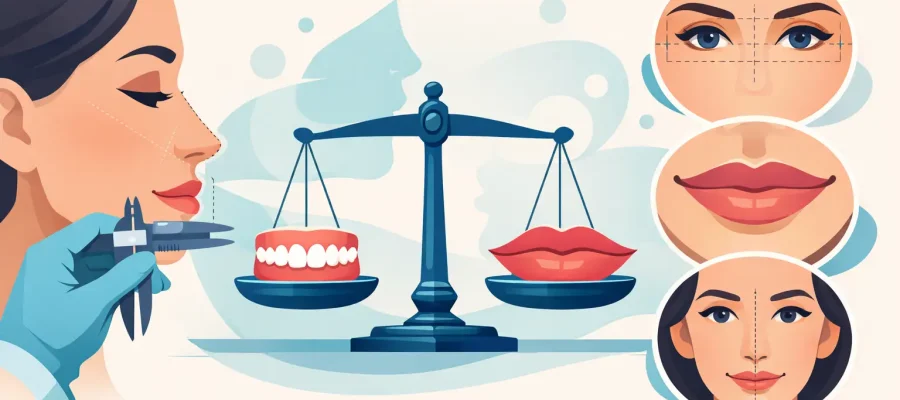
A smile can look technically perfect on a dental model and still feel wrong in the mirror. Teeth that are too long can overpower a petite face. Veneers that are too white can look disconnected from the skin tone. A wide smile may be beautiful for one patient and unflattering for another. That is why how dentists balance teeth, lips and facial features is the real question behind any successful smile makeover.
Premium cosmetic dentistry is not about applying one standard set of bright, straight teeth. It is about designing a smile that looks like it belongs to you – at rest, while speaking, and in photographs. The goal is a confident result with proportion, personality, and clinical longevity behind it.
How Dentists Balance Teeth, Lips and Facial Features
The face sets the frame. The lips create the border. The teeth become the focal point. A skilled cosmetic dentist evaluates all three before recommending veneers, zirconium crowns, whitening, gum contouring, or implants.
This process starts with facial analysis. The dentist considers the centerline of the face, the tilt of the eyes, the nose, the chin, and the overall shape of the jaw. Facial symmetry matters, but absolute symmetry is not always the target. Natural faces have small differences from one side to the other. The best smile design works with those features instead of forcing a rigid, artificial geometry.
Next comes lip analysis. Your upper lip determines how much of the upper teeth shows when you relax and smile. Your lower lip influences the ideal curve of the front teeth. A youthful smile often follows the lower lip with a soft, natural arc. If the upper teeth are designed too flat, too short, or too dominant, that relationship can disappear.
Finally, the dentist studies tooth proportions. Central incisors are usually the visual anchors of the smile. Their width, length, shape, and position affect every tooth around them. Canines add character and support at the corners of the mouth, while the back teeth help create a fuller smile corridor instead of dark spaces when you smile.
It Starts With Your Face, Not a Veneer Shade
Patients often arrive with a photo of a celebrity smile or a saved image from social media. That image can be useful for understanding preferences, but it should not become a blueprint. The same tooth shape, shade, and width will not suit every face.
A longer, more rectangular front tooth can complement a longer face and create a polished, executive look. Softer, rounded tooth edges can feel more harmonious with curved facial features and a fuller lip shape. A patient with strong jawlines may prefer a more defined tooth design, while someone seeking a softer, more youthful effect may benefit from gentler contours.
Color follows the same principle. Brightness is attractive, but the brightest possible shade is not automatically the most luxurious choice. The right shade depends on complexion, the whites of the eyes, age, existing teeth, and the requested level of glamour. An ultra-bright Hollywood Smile can be the right decision for a creator, performer, or patient who wants a high-impact transformation. For others, a layered E-Max veneer shade with subtle translucency may create a more natural result.
The key is intentional contrast. Teeth should look fresh and healthy against the face, not fluorescent or flat.
Lip Dynamics Change the Smile Design
A still photograph tells only part of the story. Lips move constantly when you talk, laugh, and pronounce certain sounds. That movement affects how much tooth surface is visible and whether the final smile feels balanced in real life.
During planning, dentists assess the lip line, lip volume, width of the smile, and the amount of gum tissue that shows. A high lip line can expose more gum above the upper teeth. In some cases, gum contouring can refine the visible proportions of the teeth. In others, the issue may be related to tooth wear, tooth position, or the movement of the upper lip. The correct solution depends on the cause.
Lip support is especially important when teeth are worn down, missing, or positioned too far inward. Properly designed crowns, veneers, or implant restorations can restore facial support and help the lips sit more naturally. But adding too much bulk can make the mouth look overfilled. This is where careful preparation and trial smiles matter.
For patients considering masseter Botox, the treatment can also change the visual balance of the lower face by reducing an overly strong jaw muscle. It is not a substitute for dental correction, and it is not right for everyone. When appropriate, however, it can complement a smile makeover by softening the lower facial width and easing clenching-related tension.
The Teeth Must Work as Well as They Look
Aesthetic design without function is a short-term win. Bite forces, grinding habits, tooth alignment, gum health, and jaw movement all influence whether veneers and crowns will last.
For example, a patient may want very long front teeth to show more when smiling. If those teeth interfere with the bite, chip easily, or force the jaw into an unstable position, the design needs adjustment. A slightly more conservative length may create a better long-term outcome without sacrificing the visible transformation.
The same applies to width. Making teeth wider can fill dark spaces at the corners of the smile, but excess width can look heavy and complicate cleaning. Sometimes orthodontic alignment, gum treatment, or a combination of veneers and crowns delivers a more refined result than simply making every tooth larger.
Implant patients need an even more detailed approach. When teeth have been missing for a long time, bone and soft tissue can change, affecting facial support and smile line. Full-arch solutions such as All-on-4 or All-on-6 are planned around bite stability, speech, lip support, and facial proportions – not just the number of teeth replaced. Immediate fixed teeth can provide a dramatic improvement quickly, but the provisional stage is also a valuable opportunity to test comfort, appearance, and function before the final restoration is completed.
Digital Smile Design Makes the Vision Testable
Digital planning has changed the conversation from “Will this look good?” to “Let’s review what this could look like before treatment begins.” High-quality photos, video, digital scans, and facial measurements allow the dental team to map a smile against the patient’s real features.
With 3D Digital Smile Design, dentists can assess the relationship between the teeth and the facial midline, lip curve, smile width, and gum line. A digital preview helps reveal potential issues early, such as front teeth that appear too dominant or a smile curve that does not follow the lower lip.
The preview is a planning tool, not a guarantee that every final detail will be identical. Biology, bite requirements, and material choices still matter. However, it gives patients a far clearer starting point than selecting veneers from a shade tab and hoping for the best.
At DRGO Smile Clinic, this planning approach supports a faster, more controlled treatment journey for international patients. Digital scans, mock-ups, CAD/CAM workflows, and coordinated specialty care reduce guesswork while keeping the patient involved in the decisions that shape the final smile.
A Trial Smile Is Where Details Become Real
The most valuable moment in many cosmetic cases is the try-in. Whether it is a mock-up, temporary veneers, provisional crowns, or immediate implant teeth, this stage lets the patient see how the design performs beyond a screen.
The dentist checks whether the teeth show naturally when the lips are relaxed, whether the smile looks balanced in motion, and whether speech feels comfortable. Sounds such as “F,” “V,” and “S” can reveal whether the front teeth are positioned correctly. The patient can also judge something no algorithm can fully measure: whether the smile feels like them.
Small refinements at this stage can have a major effect. A tiny adjustment to the edge length, canine shape, or tooth brightness can shift a smile from good to unmistakably personal. Rushing past this step may be tempting for fast treatment timelines, but precision is what makes speed worthwhile.
The Best Smile Design Leaves Room for You
There is no universal formula for a beautiful smile. Some patients want a bold, camera-ready Hollywood Smile with bright color and a strong, symmetrical presence. Others want subtle veneers that make people notice they look rested, polished, and more confident without immediately recognizing dental work.
Both goals are valid. The difference is honest planning around your face, lips, lifestyle, and oral health. A great cosmetic dentist does not sell the same smile to every patient. They build a design that flatters your features, protects your bite, and still looks compelling after the first reveal.
Before committing to veneers, crowns, or full-arch implants, ask to see your proposed smile in context – with your face, your lips, and your real expressions. The most convincing result is not simply a set of beautiful teeth. It is a smile that makes the whole face look more like its best version.