


A smile can look perfect in a close-up photo and still feel wrong when you speak, laugh, or walk into a room. That is why the question, how does digital smile design personalize a smile makeover?, matters far beyond choosing the whitest shade or the straightest teeth. The goal is not a copied celebrity smile. It is a result designed around your face, personality, bite, and the way you want to be seen.
For international patients planning a Hollywood Smile, veneers, crowns, or a full implant restoration, Digital Smile Design turns a major decision into a visual, structured process. Before treatment begins, you can see the direction of your new smile and understand the clinical steps required to create it.
How Digital Smile Design Personalizes a Smile Makeover
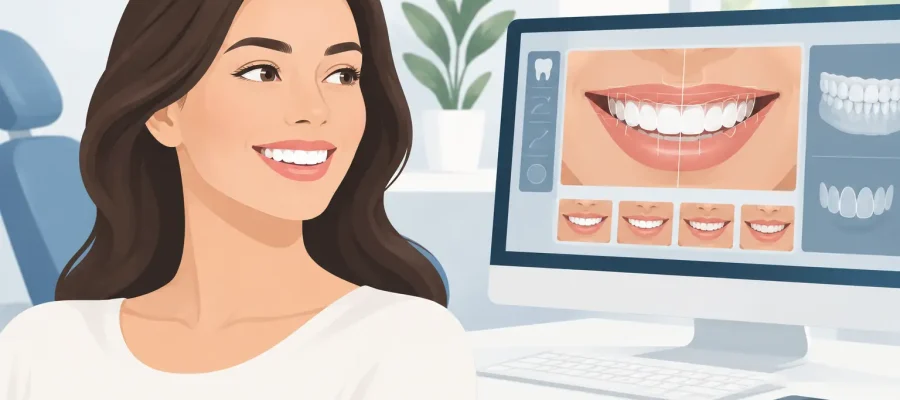
Digital Smile Design, often called DSD, combines high-quality photographs, video, digital scans, and facial measurements to plan a smile with greater precision. Rather than selecting veneers or crowns based on a generic template, the dentist studies how your teeth relate to your lips, gums, facial proportions, and natural expressions.
A front-facing photograph alone does not show the whole picture. Your smile changes when you talk. Your upper lip may reveal more gum tissue when you laugh. One side of your face may sit slightly differently from the other. Your bite may also limit how much a tooth can be lengthened or moved safely. Digital planning brings these details into the treatment conversation early, when changes are still easy to make.
The result is a smile makeover built around two priorities at once: refined aesthetics and a functional bite that can support the final restorations.
It Starts With Your Face, Not a Veneer Catalog
Every successful smile design begins with a detailed assessment. The clinical team records your tooth color, tooth shape, gum line, lip movement, bite relationship, and existing dental work. Digital scans create a highly accurate model of the teeth, while photos and short videos show how the smile works in motion.
This is where personalization becomes visible. A patient with a wide smile and prominent gums may benefit from gum contouring before veneers or crowns are designed. Someone with short, worn teeth may need a design that restores height and improves bite support, not simply a brighter shade. A patient with a naturally strong jawline may prefer more defined tooth edges, while another may want a softer, more subtle shape.
Age, skin tone, lip color, and facial structure can influence the final plan as well. A very bright white can look striking on one patient and artificial on another. Natural translucency, texture, and proportion often matter more than pursuing a single shade number.
Your goals shape the design direction
Digital Smile Design should never replace a conversation. It gives that conversation a clearer starting point.
Some patients want a camera-ready Hollywood Smile for a wedding, public-facing career, or major milestone. Others want people to notice that they look refreshed without immediately identifying dental work. Your preferred level of brightness, symmetry, and tooth character guides the design.
It also helps to be direct about what you do not want. If you dislike oversized veneers, overly square teeth, or an opaque white finish, those preferences belong in the planning stage. Reference photos can be useful, but they should inspire the result rather than dictate it. A smile that suits another face may not suit yours.
The 3D Preview Makes the Plan Easier to Trust
For many patients, the most valuable part of digital smile design is seeing a preview before the final restorations are made. The team can create a digital simulation and, in many cases, a physical mock-up that is temporarily placed over the teeth. This lets you evaluate the proposed length, shape, and smile line in real life.
A mock-up is not merely cosmetic theater. It allows the dentist to check speech, lip support, bite, and comfort before committing to ceramic veneers, E-Max restorations, or zirconium crowns. You can pronounce certain sounds, smile in a mirror, and see how the design appears from different angles.
If a tooth looks too long, an edge feels too prominent, or the smile appears too uniform, adjustments can be made at the planning stage. That reduces surprises and helps create a result that feels intentional rather than rushed.
There is a practical advantage for travelers, too. When treatment is coordinated around a limited stay in Istanbul, a detailed digital plan creates a more predictable schedule. The team knows what needs to be prepared, whether gum treatment or whitening should happen first, and when the final restorations can be designed and placed.
Personalization Also Means Choosing the Right Treatment
Not every patient needs the same solution. Digital Smile Design helps identify when minimally invasive treatment is possible and when a more comprehensive approach is necessary.
If teeth are healthy but uneven in color, shape, or spacing, porcelain veneers may provide the right balance of preservation and transformation. If existing teeth have large fillings, fractures, or extensive wear, crowns may offer more protection. E-Max can deliver natural light transmission in many aesthetic cases, while zirconium may be selected where added strength is a priority.
For patients with missing teeth, the design process may include single implants, implant bridges, or full-arch solutions such as All-on-4 or All-on-6. In these cases, the smile cannot be planned separately from the underlying bone, gum support, and implant position. A beautiful final bridge still needs stable foundations.
This is also where honest clinical limits matter. Digital technology can show a compelling preview, but it cannot make unhealthy gums, active decay, severe grinding, or insufficient bone disappear. Those conditions may require periodontal treatment, bone grafting, a sinus lift, or bite management before the cosmetic phase. The best plan protects the long-term result instead of prioritizing speed at any cost.
A Designed Smile Must Still Look Like You
Symmetry is powerful, but perfect symmetry can sometimes look unnatural. Natural teeth have small variations in texture and translucency. Facial features are not perfectly identical from left to right. A skilled digital plan uses symmetry as a guide while preserving enough character to keep the smile believable.
This is particularly relevant for patients who have seen heavily edited before-and-after images online. A digital preview is a planning tool, not a guarantee that every pixel will translate exactly to the mouth. Lighting, lip position, tissue healing, and the final ceramic material all affect the appearance. Your dentist should explain what is predictable, what may need refinement, and why a short follow-up phase can be valuable.
The aim is not to produce teeth that look manufactured. It is to create a signature smile that appears balanced, healthy, and unmistakably yours.
From Preview to Final Smile
Once the design is approved, the treatment sequence becomes clear. Depending on the case, this may involve professional cleaning or gum treatment, whitening of natural teeth, conservative tooth preparation, temporary restorations, a try-in appointment, and final bonding or cementation. With advanced CAD/CAM workflows, selected crown cases can be completed in one visit. More complex veneer, gum, implant, or full-mouth cases need additional appointments because precision and tissue healing cannot always be compressed.
At DRGO Smile Clinic, digital planning is paired with a coordinated treatment-and-travel experience, helping international patients focus on the transformation rather than transfers, hotel logistics, or language barriers. The clinical plan comes first, then the visit is organized around it.
A personalized smile makeover should leave you with more than a brighter photograph. It should give you the confidence to speak, laugh, and show up fully without wondering whether your smile looks like someone else’s. Start with a digital consultation, share what you want to change, and let the design process show what is realistically possible before you commit.