


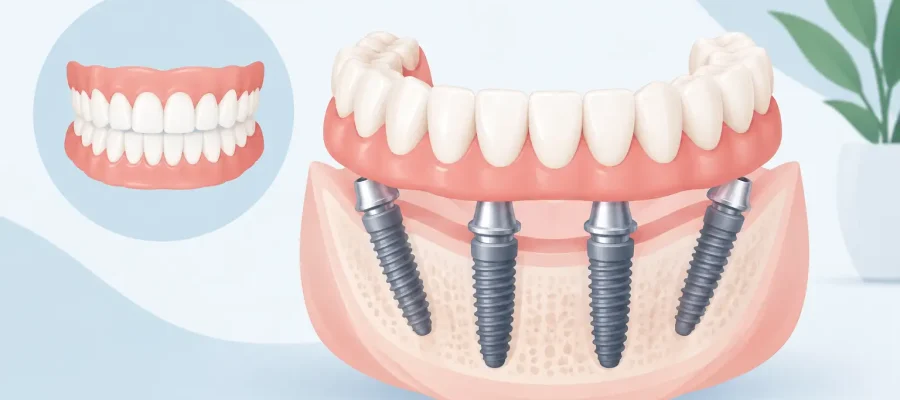
A missing smile changes more than your bite. It can change how you speak in meetings, order dinner, appear in photos, and feel when you look in the mirror. So, how many teeth can All-on-4 dental implants replace? In most cases, four strategically placed implants can support a complete fixed bridge for one jaw – typically 10 to 14 replacement teeth.
That means All-on-4 is designed to replace an entire upper arch, lower arch, or both arches when natural teeth are missing or no longer predictable enough to save. The result is not four individual replacement teeth. It is a full, custom-designed smile that is secured to four implant posts and built for everyday function, facial support, and a natural-looking aesthetic.
How Many Teeth Can All-on-4 Dental Implants Replace Per Arch?
A traditional adult dental arch may have up to 14 teeth, including molars. With All-on-4, the final bridge often replaces approximately 10 to 14 teeth in a single jaw. Twelve teeth is a common design because it restores a broad, balanced smile and enough chewing surface for most patients.
The exact number is not selected from a standard menu. It is engineered around your facial proportions, smile line, jaw anatomy, bite, and available bone. Your dentist also considers how far back the bridge can safely extend without placing excessive force on the implants.
For patients replacing both the upper and lower teeth, All-on-4 can restore two complete arches. That may mean roughly 20 to 28 replacement teeth supported by eight implants total – four in the upper jaw and four in the lower jaw. Whether both arches are treated at once depends on your health, bone quality, bite relationship, timeline, and treatment goals.
Why Four Implants Can Support a Full Arch
The strength of All-on-4 comes from implant positioning, not from simply adding more posts. Two implants are typically placed toward the front of the jaw, where bone is often denser. The two back implants are angled to maximize available bone and create a wider support base for the bridge.
This angled placement can help many patients avoid extensive bone grafting, particularly in the back of the upper jaw where sinus anatomy can limit implant placement. It also allows the fixed bridge to distribute biting forces across the arch rather than concentrating them in one area.
The bridge itself is a single, full-arch restoration. Depending on the treatment stage and final plan, it may be made from high-strength acrylic, composite, zirconia, or a layered ceramic design. The visible teeth are connected, which is why four implants can support a much larger number of teeth than four single implants would replace.
All-on-4 is a carefully planned full-mouth rehabilitation, not a shortcut. Implant angles, bridge design, bite height, and material choice must work together. A beautiful result that does not respect chewing forces is not a premium result.
What Determines the Final Tooth Count?
The answer to how many teeth can All-on-4 dental implants replace is usually a range because every full-arch bridge is customized. Four key details influence the final design:
- Jaw size and bone anatomy: A wider, stronger jaw may support a longer bridge, while some patients benefit from a slightly shorter design to protect the implants.
- Bite forces: Patients who clench or grind their teeth need a bridge designed to manage higher pressure. In some cases, a night guard and material adjustments are part of the long-term plan.
- Upper versus lower jaw: The upper jaw often has softer bone and different sinus anatomy, while the lower jaw may have limits related to nerves and available posterior bone.
- Facial and aesthetic goals: Tooth proportions, lip support, gum display, and the desired smile width all shape the number and position of visible teeth.
The goal is never to place the highest possible number of teeth. The goal is to create a stable, attractive, functional arch that looks like it belongs to you and is built to last.
Does All-on-4 Replace Every Tooth, Including Molars?
All-on-4 can replace the teeth that are visible when you smile and the back teeth needed for comfortable chewing. However, a full-arch bridge does not always extend as far back as a natural arch. This is intentional.
The farther a bridge extends behind the rear implants, the greater the leverage placed on those implants. Your dentist may limit the length of the back extension, called a cantilever, to protect the restoration. You can still receive a full-looking smile and excellent chewing ability without recreating every last natural molar position.
For patients with stronger bone volume or higher functional demands, All-on-6 may be recommended instead. Six implants can provide added support, particularly for longer bridges, stronger bite forces, or certain upper-jaw cases. More implants are not automatically better, but they can be the better clinical choice when anatomy and bite require it.
Immediate Teeth: What You May Receive on Treatment Day
Many eligible patients can leave surgery with a fixed provisional bridge on the same day. This is often called immediate loading or immediate fixed teeth. It means you do not have to spend your healing period without a smile.
Your temporary bridge is designed to protect the implants while they integrate with the bone. It also gives you immediate improvement in appearance, speech, and confidence. During healing, you will follow a softer diet and specific hygiene instructions to avoid overloading the implants.
After the integration period, your final bridge is created based on refined bite records, gum healing, facial measurements, and your preferred tooth character. This is where digital planning makes a meaningful difference. A 3D smile preview and detailed design process allow the team to refine tooth shape, shade, smile width, and overall balance before the final restoration is made.
At DRGO Smile Clinic, this planning-first approach is central to full-arch treatment. The objective is not simply to replace missing teeth quickly. It is to create a fixed, camera-ready smile with clinical precision and a treatment journey organized for international patients.
Who Is a Good Candidate for All-on-4?
All-on-4 may be an option if you have lost most or all teeth in one arch, wear a loose or uncomfortable denture, or have teeth affected by advanced decay, gum disease, fractures, or repeated failed dental work. It can also suit patients who want a fixed alternative to a removable denture and do not want a separate implant for every missing tooth.
A consultation must confirm whether it is right for you. Your dentist will review medical history, gum health, bone volume, CT imaging, bite habits, and the condition of any remaining teeth. Smoking, uncontrolled diabetes, active periodontal infection, and severe grinding do not always rule out treatment, but they may require additional preparation or a more cautious plan.
If you still have several healthy, stable teeth, preserving them may be more appropriate than removing them for a full-arch solution. Premium dentistry means choosing the treatment that protects your long-term health, not selling the biggest procedure.
Life With a Full-Arch Implant Bridge
A well-designed All-on-4 bridge is fixed in place. You do not remove it at night, use denture adhesive, or worry about it shifting during a conversation. You clean it carefully with a soft toothbrush, floss designed for implant bridges, and often a water flosser. Regular professional maintenance remains essential.
Implants themselves cannot decay, but the gum tissue and bone around them still need protection. Consistent hygiene, routine checkups, and managing clenching are what help preserve the investment. The bridge material may also need servicing or replacement over time, depending on wear and care.
The right question is not only how many teeth All-on-4 can replace. It is whether your new teeth will be planned around your face, your bite, and the life you want to return to – confidently, comfortably, and without hiding your smile.