


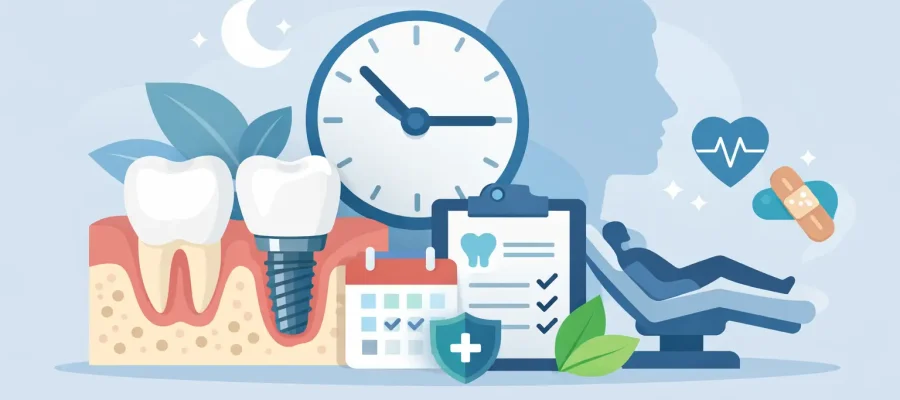
A dental implant can change how you eat, speak, smile, and show up in photos, but the calendar matters as much as the final result. So, how long does dental implant recovery take? Most patients feel ready to return to normal light routines within a few days, while the implant itself typically needs several months to bond securely with the jawbone before a final crown or full-arch bridge is placed.
That difference is the key to planning treatment confidently. You may leave with a fixed temporary tooth or a full temporary smile quickly, especially with immediate implant protocols. Yet a beautiful, durable final restoration depends on biological healing, precise bite control, and a treatment plan built around your bone, gums, and overall health.
How Long Does Dental Implant Recovery Take in Real Life?
For a straightforward single implant, the first recovery phase usually lasts about 7 to 14 days. Swelling, tenderness, and minor bruising are most noticeable during the first 48 to 72 hours, then gradually improve. Many patients can work remotely or resume light activity after one or two days. If your role is public-facing, plan a few extra days before an important event or filming commitment.
The deeper healing phase, called osseointegration, generally takes three to six months. This is when the titanium implant integrates with the jawbone and becomes a stable foundation for the final tooth. Your dentist may place the final crown sooner in selected cases, but speed should never come at the expense of long-term stability.
Full-arch implant treatment, such as All-on-4 or All-on-6, has a different rhythm. Patients can often receive fixed temporary teeth on the same day as surgery, which means they do not have to return home without a smile. However, the jaw still needs time to heal under that temporary bridge. Final full-arch teeth are commonly fitted after several months, once healing and bite stability have been confirmed.
The Dental Implant Healing Timeline
The first 24 to 72 hours
This is the period to protect. Expect mild to moderate swelling, tenderness around the surgical site, and occasional minor bleeding or oozing. Prescribed medication, cold compresses, rest, and a soft diet make a meaningful difference. Keep your head elevated when resting, avoid vigorous rinsing, and do not use a straw, as suction can disturb the healing area.
If you have received immediate temporary teeth, they may look remarkably close to a finished smile right away. Still, they are not an invitation to test a steak dinner. During early healing, the priority is protecting the implant from excessive chewing pressure.
Days 4 through 14
Most visible swelling and bruising settle during this window. Any sutures may be removed or dissolve, depending on the surgical approach. You can usually return to a broader range of normal activities, but strenuous workouts, heavy lifting, smoking, and alcohol should wait until your clinician gives approval.
For international patients, this is often the stage when travel logistics feel easier. A well-organized implant journey includes enough time in the city for post-treatment checks, adjustments to temporary teeth if needed, and clear instructions for the flight home.
Weeks 3 through 8
Your gums continue to strengthen, and the implant site may feel increasingly normal. Patients often forget about the implant during everyday life, but healing is still underway beneath the surface. Continue brushing carefully, follow the recommended hygiene routine, and maintain any dietary restrictions provided for your case.
If you are wearing a temporary bridge, its appearance and comfort can be refined as your gums settle. This is also why a planned temporary is valuable: it supports your confidence while allowing the final restoration to be designed around your healed gum line and facial proportions.
Months 3 through 6
For many patients, this is the window for final restoration planning and placement. Your dentist assesses implant stability, gum health, bite forces, and the aesthetic details that make a crown or bridge look natural. Color, translucency, tooth shape, and how the smile supports the lips all matter, particularly when the implant is in the visible smile zone.
Patients needing bone grafting or a sinus lift may need a longer timeline. In some cases, grafted bone must mature for four to six months before implant placement, followed by another healing period after surgery. This is not a delay for its own sake. It is how clinicians create the stable foundation that premium implant work requires.
What Changes Your Recovery Time?
No two implant timelines are identical. A single implant placed into healthy, dense bone with no infection may follow a relatively fast and predictable path. An implant placed after a difficult extraction, active gum disease, bone loss, or grafting requires more caution.
Your health habits matter, too. Smoking and nicotine use can slow healing and increase the chance of implant complications. Uncontrolled diabetes, certain medications, teeth grinding, and poor oral hygiene may also affect the plan. If you clench or grind at night, a protective night guard after your final restoration may be part of protecting your investment.
The location of the implant can also influence timing. The front upper jaw is highly aesthetic and may require careful gum contouring and provisional design. Back teeth handle stronger chewing forces, so your clinician may be more conservative before allowing a final crown to take full bite pressure.
Immediate implant placement can shorten the number of appointments, but it is not right for everyone. It works best when the extraction site, bone quality, gum condition, and bite all meet specific criteria. The best outcome is not simply the fastest one. It is the plan that gives you a stable implant and a smile that still looks exceptional years later.
What Can You Eat During Implant Recovery?
For the first few days, think cool and soft: yogurt, eggs, soups that are not hot, smoothies eaten with a spoon, mashed vegetables, soft fish, and pasta. Avoid hard, crunchy, sticky, or spicy foods around the surgical site. Do not chew directly on a new implant unless your dentist specifically confirms it is safe.
After the first week, many patients add softer solid foods gradually. With immediate full-arch temporary teeth, the soft-food period is usually longer because the temporary bridge must not be overloaded while the implants integrate. Your treatment team will give you a diet progression based on your specific procedure.
Good nutrition helps healing. Prioritize protein, hydration, and nutrient-rich meals while avoiding smoking and excessive alcohol. A carefully managed recovery is not glamorous, but it protects the result you traveled for.
Planning Implant Treatment Around Travel
For patients flying to Istanbul, the question is not only when surgery happens but when it is sensible to fly home. Simple cases may require a stay of several days so the team can monitor early healing and make any necessary temporary-tooth adjustments. More complex full-arch or grafting cases may need a longer stay or a staged return visit for final teeth.
A premium treatment plan should make this clear before you book. At DRGO Smile Clinic, digital planning and 3D smile previews help align the surgical, functional, and aesthetic stages before treatment begins. That level of planning is especially valuable when your schedule includes international flights, business commitments, or a milestone event.
Ask for a written timeline that identifies the initial surgery, temporary restoration, required checkups, soft-diet period, and estimated final restoration date. You should also know who will support follow-up care once you are home and what symptoms require immediate contact.
When Should You Call Your Implant Dentist?
Some discomfort is expected. Severe or worsening pain after the first few days, persistent bleeding, fever, increasing swelling, pus, a loose implant, or a temporary tooth that feels unstable should be assessed promptly. Do not try to adjust a temporary crown or bridge yourself.
A successful recovery should feel progressively better, not worse. Prompt communication lets your clinical team solve small issues before they become larger ones.
Your implant recovery is a short, purposeful phase in a much longer result. Give the implant time to integrate, follow the temporary diet even when you feel fine, and let your final smile be placed when the foundation is truly ready.