


A crown can look flawless in photos and still fail the real test if the material underneath is wrong. When patients ask what are zirconium crowns made of, they are usually asking something bigger – will this smile look natural, feel comfortable, and last.
The short answer is that zirconium crowns are made from zirconia, a highly durable ceramic derived from zirconium dioxide. Despite the name, they are not made of metal in the way many patients imagine. In modern cosmetic dentistry, zirconia is engineered into a strong, tooth-colored restoration material that can be milled with extreme precision and customized for both function and esthetics.
What are zirconium crowns made of in dentistry?
In everyday dental language, “zirconium crown” usually refers to a zirconia crown. The core material is zirconium dioxide, a white crystalline oxide of the metal zirconium. Once processed for dental use, it becomes a biocompatible ceramic with very high strength and excellent resistance to wear.
That distinction matters. Patients often hear the word zirconium and assume the crown must be metallic, heavy, or silver under the surface. It is not. Dental zirconia behaves more like an advanced ceramic than a conventional metal crown, which is why it has become such a popular choice for cosmetic smile design and full-mouth rehabilitation.
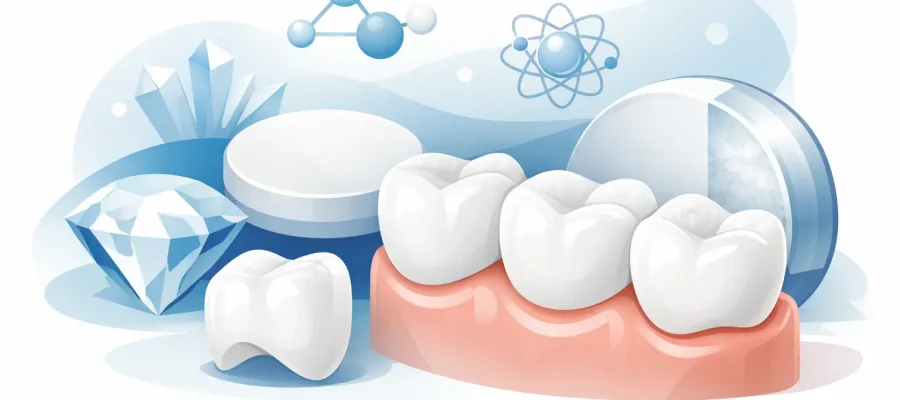
To make a crown from zirconia, the material is typically supplied as a dense dental-grade block or disc. Using digital scans and CAD/CAM technology, the crown is designed to match the patient’s bite, tooth shape, and smile line. It is then milled, sintered at high temperature to achieve its final strength, and finished for a polished or layered result.
The key ingredients inside a zirconia crown
The main ingredient is zirconium dioxide, but dental zirconia is not just one raw substance pressed into a tooth shape. It is a carefully stabilized ceramic formulation designed to perform under years of bite pressure.
Most dental zirconia includes stabilizing oxides, commonly yttria, which help keep the material structurally reliable. This is why you may hear terms such as 3Y, 4Y, or 5Y zirconia. These numbers refer to the level of yttria stabilization, and they affect how strong or translucent the final crown will be.
Lower translucency zirconia is usually stronger and often selected for back teeth or patients with heavy bite forces. Higher translucency zirconia tends to look more lifelike and is often preferred in visible smile-zone teeth. Neither is automatically better. The right choice depends on where the crown will sit, how the patient bites, and how demanding the esthetic goal is.
Some zirconia crowns are monolithic, meaning the full crown is made from a single block of zirconia. Others are layered, meaning a zirconia framework is covered with a more esthetic porcelain layer to create added depth, texture, and light reflection. Both approaches are used in premium dentistry, but they solve slightly different problems.
Monolithic vs layered zirconia
If you want the strongest version of the material, monolithic zirconia is usually the front-runner. Because it is milled as one solid piece, there is no outer ceramic layer to chip away from the framework. This makes it especially useful for molars, full-arch restorations, and patients who grind their teeth.
If you want the most refined cosmetic finish, layered zirconia can create a more nuanced result. A technician can build porcelain over the zirconia substructure to mimic the soft translucency and surface character of natural enamel. For front teeth, especially in patients with high esthetic expectations, that extra artistry can make a difference.
There is a trade-off. Layered crowns can be exceptionally beautiful, but the outer porcelain is more delicate than solid zirconia. That does not mean it is weak. It means the case has to be planned correctly. Bite design, tooth position, and habits like clenching all matter.
Why zirconia works so well for smile makeovers
Zirconia crowns are not popular just because they are strong. They are popular because they solve several problems at once.
First, the material can handle serious functional pressure. That makes it useful for patients who need cosmetic improvement and reliable performance, not just a quick visual fix. Second, zirconia is metal-free and generally very well tolerated by gum tissue, which helps create a cleaner, healthier-looking margin around the crown. Third, digital manufacturing allows a high level of precision, which supports a tighter fit and more predictable esthetic planning.
For international patients working with a tight treatment timeline, this matters even more. A crown material that can be digitally designed, milled accurately, and refined quickly fits the expectations of modern smile transformation. In clinics using advanced CAD/CAM workflows and 3D planning, zirconia is often chosen because it supports both speed and control.
How zirconium crowns are actually made
The process starts long before the crown itself is milled. First comes diagnosis. The dentist evaluates the tooth structure, gum symmetry, bite relationship, and overall smile design. If a patient is restoring multiple teeth, the material choice has to support the full look, not just one isolated crown.
After preparation, a digital scan or highly accurate impression captures the tooth. The crown is then designed on software to match neighboring teeth, facial proportions, and bite dynamics. This step is where premium results are won or lost. A crown that is technically strong but poorly designed will still look fake.
Next, the zirconia restoration is milled from a preformed block or disc. At this stage, the material is shaped oversized because it will shrink during sintering. Sintering is a high-heat firing process that hardens the zirconia and gives it final density and strength.
Once sintered, the crown can be stained, glazed, polished, or layered, depending on the treatment plan. A more natural finish may include subtle color gradients, translucency effects, and surface anatomy rather than a flat, bright white shell. The final crown is then tried in, adjusted if needed, and cemented or bonded into place.
Are zirconium crowns safe?
For most patients, yes. Zirconia is widely used in restorative dentistry because it is biocompatible, corrosion-resistant, and suitable for long-term use in the mouth. It does not contain the dark metal substructure associated with older porcelain-fused-to-metal crowns, so there is no gray line at the gum in the same way many patients remember from older dental work.
That said, safety is not just about the material itself. It is also about preparation quality, margin design, bite balance, and lab accuracy. A premium crown is never just a premium material. It is the result of disciplined planning and precise execution.
Is zirconia better than E-Max?
This is where the answer depends on the case. Zirconia is generally stronger. E-Max is often prized for its esthetic beauty, especially in thinner restorations and highly visible front teeth. If the patient has a heavy bite, needs posterior crowns, or is restoring multiple teeth with durability as a priority, zirconia often has the advantage.
If the case is all about maximum translucency in a low-stress area, E-Max may be the better fit. The best clinics do not force every smile into one material. They choose the material that matches the tooth position, the bite, the design goal, and the timeline.
Who is a strong candidate for zirconia crowns?
Patients who want a polished, long-lasting smile with excellent strength are often ideal candidates. Zirconia is especially attractive for people replacing old crowns, rebuilding worn teeth, correcting shape and color issues, or completing a full smile makeover where durability matters as much as appearance.
It is also a smart option for patients traveling for treatment who want a predictable material with a premium finish. In a clinic such as DRGO Smile Clinic, where digital planning and fast-turnaround esthetic dentistry are central to the treatment model, zirconia fits naturally into a results-first workflow.
What matters more than the material name
Patients often focus on the label – zirconium, zirconia, porcelain, E-Max. The smarter question is whether the crown is being designed for your face, your bite, and your long-term comfort. A crown can be made from an excellent material and still look bulky, opaque, or artificial if the planning is rushed.
The best zirconia crowns are not just made of zirconium dioxide. They are built from digital precision, esthetic judgment, and a clear understanding of what the final smile needs to achieve. If your goal is a confident, camera-ready result that also holds up in daily life, the material matters. But the craftsmanship matters even more.
If you are considering zirconia crowns, ask to see how your smile will be planned before treatment begins. The right material should not just restore a tooth. It should support the version of your smile you actually want to live with.